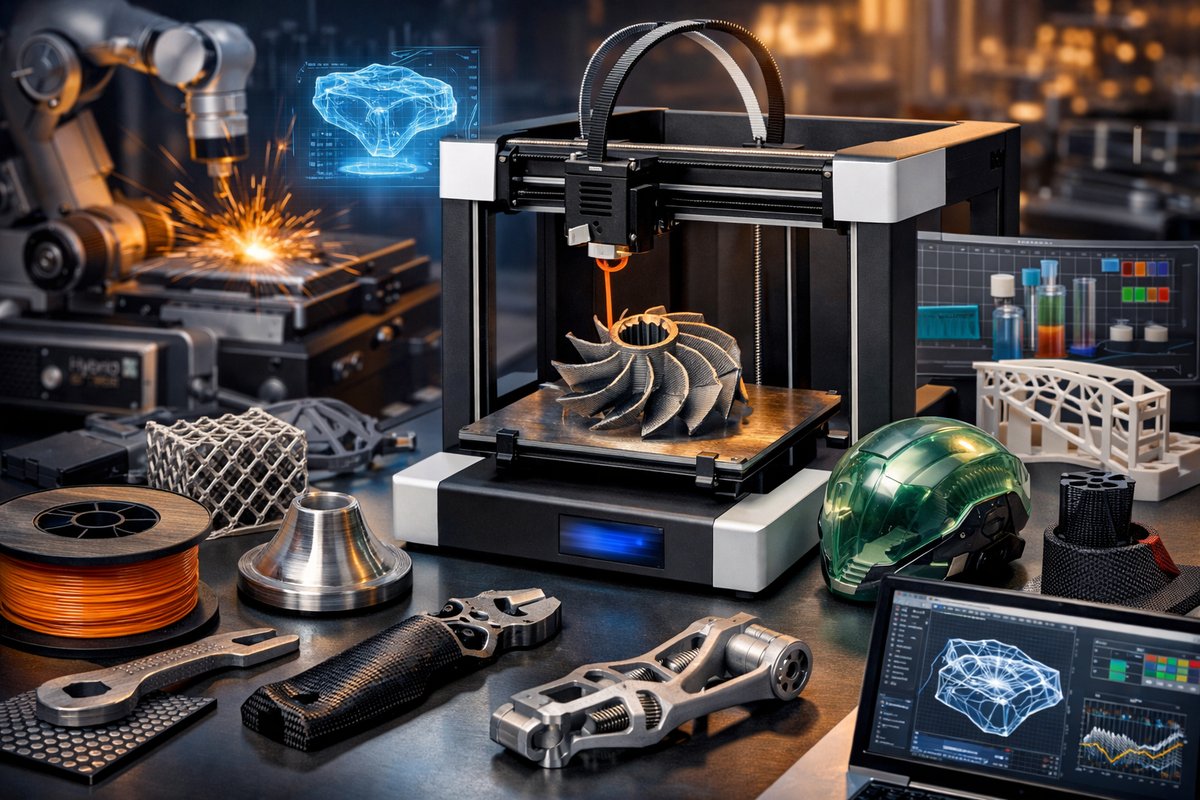

Three-dimensional printing, once a niche technology reserved for specialized labs and industry giants, is now a vibrant field where imagination and engineering converge to redefine manufacturing and creativity. The process of building objects layer by layer from digital blueprints has matured significantly, driven by breakthroughs that make it more affordable, reliable, and versatile. This evolution is not just technical but cultural, empowering hobbyists, educators, engineers, and artists alike to explore new frontiers in making.
At the heart of this transformation are innovations that address the traditional challenges of 3D printing: high costs, material limitations, print speed, and quality consistency. The latest generation of printers and techniques embraces a holistic approach, combining hardware improvements, smarter software, and novel materials to push the boundaries of what can be produced efficiently.
One of the most impactful trends is the rise of multi-material and hybrid printing systems. These machines can seamlessly switch between different filaments or resins during a single print, enabling complex parts with integrated functionalities such as flexible joints, conductive pathways, or varied textures. This capability reduces the need for assembly and post-processing, saving time and resources. For example, printers that combine thermoplastic extrusion with resin curing technologies allow creators to embed rigid and soft components in one go, opening doors for wearable devices and custom prosthetics.
Material science has also seen a renaissance within 3D printing. Beyond standard plastics, there is a growing palette of sustainable and high-performance materials designed to meet diverse needs. Biodegradable filaments derived from plant-based sources offer eco-friendly alternatives to petroleum-based plastics, aligning with the increasing emphasis on sustainability. On the technical side, composite filaments infused with carbon fiber, metal powders, or ceramics enhance mechanical strength and thermal resistance without compromising printability. This enables functional prototypes and end-use parts that withstand demanding environments, expanding 3D printing’s role in aerospace, automotive, and medical fields.
Efficiency gains are not only about materials but also about smarter slicing and print management software. Advances in artificial intelligence and machine learning have led to algorithms that optimize print paths, layer thickness, and support structures dynamically. These improvements reduce material waste, minimize print times, and improve surface finish quality. Cloud-based platforms now enable remote monitoring and control of print jobs, making it easier for small businesses and educators to manage multiple machines and scale production without significant overhead.
Another breakthrough enhancing feasibility is the development of low-cost, high-resolution resin printers. The advent of affordable LCD and DLP technologies has democratized access to detailed stereolithography (SLA) printing, which produces parts with smooth surfaces and intricate features. These printers use photopolymer resins cured layer by layer under UV light, offering precision once reserved for industrial setups. Their compact size and reduced material consumption make them ideal for prototyping jewelry, dental models, and miniature figurines, combining artistry with practicality.
Speed remains a critical factor for wider adoption, and new approaches are addressing this through parallelization and continuous printing. Continuous Liquid Interface Production (CLIP) technology, for instance, eliminates the stop-start layering process by projecting UV light through an oxygen-permeable window, allowing resin to cure in a continuous flow. This method drastically shortens print times while maintaining high resolution, making it suitable for rapid prototyping and small-batch manufacturing. Similarly, multi-nozzle extrusion printers can print several parts simultaneously, multiplying throughput without sacrificing quality.
Accessibility is further enhanced by modular designs and open-source ecosystems. Modular printers allow users to upgrade components such as print heads, build plates, or control boards independently, extending machine lifespan and customizing capabilities according to evolving needs. Open-source software and hardware communities foster knowledge sharing and innovation, lowering barriers for newcomers and encouraging experimentation. This collaborative spirit is vital for nurturing diverse applications-from educational kits that teach STEM concepts to specialized tools for scientific research.
Moreover, integration with other digital fabrication techniques is becoming more prevalent. Hybrid workflows combine 3D printing with CNC machining, laser cutting, or injection molding to leverage the strengths of each method. For example, 3D printing can produce complex internal geometries or customized inserts, which are then finished with precision machining for tight tolerances. This synergy expands the range of achievable designs and improves cost-effectiveness for medium-scale production runs.
In the medical realm, personalized healthcare solutions exemplify the power of these advancements. Custom implants, surgical guides, and anatomical models printed with biocompatible materials improve patient outcomes and reduce surgical times. The ability to print on-demand and tailor devices to individual anatomy exemplifies a shift towards precision medicine enabled by 3D printing innovations.
Looking ahead, the convergence of artificial intelligence, robotics, and advanced materials promises to further revolutionize 3D printing. Autonomous print farms managed by AI could optimize production schedules and quality control in real time. Emerging materials with self-healing or shape-memory properties could lead to dynamic, adaptive products. Even the integration of 3D printing with biofabrication techniques hints at the future of tissue engineering and regenerative medicine.
In summary, the latest technologies and techniques in 3D printing are making the process more economical, feasible, and successful by addressing core challenges through innovation at every level. From multi-material printers and sustainable filaments to AI-driven software and hybrid manufacturing workflows, these advances empower creators to transform digital concepts into physical realities with greater ease and impact. The quiet revolution of making, one layer at a time, continues to unfold-inviting us all to participate in shaping the future of fabrication.
-
Independent Dual Extruder 3D Printer Motherboard with TMC2208 ...
Top highlights · DMP Motherboard with TMC2208 Driver · Work quieter and more stable · Every Tenlog DMP Motherboard need 7 pcs TMC2208 Driver · Pre-installed ... -
Ender 3 Direct Drive Upgrade Conversion Bracket for ... - Walmart.com
Aluminum Extruder, 3D Printer Ender 3 Extruder, CR-10 Extruder Upgrade CR10 Drive ... Dual Color Print Extrusion head 1.75mm Out for 3D Printer,For Ender 3 ... -
Matte PLA Filament, High Tenacity, Eco Friendly, 1kg Refill for AMS ...
PREMIUM PLA FILAMENT – EASY PRINTING: PLA Basic filament offers superior printability with minimal warping or stringing, making it ideal for beginners and ... -
MakerBot PLA Filament for Method 3D Printer - Walmart.com - Walmart
Buy MakerBot PLA Filament for Method 3D Printer - Biodegradable Corn-Based Plastic for Office-Friendly Prototyping (True Black, 0.75kg) at Walmart.com. -
phrozen Sonic Mini 8K S LCD Resin 3D Printer, 7.1 ... - Amazon.com
Compact and Powerful - The resin printer offers sufficient space to let your creativity run wild with a printing volume of 16.5 x 7.2 x 17 cm and a load ... -
10Pcs FEP Film for Photon Resin 3D Printer 140X200mm SLA/LCD ...
Buy 10Pcs FEP Film for Photon Resin 3D Printer 140X200mm SLA/LCD Fep Sheets 0.15-0.2mm 3D Printer Filaments Impresora at Walmart.com.