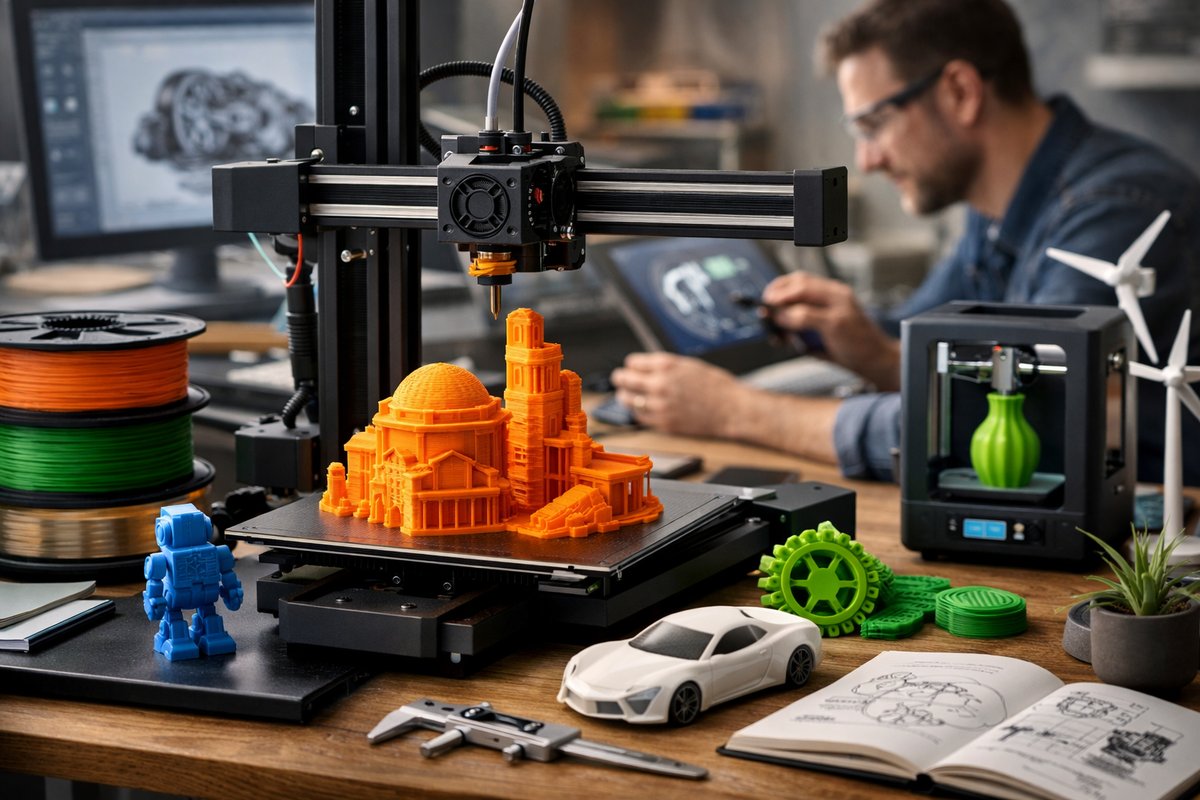

Three-dimensional printing, once a niche technology reserved for industrial prototyping and specialized manufacturing, has undergone a profound transformation. Today, it stands as a versatile tool that empowers creators across disciplines to manifest their visions with unprecedented control and affordability. This evolution is driven by a confluence of technological breakthroughs and refined techniques that address long-standing challenges of cost, material limitations, and print reliability.
At the heart of this revolution is the diversification of printing methods beyond the traditional fused filament fabrication (FFF). While FFF remains popular for its accessibility and simplicity, newer approaches such as resin-based stereolithography (SLA) and selective laser sintering (SLS) are becoming increasingly viable for smaller-scale and budget-conscious users. SLA, for example, utilizes ultraviolet light to cure liquid resin layer by layer, enabling ultra-fine detail and smooth surface finishes that were previously difficult to achieve without expensive post-processing. Meanwhile, SLS employs lasers to fuse powdered materials, including nylon and metals, allowing for robust, functional parts without the need for support structures.
One of the key enablers making these technologies more feasible is the rapid advancement in hardware components. High-precision stepper motors, improved laser modules, and more efficient light sources have dramatically increased print accuracy while reducing energy consumption. These improvements translate into faster print times and lower operating costs, which are crucial for both hobbyists experimenting at home and professionals producing small batches of parts.
On the software side, open-source slicing programs and cloud-based platforms have democratized access to sophisticated print preparation tools. These software solutions optimize layer paths, dynamically adjust print speeds, and predict potential failure points, reducing material waste and failed prints. Additionally, the integration of machine learning algorithms is beginning to personalize print settings based on user behavior and specific printer models, further enhancing success rates and minimizing trial and error.
Material innovation is another cornerstone of making 3D printing more economical and successful. The development of composite filaments that blend polymers with wood, carbon fiber, or metal powders offers users the ability to create parts with tailored mechanical and aesthetic properties without investing in multiple machines. Biodegradable and recycled materials are gaining traction, aligning the technology with broader sustainability goals. These eco-friendly options not only reduce environmental impact but also appeal to a growing community of conscious makers.
Hybrid manufacturing techniques, which combine 3D printing with traditional subtractive methods like CNC milling, are also expanding the possibilities for precision and surface quality. By printing near-net-shape parts and then finishing critical surfaces through machining, creators can achieve high-performance components at a fraction of the cost and time of fully subtractive processes. This synergy is particularly valuable in industries such as aerospace, medical devices, and custom tooling.
Another exciting trend is the rise of modular and multi-material printers. These systems allow simultaneous printing with different materials or colors, opening new avenues for functional complexity and design freedom. For example, flexible elastomers can be printed alongside rigid plastics to produce integrated hinges or seals in a single build. This capability reduces assembly steps and enhances product durability, which is essential for both prototypes and end-use parts.
Accessibility is further enhanced by the proliferation of affordable, compact desktop 3D printers that deliver professional-grade results. The reduction in hardware costs combined with user-friendly interfaces lowers the barrier to entry, inviting educators, students, and makerspaces to incorporate 3D printing into learning and innovation environments. This widespread adoption fosters a culture of experimentation and iterative design, accelerating the pace of invention.
Moreover, the emergence of decentralized manufacturing networks leverages 3D printing’s digital nature to localize production. By sharing digital models and printing parts on-demand near the point of use, companies can reduce inventory costs, shipping emissions, and lead times. This shift toward distributed fabrication aligns with sustainability principles and offers resilience against supply chain disruptions.
Despite these advances, challenges remain. Material properties such as strength, heat resistance, and long-term durability still lag behind traditional manufacturing in some cases. Quality control and standardization are critical areas for growth, particularly as 3D printed parts enter regulated sectors like healthcare and aerospace. However, ongoing research into new polymers, metal alloys, and post-processing techniques promises to close these gaps.
In sum, the latest technologies and techniques in 3D printing are not just enhancing the craft-they are redefining what is possible. By making the process more economical, feasible, and successful, these innovations invite a wider community to participate in the quiet revolution of making. Whether it’s a hobbyist crafting miniatures, an engineer fabricating custom tools, or a medical professional modeling implants, the layered journey from digital design to physical reality has never been more accessible or inspiring.
As this field continues to evolve, the interplay of hardware improvements, software intelligence, material science, and sustainable practices will shape the future of fabrication. The promise is clear: a world where imagination and precision converge effortlessly, where the only limits are those of our creativity and curiosity.
-
ELEGOO Saturn 3 MSLA 12K 3D Printer - Amazon.com
ELEGOO Saturn 3 MSLA 12K 3D Printer | Desktop Resin Impresora with 10-Inch Monochrome LCD, Voxeldance Tango Slicer, Large Printing Size of 8.62 × 4.84 ... -
Onerbl 24V AC Adapter Compatible with ELEGOO Saturn 3 UItra ...
In Great Working Condition. Compatible with: ELEGOO Saturn 3 UItra MSLA 3D Printer Desktop Resin 3D Printer ... SLA Resin Printer 24VDC 4000mA Power Supply Cord ... -
FLASHFORGE AD5X Multi-Material 3D Printer 4-Color Printing ...
FLASHFORGE AD5X Multi-Material 3D Printer 4-Color Printing, 600mm/s Speed 1-Click Print with DIY IFS Creations, Full-Auto Calibration & Filament Backup, ... -
FLSUN S1 PRO High-Speed Delta 3D Printer,1200mm/s Printing ...
... , ≤55 dB Quiet FDM 3D Printers350°C All-Metal Hotend, ,Large Build Volume 320x320x430mm³,Multi-Material Support at Walmart.com. -
Protopasta Electrically Conductive Composite Black PLA 3D Printer ...
Amazon.com: Protopasta Electrically Conductive Composite Black PLA 3D Printer Filament for Electrically Conductive 3D Prints | Easy Printing with Low Warp ... -
OUNONA Grey Pla Filament 1.75mm for 3D Printer Impact Resistant ...
Buy OUNONA Grey Pla Filament 1.75mm for 3D Printer Impact Resistant Composite Material at business.walmart.com Facilities Maintenance, Repair & Operations ...