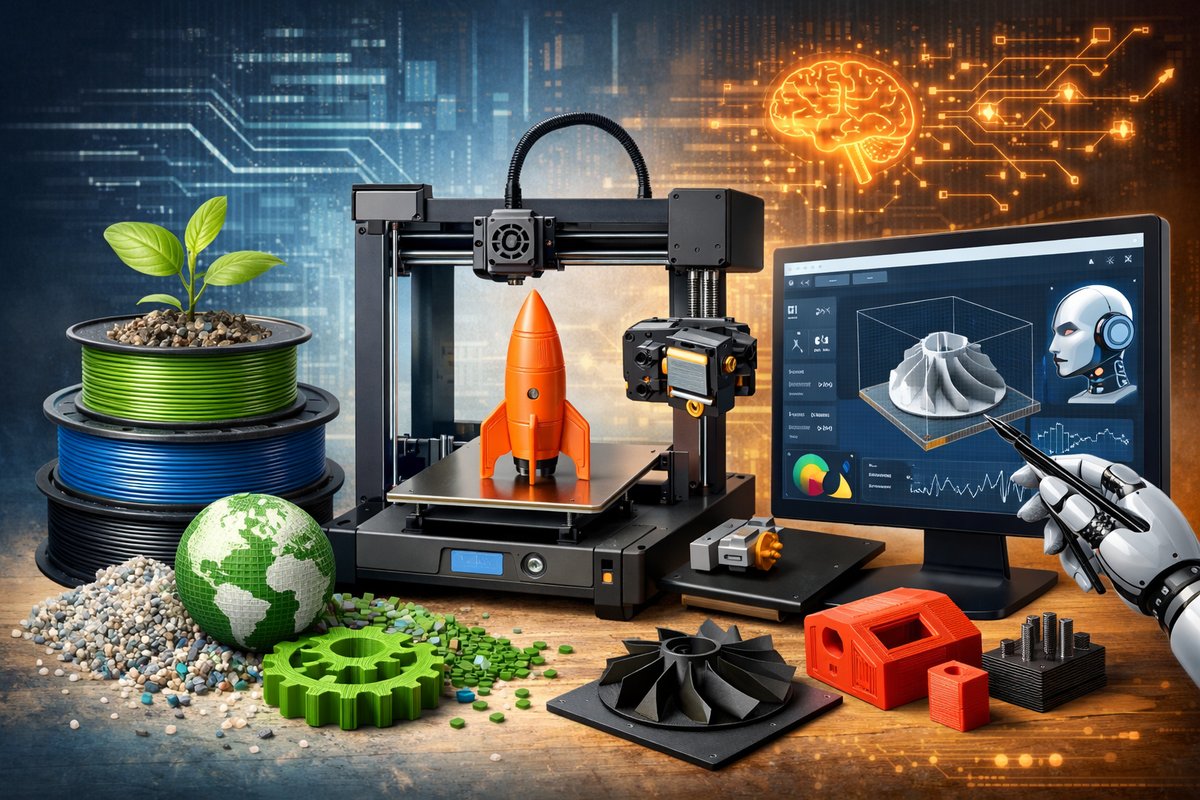

A quiet revolution is unfolding wherever printers hum and workshop lights glow. 3D printing has long been a playground for hobbyists, engineers, and artists alike. Today, that playground is expanding into a cost-conscious factory floor, a student lab, and even the living room. By rethinking materials, refining techniques, and embracing smarter software and hardware, the process of fusing thin layers into complex, functional parts is becoming more economical, more accessible, and more capable than ever before.
In the early days, material expenses could dominate a project’s budget. Premium resins and specialized powders demanded careful planning or philanthropic grants. Power-hungry components and slow print speeds meant hours of machine time that translated directly into bills. Fast slicing engines were often locked behind paid subscriptions, and exotic toolheads felt out of reach for most makers.
Now that landscape is shifting. A surge of open-source tools, sustainable compounds, and AI-driven workflows is slashing per-part expenses. From recycled filament that starts life in a soda bottle to modular extruder kits that slide into any desktop frame, makers can mix and match upgrades for performance gains without premium price tags.
A cornerstone of cost reduction is material innovation. Standard PLA used to be the de facto entry point for new printers, but recycled PLA and PETG blends are carving out a reliable second wave. Gathered from post-consumer waste and factory scraps, these filaments undergo rigorous pellet screening and re-extrusion. The result is surprisingly consistent quality at a fraction of original PLA pricing. Some lab-scale extruders even let individuals spool their own filament from shredded plastic, turning kitchen scraps into printed tools. On the liquid side, faster-curing resins formulated with benign photoinitiators reduce energy consumption and require shorter UV exposure times. Powder-based systems are testing new binders that cure at lower temperatures, cutting laser dwell and pumping efficiency up.
Hardware modularity has likewise made a leap forward. Rather than replace an entire printer to chase dual-extrusion or metal printing capabilities, makers now buy plug-and-play toolheads. A single threaded mount converts a consumer-grade desktop machine into a paste extruder for ceramics, a direct-drive filament extruder for flexible materials, or a laser engraver for wood and acrylic. Extruder swap kits often ship with calibration jigs and tension springs that click in place, eliminating alignment headaches and precious downtime.
Build platform upgrades emphasize both adhesion and repeatable leveling. Magnetic, flexible plates with textured surfaces reduce support material waste and simplify part removal-no more scrubbing on surfaces or chipping table coatings. Autonomous bed-leveling sensors paired with inexpensive linear rails guarantee first-layer consistency, which translates into quicker setups and fewer aborted prints. When less time goes into manual bed-tuning, more hours go toward creative iteration.
Behind the scenes, software and slicing engines are taking on heavier lifting to optimize resource use. AI-driven infill generators scan part geometry and determine where internal stresses actually demand material, replacing thick lattices with gossamer-thin struts. Variable layer-height algorithms sculpt gentle slopes with high resolution, then switch to chunkier layers on flat walls-all within a single print. Cloud-based slicing services leverage idle desktop GPUs overnight, delivering optimized G-code by morning without eating into local power bills. Predictive maintenance modules monitor stepper currents and nozzle temperatures, flagging clogged nozzles before they jam a long print.
Even post-processing has enjoyed a cost-downward trend. Compact LED arrays cure entire resin prints in minutes rather than hours, and replaceable waste baths let operators recycle solvents. Modular finishing stations combine belt sanders, rotary tumblers, and ultrasonic cleaners into a single footprint. Automated brushing arms apply smoothing compounds evenly, cutting manual labor. In many cases, makers can assemble finishing rigs from reclaimed router bases and repurposed aquarium pumps, minimizing both cash outlay and footprint.
Across industries, these economical upgrades are widening access to functional prototyping and on-demand tooling. In one recent project, a team of student engineers printed custom jigs and alignment fixtures for drone assembly. By choosing recycled PETG filament and leveraging open-source slicer refinements, they cut procurement costs by 70 percent compared to injection-molded counterparts. The digital files lived on a secure local server, safeguarding design privacy and accelerating version control. Early feedback loops meant iterative tweaks in minutes, rather than weeks of vendor quoting.
Artists, too, are embracing the new paradigm. One sculptor built a modular gantry on a recycled-wood frame, then mounted a low-cost slurry extruder to shape biodegradable ceramic pastes. Post-print firing took place in a community kiln but could soon shift to compact backyard furnaces fueled by recycled sawdust. By mixing clay with powdered shellfish waste, the pieces gained both structural integrity and an elegant, rough-textured finish-proof that inexpensive, eco-minded ingredients need not sacrifice aesthetics.
Medical labs and research groups are benefiting from these developments on a different front. Affordable desktop resin printers now replicate patient anatomy models for pre-surgical planning. Rapid internal production saves on outsourced machining fees and ensures confidential handling of patient scans. New biocompatible resins priced at entry-level rates allow for trial prints with fine detail, helping surgeons rehearse complex procedures on near-real tissue replicas. When speed and confidentiality matter most, in-house additive manufacturing has become indispensable.
Looking ahead, the next wave of cost reductions will likely center on energy and automation. Solar-powered printer enclosures paired with battery-backed UPS systems could offset long job-site prints. AI vision systems will verify layer alignment in real time and adjust curing lasers or extruder flow rates to correct drift. Distributed manufacturing networks will match local capacity to demand, routing print jobs to the nearest available machine and digitally syncing quality-control logs to blockchain-backed ledgers. In this future, material logistics and shipping expenses shrink, privacy standards get baked into design pipelines, and small batches become as affordable as mass production once was.
The quiet revolution in 3D printing isn’t about one breakthrough; it’s the steady convergence of clever chemistry, modular mechanics, and intelligent code. By carefully aligning each innovation, makers can now transform virtual visions into physical realities with a leaner budget and a smaller footprint. Whether you’re fabricating a one-off prototype, sculpting a gallery piece, or crafting essentials for a remote field lab, the tools to do it economically are stacked at your fingertips-layer by layer.