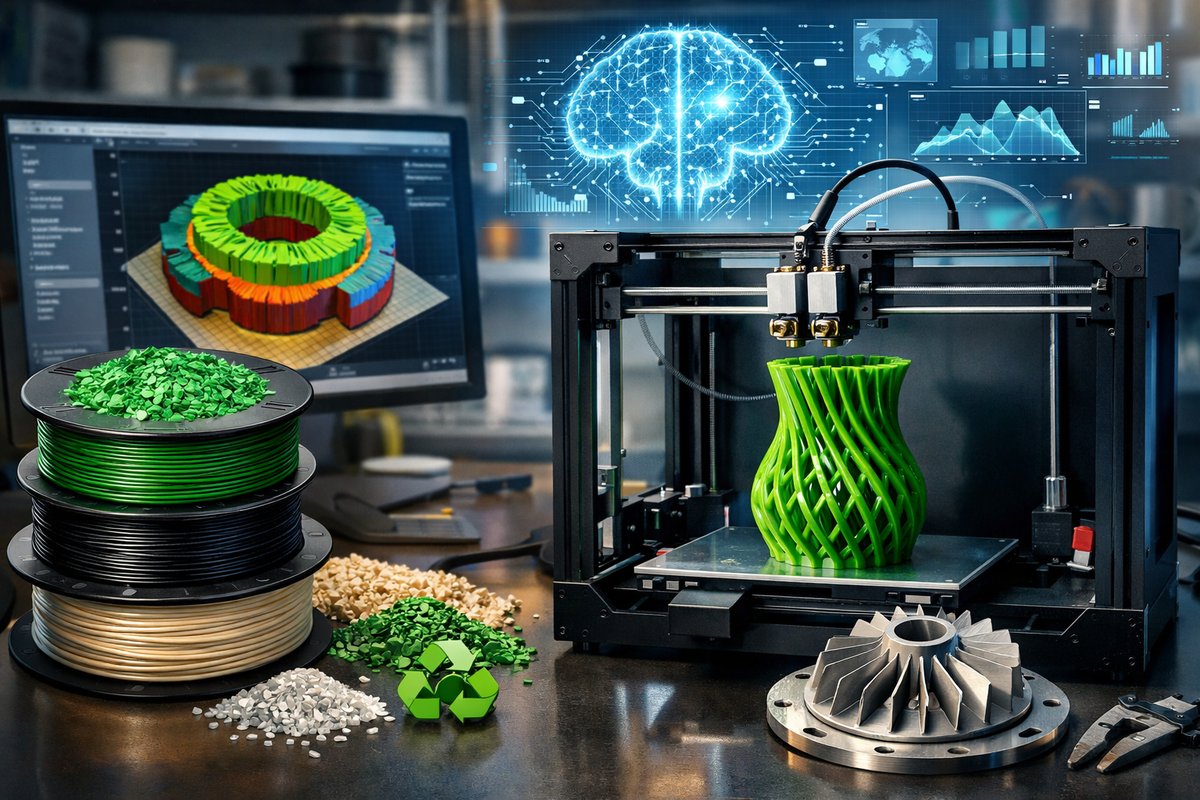

In workshops and labs around the world, a quiet revolution is under way. What began as a novelty-producing simple plastic trinkets from melted filament-has matured into a multifaceted technology capable of prototyping tools, medical models, architectural mock-ups, and intricate art pieces. Yet the promise of affordable, reliable 3D printing hinges on overcoming a trio of challenges: cost, consistency, and ease of use. In this piece, we survey the latest materials, hardware upgrades, and software techniques that are turning desktop machines into robust, cost-effective workhorses.
At the heart of any printer’s budget is filament or resin. Traditional PLA and ABS remain popular for their low cost and ease of handling, but innovators have turned to recycled plastics and composite blends to drive prices down further and reduce environmental impact. Filaments made from reclaimed coffee grounds, ocean plastics, or repurposed consumer waste now fetch prices comparable to standard spools while offering similar print quality. Composite filaments infused with wood, bamboo, or even metal powders lend aesthetic complexity to prints without requiring expensive post-processing.
On the resin side, UV-cured photopolymers have also become more economical. Bulk resin concentrates allow users to mix custom formulations, stretching a single liter into multiples of standard volume. New bio-derived resins-based on plant oils and natural polymers-can match the toughness of petrochemical counterparts at a fraction of the cost, and a growing open-source community shares recipes for DIY resin production. These advances lower entry barriers for resin stereolithography (SLA) and digital light processing (DLP) printers, enabling small studios and individual makers to experiment without breaking the bank.
Time is money, and printing speed has long been a bottleneck. Recent hardware tweaks have accelerated layer-by-layer deposition without sacrificing accuracy. High-flow hot ends with larger nozzles can extrude molten plastic at double or triple the rate of standard setups, while adaptive layer-height sliders let slicing software choose thicker layers in low-detail zones and finer strata in intricate regions. Combined with optimized motion controllers-featuring silent stepper drivers that reduce vibration and ghosting-an FDM machine can halve print durations with no change in dimensional precision.
Beyond single-nozzle setups, multi-extruder and multi-material heads are becoming more accessible. Tool-changing systems automatically swap nozzles mid-print, opening the door to soluble supports, dual-color objects, and functional parts that blend rigid thermoplastics with flexible filaments. On the resin front, grayscale LCD screens and dynamic masking techniques speed up each layer’s curing time, bringing down total print cycles to a fraction of what early resin machines required.
Reliability often hinges on proper calibration. Nozzles must be precisely aligned, beds leveled, and temperatures finely tuned. In recent years, plug-and-play auto-bed-levelling sensors have matured from finicky afterthoughts into dependable tools. Coupled with filament runout detectors and power-failure recovery routines, these sensors guard against print failures caused by small hiccups. High-resolution digital calipers, dial indicators, and smartphone-based scanning apps further streamline the fine-tuning process, allowing even novice users to achieve consistent first layers and tight tolerances.
Software innovations are equally transformative. Open-source slicers have traded clunky interfaces for streamlined workflows, embedding features like real-time print time estimation, dynamic support generation, and variable infill strategies. Cloud-based slicing services leverage remote high-power CPUs and GPUs to slice complex geometries in seconds, freeing local machines from heavy computation. Some platforms even use machine-learning models trained on thousands of successful prints to recommend optimal print settings for a given filament, nozzle size, or geometry, effectively democratizing years of expert tuning.
Cost control also extends to post-processing. Traditional sanding, chemical smoothing, and manual support removal can be labor-intensive and inconsistent. Enclosed blasting cabinets paired with fine media allow for quick and uniform surface finishing of thermoplastic parts, while low-temperature UV curing chambers with programmable light cycles cure resin prints evenly, minimizing warpage and improving mechanical properties. In many makerspaces, communal post-processing rigs now rival the sophistication of industrial finishing workshops.
Scaling up, binder-jetting and powder-bed fusion systems-once the domain of large manufacturers-are shedding their high price tags. Entry-level metal printers now use safe, bakery-style powders and room-temperature binders, enabling small engineering firms to prototype aluminum, stainless, and even titanium parts on site. These developments compress lead times and reduce outsourcing costs, making metal additive manufacturing more feasible for custom tools or low-volume production runs.
Even large-format machines have seen breakthroughs. Build chambers once measured in mere inches now expand to rival conventional CNC routers, letting users print furniture-sized panels or architectural components. On these scales, material cost per cubic inch becomes a critical metric, propelling interest in lightweight infill patterns, geopolymer composites, and recycled construction plastic. By integrating robotics and pick-and-place modules, some workshops are automating multi-step production lines, where parts are printed, finished, and assembled with minimal human intervention.
Energy efficiency also factors into economic feasibility. New power supplies with high conversion rates, brushless direct-drive extruders, and LED-based curing arrays each draw less electricity per gram of material processed. Solar-powered print farms in off-grid locations are now within reach, broadening the technology’s footprint to remote areas for on-demand part fabrication.
Yet the greatest advances often come from the community. Online repositories host tens of thousands of open-license models, from calibration cubes to complex gear assemblies. Shared print profiles, failure reports, and hardware mods proliferate on forums and social media, encouraging rapid iteration and collective learning. Hackerspaces, libraries, and schools have embraced modular printer kits that users can build and upgrade themselves, nurturing skills that go beyond simply pressing “Print.” This spirit of experimentation underpins the quiet but profound revolution in additive manufacturing.
Looking forward, researchers are exploring multi-axis print heads that abandon the traditional Z-axis layering, enabling true free-form deposition and stronger interlayer bonding. Conductive and living materials are entering the mix, promising 3D-printed electronics and tissue scaffolds. As artificial intelligence further integrates with design and slicing tools, printers will anticipate defects, adjust parameters on the fly, and recommend design tweaks for manufacturability.
The result is a virtuous cycle: better materials reduce cost, smarter hardware improves reliability, and intuitive software lowers the learning curve. Whether you’re a hobbyist crafting miniatures, an engineer fabricating custom fixtures, or an artist realizing a sculptural vision, the latest techniques make each layer quicker, cleaner, and more precise. In this ongoing journey from virtual model to physical object, every innovation-no matter how small-can transform a single extruded strand into a masterpiece of possibility.