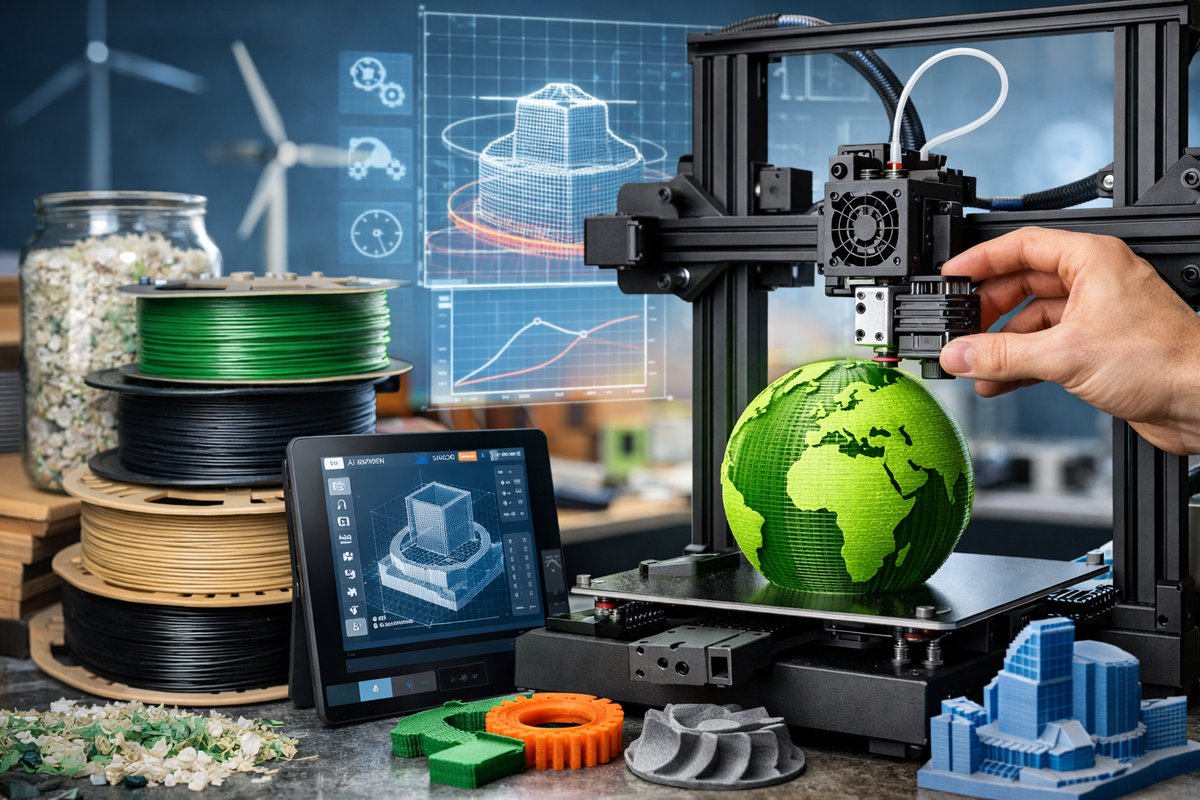

The quiet revolution of 3D printing has moved from niche prototyping labs into garages, maker spaces, and small workshops around the world. What began as experimental builds and novelty projects now underpins serious innovation in engineering, healthcare, and product design. Yet as machines proliferate, a shared goal emerges: make every print more economical, reliable, and sustainable. Advances in materials, hardware add-ons, and software intelligence are converging to deliver higher success rates with lower waste and overhead. For the curious creator or novice administrator, understanding these modular upgrades and smart techniques can unlock new levels of precision without breaking the budget.
Material science sits at the heart of this transformation. While standard PLA remains beloved for its ease of use and biodegradability, makers increasingly turn to filament blends that incorporate recycled plastics, wood fibers, and even metal powders. Recycled PLA spools sourced from consumer waste can reduce raw-material costs by up to 30 percent. Composite filaments infused with finely milled metal or carbon fiber lend mechanical strength that rivals engineered plastics, bridging the gap between hobbyist prints and serious end-use parts. Flexible thermoplastic elastomers with shore hardness tailored to specific applications open doors to wearable prototypes and custom grips. By experimenting with low-cost sample packs and micro-batch spools, users avoid overstocking expensive materials and keep the creative process nimble.
Resin printing, once the domain of dental labs and jewelers, has also adopted greener, budget-friendly workflows. New formulations of plant-based resins cut reliance on petroleum derivatives while retaining ultra-fine resolution. Self-cleaning resin vats feature anti-stick coatings that simplify post-print cleaning and extend the life of costly vats by 50 percent. Curing stations now integrate UV intensity sensors to optimize exposure times and avoid overcooking delicate parts. Some practitioners reclaim excess resin by filtering micro-particles with gravity-fed sieves, returning up to 80 percent of uncured liquid to the reservoir. These iterative improvements reduce material waste and lower the barrier of entry for artists exploring intricate, fluid designs.
On the hardware side, the rise of modular extruder heads and multi-tool carriages has reshaped desktop FDM machines into versatile production platforms. Swap-and-go extruder modules allow users to switch between high-flow nozzles for rapid prototyping, fine-detail nozzles for intricate gears, and flexible-filament hot ends without rewiring the entire machine. Pellet-fed extruders, long confined to industrial systems, are making their way into smaller setups. By bypassing filament spools entirely and directly feeding raw pellets, these extruders slash material cost per kilogram by 40 percent and support a wider palette of engineering plastics.
Software innovation continues to drive efficiency gains at every layer of the build. AI-enhanced slicing engines analyze geometry in real time, dynamically adjusting layer height, wall thickness, and infill density. Critical overhangs and bridging regions receive extra support, while non-load-bearing areas shift to sparse lattices that conserve plastic and shorten print time. Cloud-based slicing profiles allow teams to maintain consistent results across multiple printers, regardless of firmware version or regional voltage differences. A growing ecosystem of open-source slicers offers plugin architectures for custom tool-path generators, adaptive cooling controls, and on-the-fly error detection that can pause a build if a nozzle clog is suspected.
Firmware hacks and community-driven upgrades have long been a hallmark of the maker movement. Auto bed-leveling sensors, once add-on accessories, are now integrated into mainline firmware distributions and supported by major controller boards. Gone are the days of manual mesh probing that eats into creative energy; today’s smart probe routines can compensate for slight frame twist, glass bed curvature, or temperature-induced flex. Users can calibrate axis tilt and belt tension through guided wizards, logging sensor data for future reference and sharing proven profiles online. Plug-and-play touchscreen controllers streamline settings adjustments, while companion smartphone apps provide remote monitoring, filament consumption tracking, and error-alert notifications that respect user privacy by keeping data local when desired.
Environmental control enclosures are another low-cost upgrade that dramatically boosts print consistency, especially with temperature-sensitive materials like ABS, nylon, or polycarbonate. Insulated tents fitted with silent fans and adjustable vents maintain stable internal temperatures above ambient, reducing warping and layer separation. Moisture-absorbing desiccant packs or filament dryers preserve hygroscopic materials by pulling water vapor from storage spools. Even in humid climates, well-sealed filament boxes ensure that prints emerge strong and dimensionally accurate. These simple enclosures invite a more conscious approach to resource use: filament that lasts longer, prints that fail less often, and fewer discarded projects gathering dust.
Measurement and calibration tools may seem low-tech next to lasers and lasers of innovation, but they are vital for precision. Digital calipers accurate to 0.01 millimeter become trusted partners when validating test cubes and tolerance gauges. Bed leveling probes help detect subtle discrepancies in surface plane, guiding shim placement or Z-offset fine-tuning. Using modular calibration towers that gradually ramp wall thickness, creators can identify ideal speed and temperature settings for new material blends. By embedding these quality-assurance steps into an iterative workflow, hobbyists and small-batch manufacturers alike cut out print-and-reject cycles, transforming trial and error into incremental improvement.
Sustainability extends beyond materials to entire production cycles. Desktop filament extruders enable hobbyists to recycle failed prints and support rafts into new usable filament right at the workbench. Some open-source designs incorporate pellet grinders and dual-filament mixing chambers, producing unique color gradients or reinforcing microfibers. On the resin side, centrifugal separation rigs reclaim fine particles from wash baths, minimizing landfill waste. Enthusiasts organize filament exchange drives, swapping surplus spools and keeping communities energized without overstocking global supply chains. By closing the material loop, the 3D printing community demonstrates that innovation needn’t come at the expense of the planet.
Collaboration platforms have matured into vibrant marketplaces for printer profiles, material settings, and design libraries. Open-license repositories host pre-validated print jobs, from functional jigs to art installations, complete with recommended nozzle size, layer height, and bed adhesion methods. Cloud slicing services facilitate ephemeral builds on remote hardware, ideal for teams spread across geographies. Designers can upload models into shared workspaces, annotate critical dimensions, and receive automated print-time estimates before committing to physical prototypes. This software-driven synergy empowers remote learners and seasoned professionals alike to iterate faster, learn from failure, and build on each other’s successes.
Real-world success stories abound. A home-brew electronics enthusiast used a pellet extruder and custom nozzle modules to print heat-resistant shields for a backyard forge. A small engineering firm slashed prototyping costs by blending reclaimed PLA with carbon fiber, producing production-grade fixtures that once required outsourcing. A biomedical startup leverages AI-sliced microstructures to create porous bone implants with just the right balance of rigidity and cell permeability. In each case, the blend of economical materials, modular hardware, and intelligent slicing software turned a previously expensive process into an agile advantage.
Looking ahead, the intersection of machine learning, multi-material co-extrusion, and distributed manufacturing promises to accelerate this revolution. Printers that automatically identify print failures through on-board cameras, then adjust tool paths in real time, are already in development. Novel composites that change color under stress or conduct electricity within printed circuits inch closer to mainstream. As networks of community-run microfactories proliferate, products may be printed on demand at local hubs, slashing shipping costs and carbon footprints. The layered future of additive making is not solely about new machines; it’s about cultivating curiosity, sharing knowledge, and building sustainable ecosystems one filament strand at a time.
Whether you’re a lifelong learner exploring your first calibration cube or an experienced designer refining custom jigs, these cost-effective upgrades and techniques pave the way for more successful prints and a lighter environmental impact. By embracing recycled materials, smart slicing, modular hardware, and open-source collaboration, every maker can take part in a sustainable, emotionally intelligent movement. The journey from digital model to physical object has never been more accessible-and it all starts with a single, perfectly laid layer.