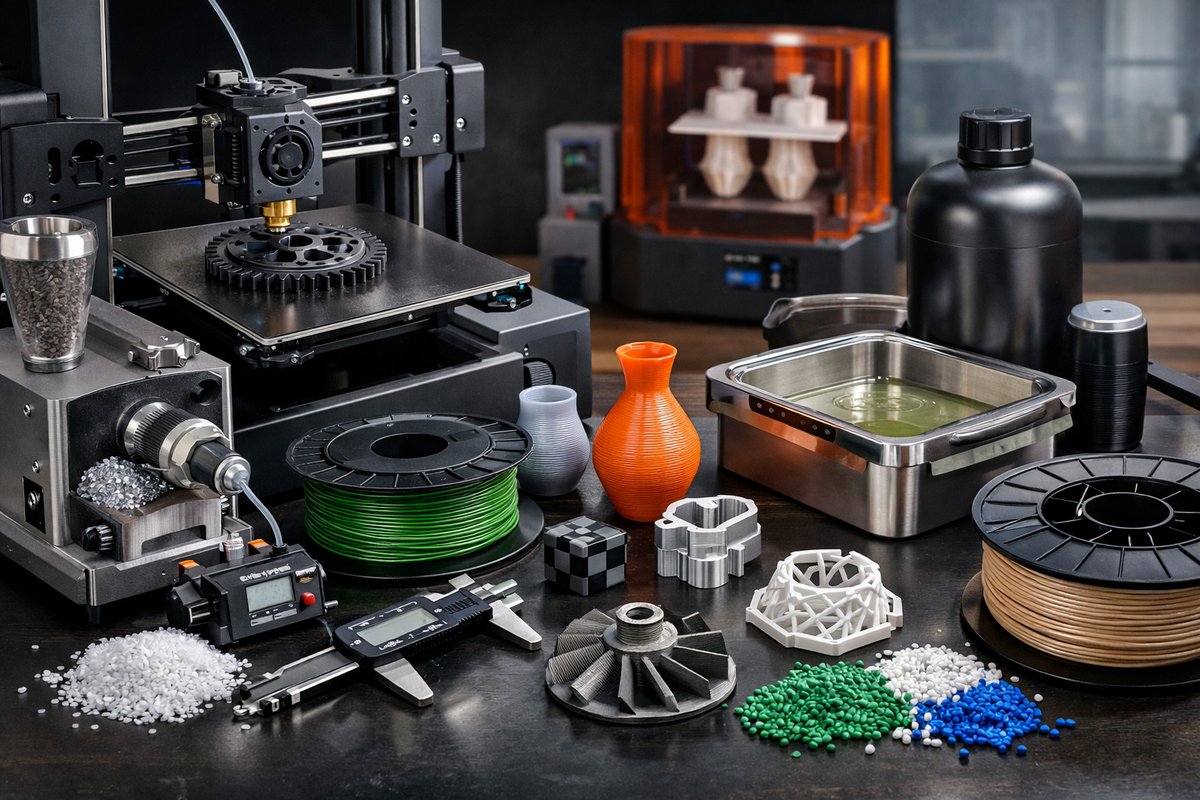

The art of forming objects layer by layer has evolved from a niche prototyping tool into a cornerstone of modern fabrication. Today’s landscape of desktop and industrial 3D printers is driven by an emphasis on affordability without sacrificing precision. Whether you’re a hobbyist creating custom miniatures or an engineer manufacturing functional end-use parts, practical innovations in materials, machinery, and workflow can transform every print bed into a launchpad for creativity and efficiency.
One of the most straightforward ways makers reduce expenses is through recycled and off-market filaments. Several filament extruders and pellet-based recycling systems allow users to reclaim waste prints or use recycled plastic pellets to produce fresh PLA or PETG. By investing once in a desktop filament extruder or subscribing to a recycling kit, small workshops can slash filament costs by up to 60 percent. Recycled PLA not only lowers expenses but also empowers a circular approach, turning failed prints into new startup lines for prototypes.
Resin-based printing has also seen its cost curve flatten thanks to low-cost polymer chemistries and bulk resin delivery. Industrial suppliers now offer large drums of biocompatible or high-toughness resins at per-liter prices that challenge even budget FDM filaments. Combined with modular resin vats and replaceable tank liners, users can swap materials quickly and minimize waste. For those running multiple desktop SLA or DLP machines, switching from single-use cartridges to refillable resin reservoirs is a game changer in unit economics.
Print optimization software, often powered by artificial intelligence, is another emerging cost saver. AI-driven slicers analyze digital models and predict areas prone to warping, bridging, or excessive support. Using cloud-based algorithms, these tools recommend orientation changes, support modifications, and infill patterns that reduce material usage by up to 30 percent. Smarter slicing not only shrinks filament bills but also cuts post-processing labor and improves first-time success rates.
Hardware innovations such as continuous belt printers and modular multi-nozzle heads further drive down per-piece costs. Continuous belt systems allow producers to run long print runs without manual intervention, automatically ejecting finished parts and advancing the build surface. Multi-extruder tool heads enable simultaneous deposition of different materials-rigid cores inside flexible outer shells or soluble supports for complex geometries-resulting in fewer machine changes and faster overall throughput.
Calibration and process control have grown more accessible with plug-and-play sensors and auto-leveling kits. Ultrasonic or capacitive bed-leveling sensors track build plate flatness in real time, compensating for thermal drift and mesh inconsistencies. In hot-end assemblies, thermistor upgrades and nozzle-flow monitoring keep extrusion on cue, cutting down on clog-related failures. These hardware add-ons, priced under a hundred dollars, can prevent wasted mornings recalibrating and dripping plastic.
Material science continues to expand the palette of filaments and resins, offering composites that combine strength with low cost. Carbon fiber or glass-filled PLA blends boost stiffness for functional prototypes, while wood- and metal-fill filaments give a premium finish at lower weight. Cellulose-based and bio-derived polymers are entering the market, promising sustainable end-products and new surface textures. As suppliers refine formulations, the gap between budget plastics and professional-grade materials is narrowing rapidly.
Process automation extends beyond the printer itself. Remote monitoring apps and cloud-hosted print queues allow makers to manage multiple machines from a single dashboard. Built-in cameras stream live progress, while alerts notify you the moment a build finishes or an error is detected. Centralizing prints in the cloud means less printer downtime, fewer aborted jobs, and better scheduling for batch work.
Open-source collaborations and maker networks continue to democratize cost-cutting strategies. Online repositories share DIY modifications for filament feed systems, hardened-steel nozzles engineered for abrasive composites, and build-plate treatments that keep prints firmly attached without adhesives. By contributing back, users refine low-cost hacks into polished upgrades that any novice technician can install.
Consider a small design studio producing decorative vases in various silhouettes. By nesting multiple vases in a single build plate and using automated orientation tools, they reduce print time per vase by 40 percent. After batch production, these team members repurpose off-cuts of flexible support material as packaging padding. The result is a streamlined pipeline that cuts material waste, reduces machine hours, and scales the business without ballooning overhead.
Batch printing strategies also drive down per-item setups and slicing overhead. Grouping parts with similar height and filament requirements maximizes machine runtime. Printed-in-place assemblies, where moving parts form together in a single job, eliminate manual post-assembly steps. These tactics are particularly effective in small-batch manufacturing, where every second of print time and gram of filament matters.
The push toward sustainability in 3D printing is a quiet revolution in itself. Community recycling initiatives collect failed prints to produce fresh pellets, while compostable resins dissolve away in benign chemical baths. Some makers are experimenting with printing frameworks that hold organic matter-seeds, spores, or soil blends-opening paths to living structures that grow after printing. Such developments not only lower environmental impact but also inspire a new generation of applications.
To achieve consistent success, operators apply disciplined troubleshooting protocols: small test prints to validate new filaments, standard cubes for verifying dimensional accuracy, and temperature towers that chart the sweet spot for each polymer. Keeping a log of slicer settings, nozzle sizes, and ambient humidity enables repeatable results. Over time, these data-driven practices reduce trial-and-error waste and heighten confidence when scaling up complex parts.
As 3D printing enters its next decade, the synergy of smarter materials, adaptive hardware, and predictive software will continue compressing costs and boosting reliability. Integrations with augmented reality for remote maintenance, AI-powered part orientation, and novel green polymers point toward a future where additive manufacturing blends seamlessly into home workshops, educational labs, and industrial floors alike. The revolution of making layer by layer is just beginning to reveal its full potential