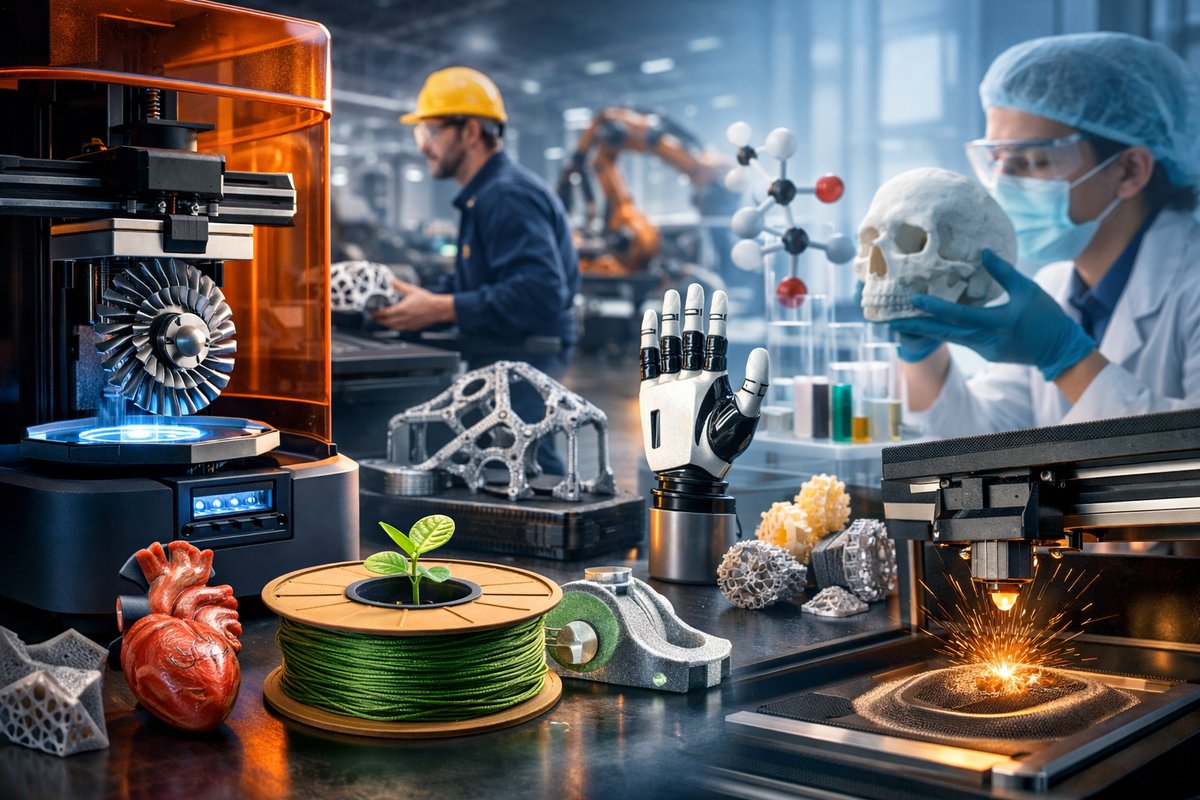

At the heart of 3D printing lies a simple but profound concept: building objects layer by layer from digital designs. This additive manufacturing approach has democratized creation, allowing anyone with a computer and a printer to turn imagination into tangible reality. Yet, the technology’s true potential is only now beginning to be unlocked as innovations address longstanding challenges around cost, speed, material diversity, and environmental impact.
Traditional 3D printing methods, such as fused filament fabrication (FFF) or stereolithography (SLA), have served as the backbone for hobbyists and professionals alike. However, these processes often face trade-offs between print quality, speed, and material expense. The latest wave of advancements seeks to transcend these limitations through a combination of hardware improvements, new materials, and smarter software.
One significant trend is the development of multi-material and composite printing. Instead of relying on a single plastic filament or resin, modern printers can now handle combinations of polymers, metals, ceramics, and even bio-based materials within a single build. This capability not only enriches the functional properties of printed objects-like strength, flexibility, or conductivity-but also opens doors to entirely new applications. For example, engineers can embed conductive traces directly into prototypes, while medical researchers fabricate scaffolds that mimic natural tissue complexity.
Alongside material innovation, speed and precision enhancements have made 3D printing more feasible for rapid prototyping and small-batch production. Technologies such as continuous liquid interface production (CLIP) leverage light and oxygen to cure resin layers in a continuous flow rather than discrete steps, drastically reducing print times without sacrificing detail. Similarly, advancements in laser sintering and powder bed fusion have improved the efficiency and resolution of metal printing, enabling the creation of intricate parts previously impossible to manufacture conventionally.
Another critical factor in making 3D printing more economical is the rise of open-source hardware and software ecosystems. By sharing designs, firmware, and slicing algorithms freely, communities of makers and developers accelerate innovation while lowering costs. This collaborative spirit has led to the emergence of affordable yet capable printers that rival industrial machines in performance. Additionally, improvements in print slicing software optimize material usage and reduce waste, contributing to both cost savings and sustainability.
Environmental considerations are becoming increasingly central to 3D printing’s evolution. The industry is exploring biodegradable and recycled feedstocks to minimize ecological footprints. For instance, filaments made from recycled plastics or plant-based polymers reduce reliance on virgin petroleum products. Furthermore, some processes now incorporate closed-loop recycling systems, where failed prints and support structures are reprocessed into new filament, promoting a circular material economy.
On the user experience front, automation and AI-driven monitoring are enhancing print success rates and reducing manual intervention. Sensors embedded in printers can detect errors like warping or layer misalignment in real time, pausing or adjusting the process to prevent waste. Machine learning algorithms analyze print data to recommend optimal settings tailored to specific materials and geometries, empowering even novices to achieve professional-quality results.
These technological strides are not confined to industrial or professional settings. Hobbyists and educators benefit from increasingly accessible tools that balance affordability with advanced features. Desktop printers now often include enclosed build chambers for temperature control, touchscreen interfaces, and modular components for easy upgrades. The growing availability of cloud-based design libraries and slicing platforms further lowers the barrier to entry, inviting more people to experiment and innovate.
Looking ahead, the fusion of 3D printing with complementary technologies like robotics, augmented reality, and advanced simulation promises to redefine the creative process. Imagine collaborative robotic arms assisting in multi-axis printing or AR overlays guiding assembly and finishing steps. Simultaneously, predictive modeling can simulate mechanical and thermal properties before printing, reducing trial and error.
Ultimately, the quiet revolution of 3D printing is about more than just machines and materials. It’s a shift toward empowering individuals and organizations to rethink how things are made-embracing curiosity, sustainability, and precision. By continually refining the craft of layering, the technology invites us to imagine objects not as fixed artifacts but as evolving expressions of creativity and function.
In this evolving landscape, success in 3D printing hinges on understanding and leveraging the interplay between emerging materials, smarter hardware, and intelligent software. Whether crafting delicate miniatures, functional tools, or biomedical implants, the future of making is layered with possibility.
-
Independent Dual Extruder 3D Printer Motherboard with TMC2208 ...
Top highlights · DMP Motherboard with TMC2208 Driver · Work quieter and more stable · Every Tenlog DMP Motherboard need 7 pcs TMC2208 Driver · Pre-installed ... -
Whoamigo Dual Z-Axis Adjustment Blocks for CR10 3D Printer
NoClogger The Must-Have 3D Printing Tool 3D Printer Extruder Nozzle Cleaning (Blue) ... Flashforge Creator Max Dual Extruder 3D Printer. Add. $87900. current ... -
Anime Prince Bojji Hair Clip 3D Printed Hard Resin Golden Crown ...
Top highlights · Material: 3D Printed Hard Resin · Color: Gold · Include: 1 x Hair Clip (Wig isn't included) · Diameter: 5.5 cm, Height: 4 cm. -
Precise And Adjustable Bed Clip 3 Heatbed Clamp Kit For Cr10 Builds
YANI- Resin 3D Printing Toolkit Elegoo Anycubic Longer. Add. $5039. current ... 20Pcs Bowden Tube Coupling Clip Bowden Collet and Clip Set 3D Printer Accessories ... -
Matte PLA Filament, High Tenacity, Eco Friendly, 1kg Refill for AMS ...
CONSISTENT QUALITY & DIAMETER CONTROL: With precise 1.75mm diameter and ±0.03mm tolerance, this filament ensures reliable, jam-free performance. Advanced ... -
MakerBot PLA Filament for Method 3D Printer - Walmart.com - Walmart
Buy MakerBot PLA Filament for Method 3D Printer - Biodegradable Corn-Based Plastic for Office-Friendly Prototyping (True Black, 0.75kg) at Walmart.com.