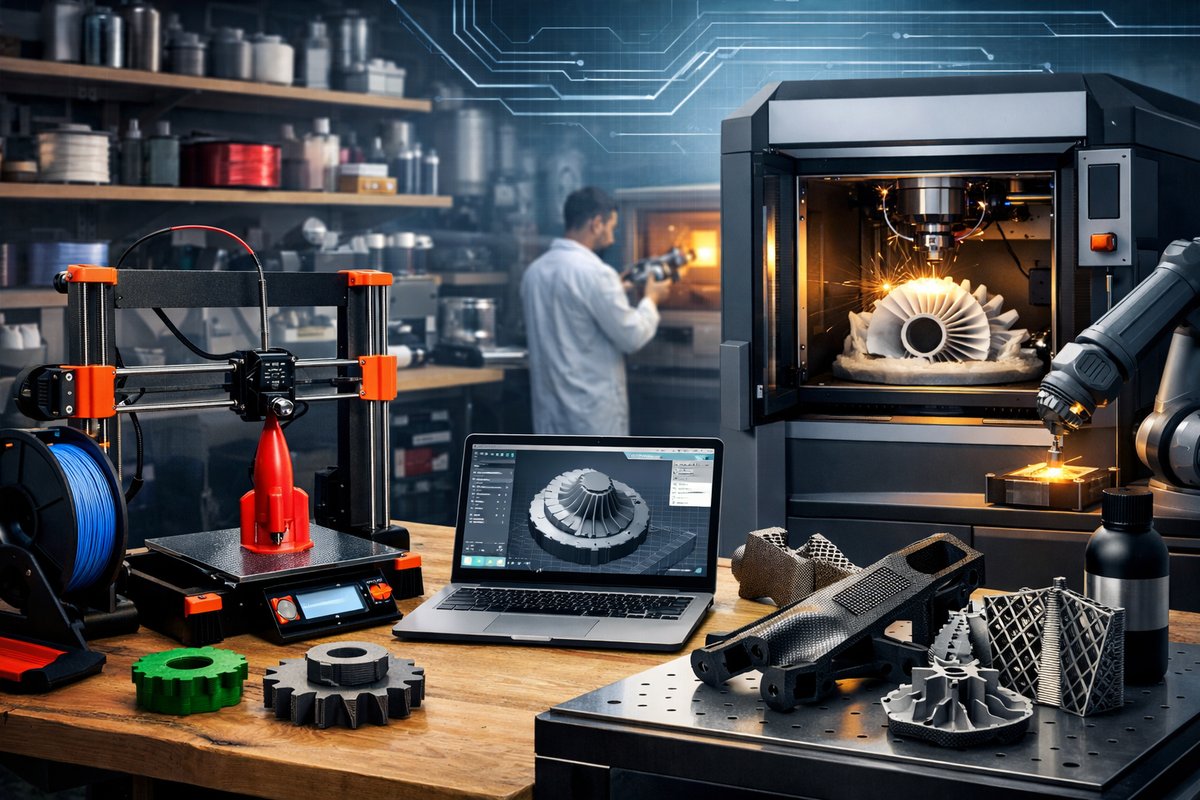

In studios, garages, and laboratories around the world, the quiet revolution of 3D printing continues to unfold. What once required industrial-grade machines and specialized training has grown into a grassroots movement of makers, engineers, and artists experimenting with plastic filament, resin vats, and powdered metals. Today, a new wave of technologies and techniques is making additive manufacturing more economical, feasible, and ultimately successful for a range of users-from hobbyists prototyping miniatures to engineers fabricating end-use parts. This exploration of the latest developments will reveal how smarter machines, advanced materials, and streamlined workflows are reshaping what’s possible, one layer at a time.
At the heart of affordable 3D printing lies hardware innovation. Desktop fused filament fabrication (FFF) machines now sport higher-precision components, improved motion systems, and enclosed build chambers, all at price points that rival mid-range electronics. Core-XY kinematics and belt tension optimization keep print heads moving smoothly, reducing artifacts and allowing finer detail without a dramatic cost increase. Meanwhile, entry-level resin printers have adopted more stable light engines and improved cooling, lengthening the lifetime of ultraviolet light sources and slashing maintenance costs. The common thread is smarter engineering: interchangeable modules, precision lead screws, and calibration sensors that make once-finicky machines almost plug-and-play.
Equally transformative is the explosion of material options. A few years ago, hobbyist printers were limited to generic polylactic acid, or PLA, in vibrant but brittle forms. Now, multi-material platforms enable printing with flexible elastomers, impact-resistant nylon, carbon-fiber-filled composites, and even metal-particle blends. These materials bridge the gap between plastic prototypes and fully functional parts. On the resin side, bio-based formulas and low-odor chemistries have emerged, making vat systems friendlier for desktop environments. Some formulations cure faster and exhibit less shrinkage, reducing post-processing time and waste. In parallel, bulk purchasing options and open-source filament recipes help lower material costs, turning every kilogram of plastic or resin into a laboratory of experimentation rather than a black-box expense.
Behind every successful print lies software that orchestrates complex trades-offs between speed, strength, and surface quality. Slicing engines have matured with adaptive layer-height algorithms that vary feature resolution on the fly. Fine details receive thinner layers while flat surfaces build faster with thicker slices, shaving hours off multi-inch parts without sacrificing fidelity. Support-structure generators now place dissolvable or easily snapped-away scaffolding only where needed, minimizing both material use and post-print cleanup. Beyond slicing, emerging cloud-based platforms offer collaborative file management and version control, enabling teams across continents to iterate on designs in unison. Even novice users benefit from pre-validated profiles that match filament brands, machine models, and environmental conditions, yielding printouts that just work.
Economic viability often hinges on efficiency in post-processing. Manual removal of supports, sanding, and finishing can eat hours of labor, turning rapid prototyping into a slow craft. To tackle this bottleneck, automated washing and curing stations integrate with desktop resin systems, standardizing every step from rinse time to ultraviolet exposure. Some setups include robotics-assisted removal of parts from build plates or turntables that gently rotate prints through a solvent bath, ensuring uniform cleaning. For filament prints, quick-release build surfaces and adjustable heat beds simplify part removal, reducing the risk of damage. Even simple upgrades-like magnetic build plates or textured masking sheets-can boost first-layer adhesion and cut wasted prints.
Sustainability has become a guiding principle as the number of desktop machines and printed objects multiplies. Closed-loop recycling systems shred failed prints and support structures into reusable pellets, feeding back into filament extruders. Certain multi-filament splicing attachments allow live mixing of colors or materials as the spool unwinds, injecting creativity while reducing leftover scraps. Material exchange programs, where local makers share or swap unused filament, encourage community-level waste reduction. On the resin front, developers are refining non-toxic chemistries and more efficient photoinitiators that require lower exposure energy, cutting both environmental impact and electricity bills.
One of the most intriguing frontiers lies at the intersection of 3D printing and artificial intelligence. Generative design software can propose organic, lattice-based structures optimized for weight, strength, and material usage-all before a single layer is printed. By simulating applied loads and thermal conditions, these tools identify the minimal geometry needed, reducing both print time and plastic consumption. The resulting files often feature complex internal channels and bionic forms that would be impossible to craft by hand. As machine-learning models train on successful print parameters, cloud-connected printers can adjust extrusion temperatures and retraction speeds in real time, dialing in perfect settings based on billions of points of historical data.
Beyond the desktop, hybrid manufacturing systems are blurring the lines between subtractive and additive processes. Combined 3D printing and CNC milling machines can print a rough geometry in plastic or wax, then refine surfaces with a high-speed spindle. This synergy slashes both cycle times and the need for secondary jigs. In metal fabrication, laser-directed energy deposition heads can deposit layers of metal powder or wire onto substrates, then machine critical surfaces to tolerances within fractions of a millimeter. While these technologies still command a premium, modular attachments that retrofit onto more affordable machines are beginning to democratize their use.
Making 3D printing feasible for production-scale applications also requires smart inventory and supply-chain practices. Distributed manufacturing models, where small print farms across multiple locations serve local customers, reduce shipping distances and lead times. Print-on-demand services utilize networks of compatible machines to fulfill orders, optimizing capacity by tapping into idle time on low-cost desktop systems. For small businesses, this means avoiding large upfront investments in inventory and tooling. Digital warehouses storing hundreds of printable designs can translate into virtual catalogs, with parts produced only when a customer clicks “order.” The result is a leaner, more responsive production ecosystem.
For those eager to harness these advances, a handful of practical techniques can make the difference between frustrating trial-and-error and consistent success. First, establish a regular calibration routine. Automated bed leveling, once a luxury feature, is now common even on budget machines. Spending a few minutes on calibration before each print can save hours of troubleshooting later. Second, experiment with filament drying methods. Humidity-sensitive polymers benefit from stored containers or simple food-dehydrator setups. Third, follow material manufacturers’ recommended profiles but be prepared to tweak temperatures and flow rates based on environmental conditions. Finally, embrace community knowledge. Online forums, open-source repositories, and local maker groups share real-world insights into machine quirks and material behaviors, helping newcomers bypass pitfalls with proven workarounds.
Despite all the progress, challenges remain. High-temperature polymers still demand exotic hot ends and chambers. Metal printers require powder-handling protocols that can intimidate non-industrial users. And regulatory frameworks for medical, aerospace, or safety-critical parts continue to evolve. Yet, each barrier invites fresh innovation. Researchers are developing polymer pellets that feed directly into screw-driven extruders, bypassing the need for pre-extruded filament. New photopolymer resins activated by visible light promise safer labs and homes. And open standards for build-parameter reporting aim to simplify certification in regulated industries.
The story of 3D printing is far from finished. With each new material breakthrough, smarter slice algorithm, or modular hardware upgrade, the boundary between digital concept and tangible object blurs further. Additive manufacturing is shedding its reputation as a niche prototyping trick, evolving into a versatile, cost-effective method for small-batch production, custom tooling, and even sustainable circular manufacturing. As these layered realities coalesce, the only limit left may be the reach of our own imagination.
Whether you’re a hobbyist printing your first miniatures, an entrepreneur launching a startup, or an engineer optimizing a production line, the tools and techniques described here offer a roadmap to more economical, feasible, and successful 3D printing. The revolution has already begun-layer by layer, build plate by build plate-and anyone with curiosity and a desktop machine can join in crafting the future, one print at a time.