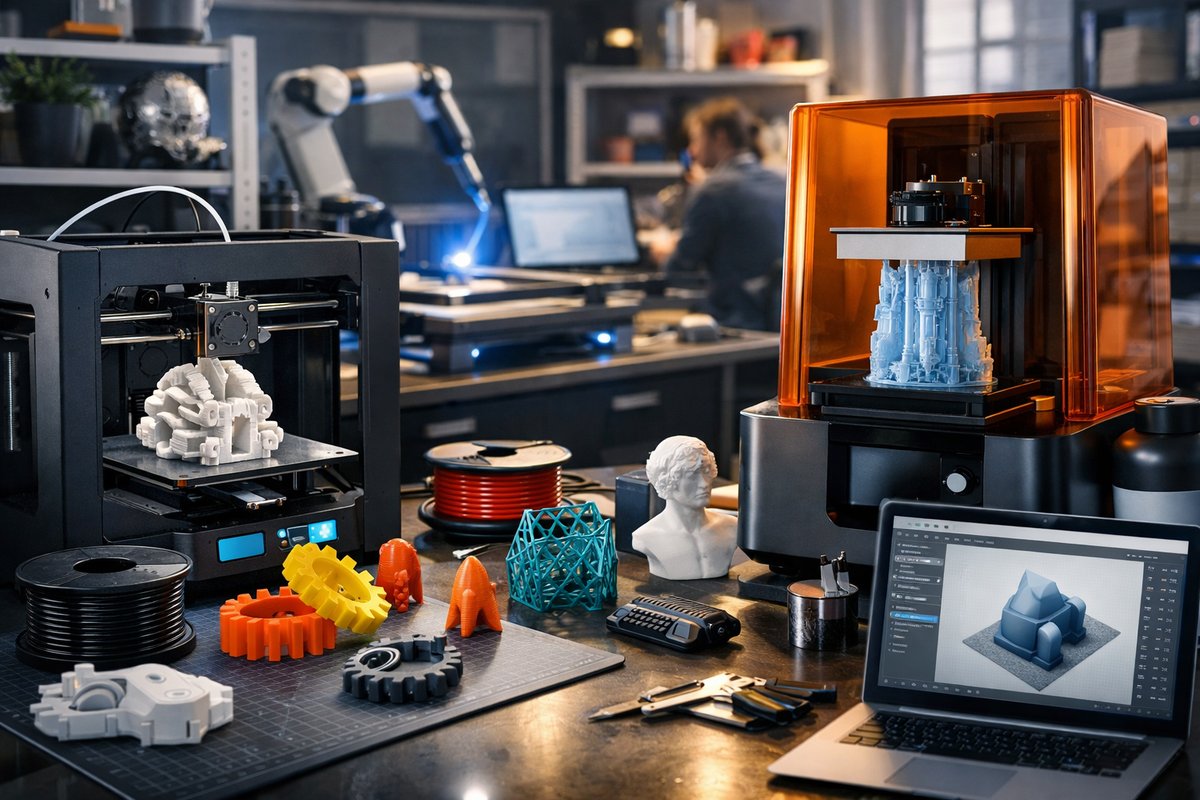

Additive manufacturing has come a long way since its earliest days of slow, expensive builds. What once required specialized labs and hefty budgets can now be tackled in a compact desktop machine humming away in a garage or a studio. The intersection of playful experimentation and precision engineering has inspired a wave of techniques and technologies aimed squarely at making 3D printing more economical, feasible, and successful. As layer upon layer of filament, resin, or metal powder builds up to form complex shapes, today’s workflows emphasize smarter resource use, modular hardware upgrades, and software-driven automation. The result is a quiet revolution of making where budgets are stretched further, waste is minimized, and the joy of seeing a digital model become a physical object remains undiminished.
Mechanical motion systems have been a major focus in cost-cutting hardware upgrades. CoreXY and belt-driven platforms increasingly replace older lead-screw or single-axis gantry designs, reducing part count and maintenance requirements. Delta-style printers, with three arms working in unison, now offer larger build volumes on a smaller footprint, making them ideal for oversized prototypes without a sprawling machine shop. Multi-head extrusion systems let users switch between two or more filament types mid-print-mixing rigid materials for structure and flexible filaments for hinges-without needing multiple print jobs. For shops scaling up production, compact printer kits allow linear rails and easy-to-source electronics to be swapped in, extending service life without investing in a brand-new machine. Straightforward upgrades such as quick-release build plates, magnetic bed surfaces, and snap-in heater cartridge assemblies cut downtime and reduce the need for pricey replacement parts.
Material science continues to drive both sustainability and cost reduction. Recycled PETG filament derived from reclaimed water bottles is gaining traction, offering similar strength and temperature resistance to virgin PLA at a fraction of the cost. Pellet-fed extruders let users process industrial-grade polymer pellets directly, bypassing expensive spool manufacturing and opening the door to specialty blends such as carbon-fiber-filled or glass-reinforced thermoplastics. On the resin side, bio-based photopolymers formulated from plant oils and sustainable feedstocks deliver fine detail with less environmental impact. Powder-bed fusion techniques, long confined to metal prototyping, are trickling down into community labs, where polymer powders can be sintered using low-cost infrared lamps and open-source control boards. These approaches emphasize closed-loop recycling-collecting powder that falls from each build, sieving it for reuse, and mixing it with fresh material-dramatically lowering material waste.
The software ecosystem around 3D printing has matured into a key cost-saver. Intelligent slicing engines now use machine learning to predict optimal print speeds, nozzle temperatures, and support structures based on part geometry and material selection. Automatic orientation algorithms position parts to minimize support volume and reduce build time without sacrificing surface quality. Cloud-based slicing platforms allow teams to upload models directly from CAD software and queue prints on remote machines, enabling distributed manufacturing with centralized oversight. Built-in process monitoring tools provide real-time estimates of filament consumption, letting users stock supplies more accurately. Customizable macros can automate bed-leveling routines, prime extruders, and even purge unused filament, reducing human error and ensuring consistent first layers. Together, these developments turn slicing from a static step into a dynamic, adaptive workflow that keeps printers running at peak efficiency.
Optimizing the printing process itself remains an art form, one that blends digital planning with hands-on adjustment. Effective part orientation-tilting curved surfaces at precise angles-can halve the need for support scaffolding, saving both filament and post-processing time. Batch printing of small parts on a single build plate minimizes idle periods and lets operators launch overnight runs. Dedicated print-farm management software tracks individual printer health, notifies users of filament run-outs or finish times, and even pauses or restarts jobs after minor interruptions. Environmental controls such as low-cost enclosures with humidity sensors stabilize the printing atmosphere, preventing warping during temperature swings. For resin printers, open-source wash and cure stations circulate cleaning fluid automatically and use adjustable LED arrays to uniformly post-cure parts, cutting labor while ensuring consistent mechanical properties.
Reliability improvements have been critical to turning prototypes into production-ready parts. Filament-run-out sensors and auto-filament-cut detectors stop prints before layers fail, allowing simple refill and resume routines. Closed-loop extrusion motors track actual filament movement, adjusting feed rates on the fly to maintain exact flow-even when nozzle pressure fluctuates. Self-levelling beds use capacitive or inductive probes to map platform curvature, compensating in software rather than relying on manual screws. Thermal-runaway protection firmware and power-loss recovery features protect long prints from catastrophic failures, enabling multi-day builds without constant supervision. Collectively, these safeguards mean fewer aborted jobs, less wasted material, and higher first-print success rates-critical factors when every gram of polymer counts.
Beyond machines and materials, the open-source maker community remains an engine for accessible innovation. Modular upgrade ecosystems let hobbyists buy inexpensive base units and add high-precision motion modules, dual-extrusion heads, or even laser engraver attachments as budgets allow. Online repositories host thousands of calibration profiles, tuning guides, and custom firmware variants, giving newcomers a head start without reinventing the wheel. Community-driven forums and video tutorials democratize troubleshooting, turning expensive service calls into peer-to-peer support sessions. Local maker spaces and coworking labs offer shared printers and bulk materials purchasing power, lowering the entry barrier for startups and student projects.
Looking ahead, the next wave of additive breakthroughs promises even greater economies of scale. Multi-material mixing on the fly-combining rigid, flexible, and electrically conductive filaments in a single pass-could enable fully functional prototypes straight off the build plate. Continuous liquid interface production (CLIP) and high-speed DLP approaches are being adapted for desktop footprints, cutting print times by an order of magnitude. Advanced sensor arrays, combined with artificial intelligence, will predict nozzle clogs or layer shifts before they occur, further boosting reliability. Sustainability initiatives aim to close the loop entirely, with onsite recycling and filament re-extrusion systems turning failed prints back into feedstock. As tools become smarter, machines more affordable, and materials increasingly sustainable, 3D printing stands ready to transform everything from spare parts inventories to bespoke medical implants. Whatever your next project-an ergonomic tool, a decorative sculpture, or a precision jig-the layered revolution makes it possible to bring ideas to life without compromise.