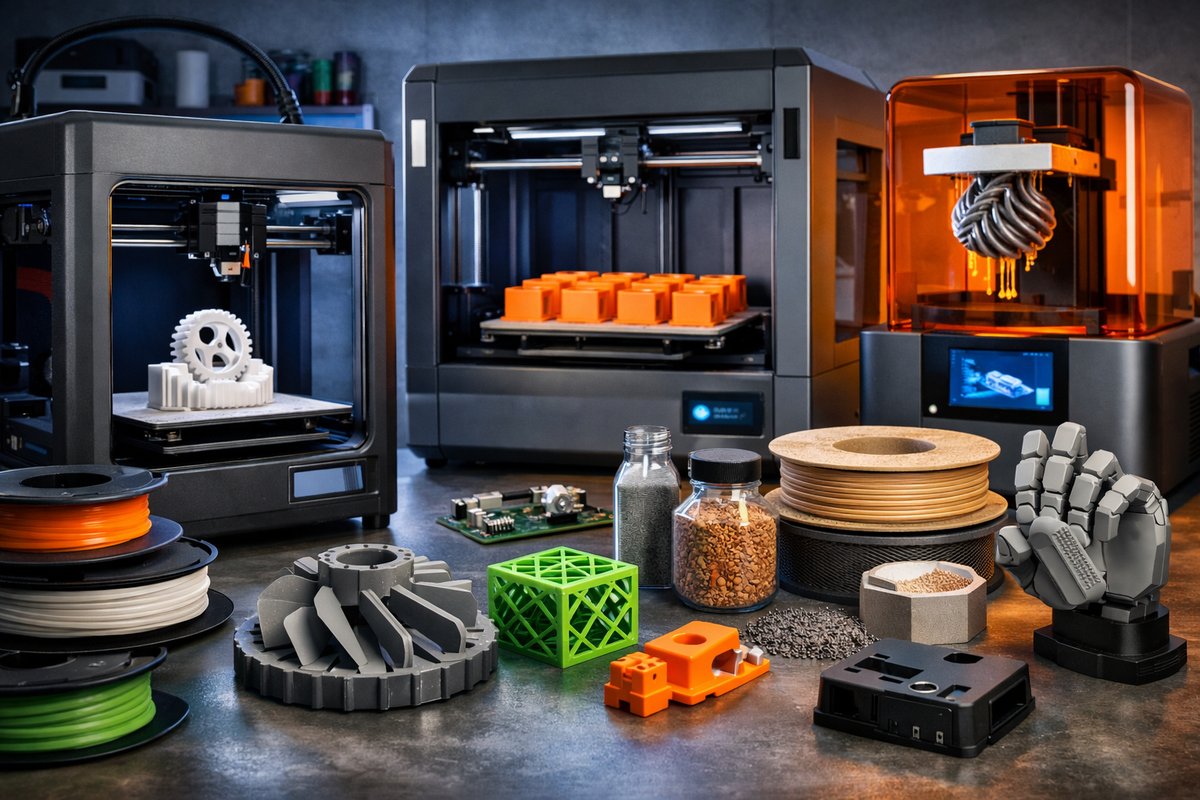

The moment you watch a nozzle trace the first path of filament or see a tray of resin cured by UV light, it’s clear that 3D printing is more than just a hobby. It’s a melding of imagination and precision that ripples across industries. For years, cost barriers and unpredictable yields held back wider adoption. Today, a suite of innovations-from smarter slicing algorithms to recycled materials-has quietly driven costs down and reliability up. What began as a tool for rapid prototyping now stands ready to reshape manufacturing, health care, education, and even the arts, all without demanding a Fortune 500 budget.
Early adopters of fused deposition modeling (FDM) printers learned to troubleshoot filament jams, tweak bed leveling, and live with chunky layer lines. Now, dual-extrusion tool heads and high-flow nozzles can push speeds past 200 millimeters per second while still yielding smooth surfaces. Direct-drive extruders have largely tamed flexible filaments, and Bowden systems refined their feeding paths. Hobbyists can swap nozzles in minutes, testing hardened steel for abrasive carbon composites or ruby tips for extended wear. Rather than buying a new machine, modular upgrades let users customize thermal blocks, cooling ducts, or multi-filament hoppers-stretching every dollar invested in their printer’s frame.
While hardware has leapt forward, the most dramatic cost savings often come from software. Next-gen slicing platforms now incorporate adaptive layer heights that add resolution only where curvature demands it. Intelligent support generation builds slender, tree-like scaffolding that peels away cleanly and slashes material consumption. Time-to-first-layer predictions and dynamic flow compensation reduce the number of failed starts. Many tools offer preset profiles for popular printers, dramatically shortening the calibration cycle that once cost hours of trial and error. By automating bed-level mapping and extrusion calibration, open-source firmware has turned one-time setup chores into background tasks.
Resin printing technologies have also broken free of the price plateau. High-resolution LCD panels once reserved for industrial vat systems are now sourced from midrange tablets and repurposed in desktop machines. Combined with low-viscosity UV resins infused with bio-based monomers, these rigs deliver fine detail at a fraction of the per-part cost seen just three years ago. Batch printing multiple miniatures or dental models in one cycle boosts throughput, and continuous tilt platforms can slide cured objects out while fresh resin floods the gap-eliminating the peeling forces that slow down conventional vats. For labs and educators, this translates into more lessons, more prototypes, and less budget stress.
On the powdered end of the spectrum, selective laser sintering and binder jetting once required million-dollar setups. Today, desktop metal printers leverage binder jet workflows that infiltrate sintered polymer precursors with bronze or copper. These hybrid processes sidestep costly inert-gas chambers. Polymer-infused metal prints undergo a post-sintering bake that burns off the plastic and fuses metal grains, yielding parts with respectable strength and surface finish. As startups push down the price of laser sources and high-speed galvo mirrors, small-batch metal production is inching closer to the budgets of design workshops and research labs.
Material science has emerged as a cost battleground. Biodegradable PLA remains the cheapest filament, but recycled PETG filaments-spun from reclaimed soda bottles-offer superior strength and temperature resistance at a slight premium. Composite blends combine PLA with wood flour for an organic finish or embed chopped carbon fiber for stiffness rivaling engineering plastics. Users with desktop filament extruders can transform failed prints and scraps into fresh spools, cutting waste and material outlay in one sweep. Several community-driven recipes guide recyclers through drying, shredding, and feeding routines that maximize filament quality and minimize jams.
In the realm of hardware hacks, it’s the little cost-effective add-ons that compound savings. Magnetic build plates snap on and off in seconds, granting perfect adhesion without glue or tape. Silicone sock covers on hot ends keep heat stable and slicing consistent. DIY enclosures built from acrylic panels or repurposed cabinets let low-cost printers handle engineered filaments like nylon or polycarbonate that need elevated chamber temperatures. A simple Raspberry Pi running open-source monitoring software can stream webcam feeds, send print-complete alerts, and even perform forced shutdowns if a print runs awry-protecting machines and properties without investing in industrial control systems.
Batch printing plays another strategic role in cost efficiency. Rather than launching dozens of single-part jobs, makers nest multiple objects in a single build volume. Clever orientation tools minimize support, and feeder spindles preheat multiple filament colors during a multi-color job. On the supply side, bulk spools and sample packs reduce per-kilogram costs, and group buys within online communities can shave off another 10 to 15 percent. Even anti-stringing washes-once sold as specialty solvents-can be replaced by simple isopropyl alcohol baths, cutting fluid costs without harming surface quality.
Calibration and quality assurance have also become easier and cheaper. Automated bed leveling systems use capacitive or inductive sensors to scan dozens of points on the print surface, generating a height map that firmware compensates in real time. Thermal sensors embedded in nozzle blocks and chamber walls monitor temperature fluctuations, feeding data back to slicing profiles that adjust extrusion rates on the fly. Precision digital calipers and inexpensive surface plates let makers measure shrink rates in custom filament blends, guiding tweaks that rescue prints otherwise destined for the scrap bin.
Sustainability sits at the heart of the new cost paradigm. Several printers now offer waste-reduction modes that redirect failed prints into internal recycling bins. Dissolvable supports made from biodegradable polymers wash away in warm water, eliminating physical cleanup and hazardous solvent use. Solvent recycling stations recover isopropyl alcohol used for cleaning resin prints, turning it into a closed-loop system. By cutting both material and cleanup costs, green workflows pay dividends that go beyond budget-making every print more ethically sound.
In education and small business settings, these trends have democratized additive manufacturing. High-schools run fleets of low-cost printers to teach engineering fundamentals. Design studios churn out jigs and fixtures on demand, avoiding expensive custom machining. Product developers create dozens of functional prototypes before ever touching a CNC mill. In medical research, labs print organ models for surgical planning or custom fixtures for tissue culture. The ability to iterate quickly-and affordably-accelerates innovation cycles and shrinks time-to-market for new ideas.
Looking forward, the integration of artificial intelligence and generative design promises further cost compression. AI-driven slicers will simulate print failures before a single layer is laid, suggesting orientation changes or support tweaks that maximize strength and minimize material. Cloud-based marketplaces will match print jobs with underused machines around the world, turning downtime into revenue and slashing shipping footprints. One-click workflows will guide non-technical users through part submission, material selection, and post-processing, transforming making from a niche skill into an everyday toolset.
The promise of layer-by-layer creation has never been more accessible. By embracing modular upgrades, open-source software, recycled materials, and smart workflows, makers of all stripes can drive costs down without sacrificing reliability or environmental responsibility. Every nozzle turned, every resin cured, and every filament recycled chips away at the barriers that once confined 3D printing to specialized labs. Today, the quiet revolution of making invites anyone with curiosity and a few dollars to join in-and start reshaping the world one layer at a time.