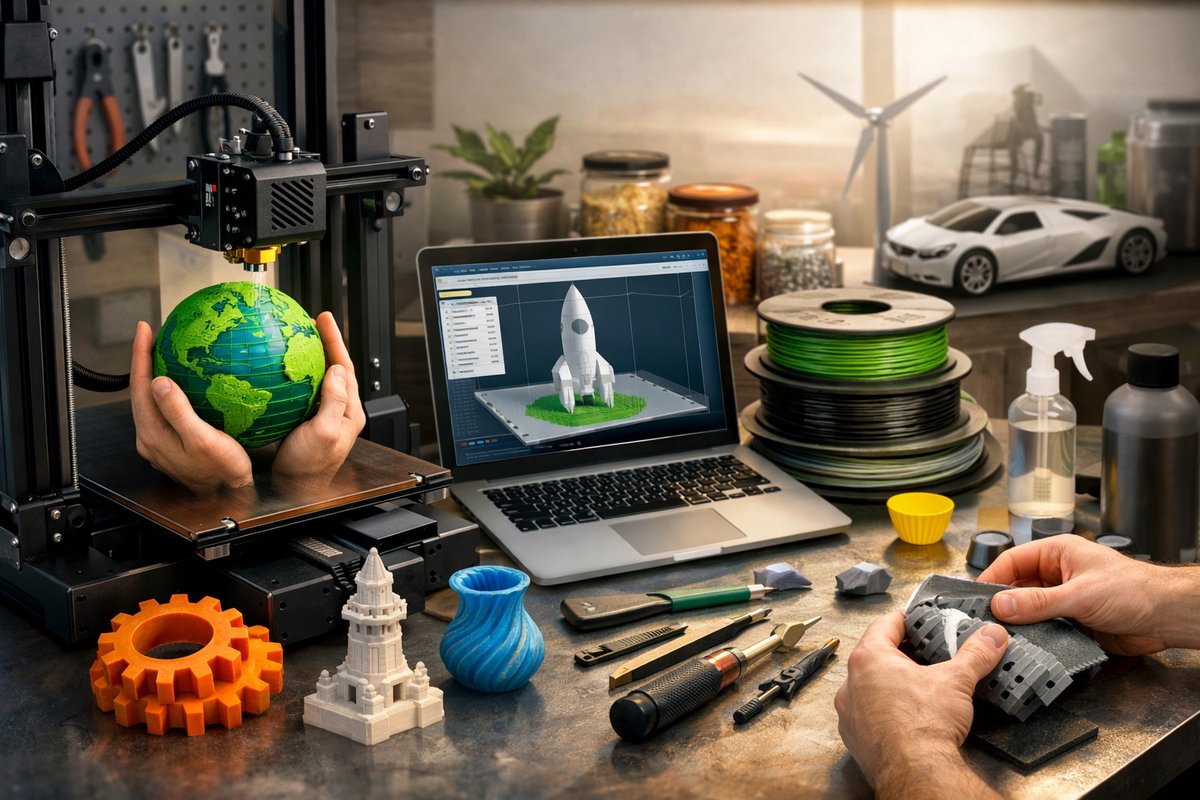

The rapid evolution of additive manufacturing has opened new doors for hobbyists, designers, engineers, and educators alike. Desktop 3D printers have become accessible enough to fit on a crowded workbench, while industrial machines can produce functional metal parts for aerospace or medical applications. Whether you’re experimenting with your first plastic figurine or developing a complex prototype for production, understanding the core components-hardware, materials, software, and workflow-will help you transform digital designs into physical objects with precision and confidence.
It all starts with the printer itself. Fused Deposition Modeling (FDM) machines dominate the desktop market, layering molten thermoplastic filament through a heated nozzle onto a build plate. Their straightforward mechanics and wide choice of materials make them ideal for beginners. Stereolithography (SLA) and Digital Light Processing (DLP) systems use light to cure liquid resin in ultra-fine layers, delivering parts with smoother surfaces and finer details. Selective Laser Sintering (SLS) melts powdered materials to produce complex geometries without support structures, but these systems often come at higher cost and require dedicated safety measures. Evaluate build volume, resolution, speed, and reliability to find a printer that aligns with your projects and budget.
Beyond the core machine, key hardware options will shape your success. Nozzle size affects resolution and print speed: a smaller diameter yields finer detail but slower builds, while a larger nozzle lays down material more quickly for functional prototypes. Dual-extruder systems allow two filaments to run side by side-perfect for soluble support structures or combining colors. A heated build plate reduces warping when printing materials prone to shrinkage, such as ABS or nylon. Some advanced printers include automatic bed leveling sensors that map plate irregularities and compensate in real time, saving you from tedious manual adjustments.
Getting prints to stick to the build surface consistently is an art in itself. Tape, glue sticks, specialized build plates, or removable adhesive sheets each have a role, depending on the filament. Fine calibration of nozzle height, bed temperature, and cooling fan settings helps prevent first-layer failures. Routine maintenance-cleaning the nozzle, tightening belts, lubricating linear rails-keeps your printer humming and reduces print artifacts like layer shifts or gaps. Logging changes and results in a print journal can guide you when optimizing new filaments or intricate geometries.
Materials science lies at the heart of 3D printing. Polylactic Acid (PLA) remains a go-to choice for its ease of use, biodegradability, and minimal odor. Acrylonitrile Butadiene Styrene (ABS) is tougher and heat-resistant, though it demands an enclosed chamber to avoid warping. PETG blends strength with flexibility and chemical resistance, making it popular for functional parts. This family of thermoplastics covers most beginner needs, but exploring each filament’s glass transition temperature, tensile strength, and impact resistance will reveal the right candidate for your application.
For more demanding tasks, specialty filaments expand the design palette. Nylon offers exceptional toughness and low friction, ideal for gears, bearings, or wear-resistant prototypes. Composite filaments embed wood fibers, metal powders, or carbon fiber into a polymer matrix for unique aesthetic or mechanical properties. Conductive or magnetic materials bring electronics integration within reach. Each of these filaments often requires adjustments in print temperature, flow rate, or cooling strategy, so thorough test cubes and bridging trials are essential before committing to a large model.
Your digital workflow hinges on slicing software that translates CAD or mesh files into a series of layered instructions. Popular open-source slicers provide intuitive controls for layer height, infill density, print speed, and support generation. Advanced features-adaptive layer heights, variable extrusion width, or seam hiding-can dramatically improve surface finish and strength. Learning to tweak retraction settings and acceleration profiles will reduce stringing and ringing artifacts, producing cleaner prints with less post-processing.
Support structures enable overhangs and complex geometries, but they add material waste and cleanup time. Tree-style supports branch out only where needed, minimizing contact points, while lattice or grid patterns offer predictable removal and strength. Custom supports let you reinforce critical areas without overbuilding. Strategic orientation of the model can reduce unsupported areas, and breaking a complex design into multiple parts may ease assembly and post-processing.
Post-processing elevates a rough print into a polished object. Sanding with progressively finer grits smooths layer lines on FDM parts. Chemical vapor smoothing for ABS can produce a glossy, uniform surface without losing detail. Resin prints benefit from rinsing in isopropyl alcohol and final curing under UV light to reach full mechanical properties. Primer, paints, or clear coats add color and protection. For metal or composite prints, specialized polishing kits or tumbling barrels can reveal the embedded particles and create striking finishes.
Printing in multiple materials or colors introduces fresh opportunities for creativity. Multi-extruder setups can mix filaments mid-print, but flow calibration must be spot on to avoid clogs or under-extrusion. Filament-swapping scripts pause prints at preset layers so you can change spools manually. Some monochrome printers now support gradient filaments that transition between colors along the spool, creating vibrant prints without hardware upgrades.
As the maker community grows, so does the commitment to environmental responsibility. Recycling programs and filament-extrusion kits let you transform failed prints and plastic waste into fresh spools. Biodegradable polymers reduce long-term impact, while energy-efficient printers and smart power controls shrink your carbon footprint. Teaching sustainable design workflows in schools and makerspaces inspires the next generation to innovate responsibly.
Safe operation and proper maintenance ensure a long service life for your printer and protect you from hazards. Ventilation or air filtration is crucial when working with resin or high-temperature filaments. Wear protective gloves and eye protection during chemical treatments. Keep a maintenance log, inspect wiring connections periodically, and replace nozzles or belts at signs of wear. A clean, organized workspace mitigates the risk of accidents and makes setup and teardown faster.
At the heart of 3D printing lies an open ecosystem of collaboration. Online forums, local maker meetups, and social media groups offer design tips, troubleshooting advice, and inspiration. Sharing modified printer firmware, custom slicing profiles, or experimental material blends accelerates collective learning. Many open-source projects have emerged from this culture, providing affordable printer kits, community-driven upgrades, and freely available CAD libraries.
Looking ahead, advanced technologies promise to push boundaries even further. Metal printing through powder bed fusion and directed energy deposition is becoming more accessible, enabling lightweight, high-strength parts for aerospace, automotive, and medical implants. Bioprinting research explores living tissues and organ scaffolds, raising exciting possibilities for regenerative medicine. New photopolymer formulations and high-speed continuous resin printing could bring office-safe, production-level capabilities to every desk.
Whether you’re dreaming up functional prototypes, artistic sculptures, or one-off replacement parts, mastering the interplay of hardware, materials, software, and post-processing unlocks the full potential of 3D printing. Embrace experimentation, share your findings, and commit to sustainable practices. Each successful print is a step toward a future where ideas take shape as quickly as they emerge in the mind. The world is waiting for what you’ll build next.