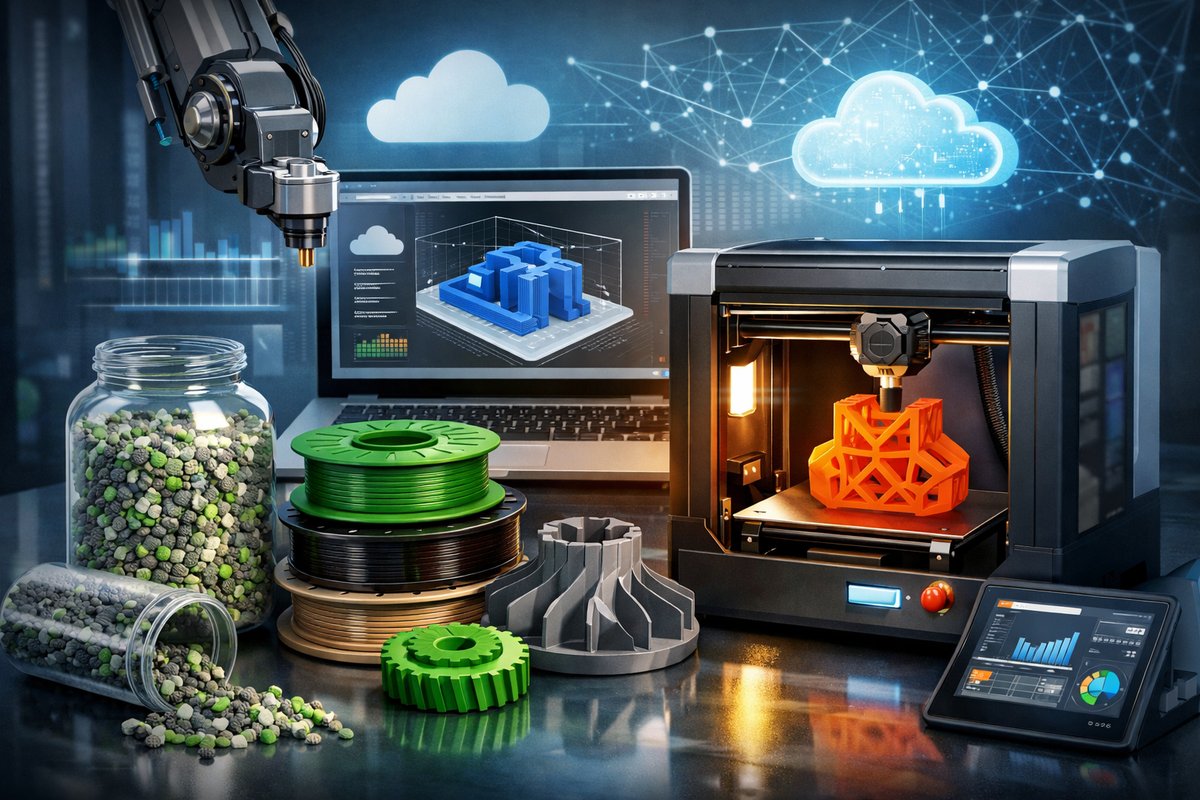

Three-dimensional printing has moved well beyond its origins as a novelty for hobbyists and rapid prototypers. Today it stands at the intersection of art, engineering, medicine, and sustainability, transforming digital visions into tangible realities one layer at a time. Yet the path from design to finished part still carries hurdles: material expenses, printer downtime, trial-and-error calibration, and environmental concerns. Innovators everywhere are tackling these challenges head-on, developing techniques and tools that cut waste, automate precision, and increase throughput without sacrificing quality. What follows is a deep dive into the latest methods making 3D printing more economical, feasible, and successful for makers and professionals alike.
Material costs represent a significant portion of the budget for any 3D printing project. High-performance polymers and specialty resins command premium prices, and even standard PLA and ABS filament can add up when prototypes undergo multiple iterations. One solution gaining traction is the direct use of polymer pellets via pellet extruder attachments. By purchasing bulk raw pellets instead of pre-made filament, users can slash material costs by up to 70 percent. Beyond savings, pellets open the door to custom compounding with recycled content, bio-based additives, and even color concentrates, all mixed on-the-fly in a single step. Pellet extruders designed for desktop machines are becoming more user-friendly, streamlining hopper feeds and temperature control so that designers can treat printing more like injection molding without losing the flexibility of layer-by-layer fabrication.
Sustainability and circularity have entered the maker lexicon in a big way, prompting new workflows that reclaim failed prints and end-of-life parts. Desktop filament recyclers use internal grinders and extruders to convert scrap PLA and ABS back into usable filament. Paired with simple pellet blends, these systems can close the loop on plastic waste generated in-house, yielding up to 2 kilograms of filament for every 3 kilograms of scrap material. For labs and workshops seeking lower environmental impact, recycled pellets derived from industrial plastic waste are also on the rise, offering certified bio-resins that retain mechanical properties while cutting the carbon footprint of each print.
Pellet extrusion isn’t the only materials frontier. Chemically modified filaments-PLA alloyed with coconut fiber, conductive charcoal blends, or even magnetic nanoparticle-loaded polymers-are expanding functional applications. On the resin side, water-washable formulations eliminate the need for isopropyl alcohol baths, reducing hazardous waste and operating costs. Photopolymer systems with faster cure times and improved mechanical strength allow artists and dentists alike to complete projects in hours rather than days. Designers working on transparent models or complex dental guides can now rely on next-generation resins that balance clarity, biocompatibility, and affordability.
Software advances are driving efficiency before the first filament strand lands. Adaptive slicing algorithms vary layer height dynamically based on part geometry, using thicker layers on flat regions and micron-fine layers around curves. This strategy can cut print time in half without compromising surface finish. Coupled with smarter infill patterns-gyroid lattices, honeycomb variants, or custom gradient densities-engineers are maximizing strength-to-weight ratios while minimizing material usage. Many slicers now include built-in support optimization that analyzes overhang angles and generates minimal scaffolding, reducing post-processing labor and filament waste.
Achieving reliable first-layer adhesion and dimensional accuracy has long been a sticking point for newcomers and veterans alike. Automated bed leveling sensors and mesh compensation routines have matured to the point where even complex, non-rectangular build plates can self-calibrate overnight. Thermal sensors embedded in hot ends and build plates feed real-time data to firmware, allowing dynamic temperature adjustments that prevent warping and delamination. Some printers integrate humidity and particulate sensors in enclosures to maintain stable printing environments for sensitive resins. When paired with cloud-connected dashboards, users can receive real-time alerts on print health, stopping errors before they waste hours of time.
Hardware upgrades have also democratized high-end features previously reserved for industrial machines. Affordable heated chambers maintain consistent ambient temperatures for challenging materials like ABS and nylon, drastically reducing layer splitting. Hardened steel or carbon fiber nozzles resist wear when printing abrasive composites loaded with carbon fiber or metallic powders. Flexible spring steel build sheets with PEI coatings make removing finished prints a breeze-no more scrapers and spatulas. Magnetic plate systems allow quick swaps between different surface finishes, from textured glass to ultra-smooth polyetherimide sheets, tailoring the first layer to each material.
Open firmware ecosystems and plug-and-play expansion boards enable custom workflows for power users. Adding Raspberry Pi-based controllers allows remote webcam monitoring, automated time-lapse capture, and integration with open APIs for factory management. Some labs leverage machine learning plugins that analyze early layer images to predict print failures, dynamically pausing jobs before large errors occur. Collaborative communities share profiles for exotic materials, ensuring that beginners can adopt advanced compounds without hours of manual temperature tuning.
Scale is no longer the exclusive domain of industrial production lines. Print farms composed of dozens-or even hundreds-of desktop machines can operate under a unified queue, roving parts between idle printers to maximize utilization. Automated gantry systems can swap build plates, clear finished beds, and refill filament spools without human intervention. Distributed manufacturing networks are emerging where blueprints circulate globally, and regional hubs print on demand, slashing shipping costs and lead times. For custom tooling, jigs, or small-batch production, these farms deliver economies of scale previously unimaginable in a garage workshop.
Even with all these breakthroughs, foundational practices remain critical. Precise calibration using digital calipers ensures accuracy when measuring belt tension, stepper motor travel, and extrusion multipliers. Moisture management via filament dryers or sealed storage prevents brittle, swelling, or bubbling filaments that jam nozzles mid-print. Routine nozzle cleaning with specialized kits restores smooth extrusion and prevents partial clogs. Investing in temperature-stable enclosures, reliable power supplies, and high-resolution displays can elevate a basic machine into a workhorse that churns out production-quality parts day after day.
As 3D printing continues its metamorphosis from experimental gadget to mainstream tool, cost-effective workflows and robust process controls will define who leads the next wave of innovation. By blending recycled and pelletized materials with adaptive slicing, automatic calibration, and smart farms, makers are overcoming traditional barriers of expense and complexity. Whether crafting intricate miniatures, functional end-use components, or patient-specific medical models, these techniques empower creators to focus on imagination rather than troubleshooting. The true revolution lies in making additive manufacturing accessible, sustainable, and seamlessly integrated into every workshop and lab.
The layered revolution is far from over. As materials science, software intelligence, and hardware modularity advance in lockstep, the barriers that once kept 3D printing on the fringes of creativity will continue to fall. The next time you load a custom resin, adjust an adaptive slicing profile, or watch a pellet extruder hum to life, remember that the journey from digital design to physical object has never been more efficient, affordable, or full of possibility. Welcome to the era of smarter additive manufacturing.