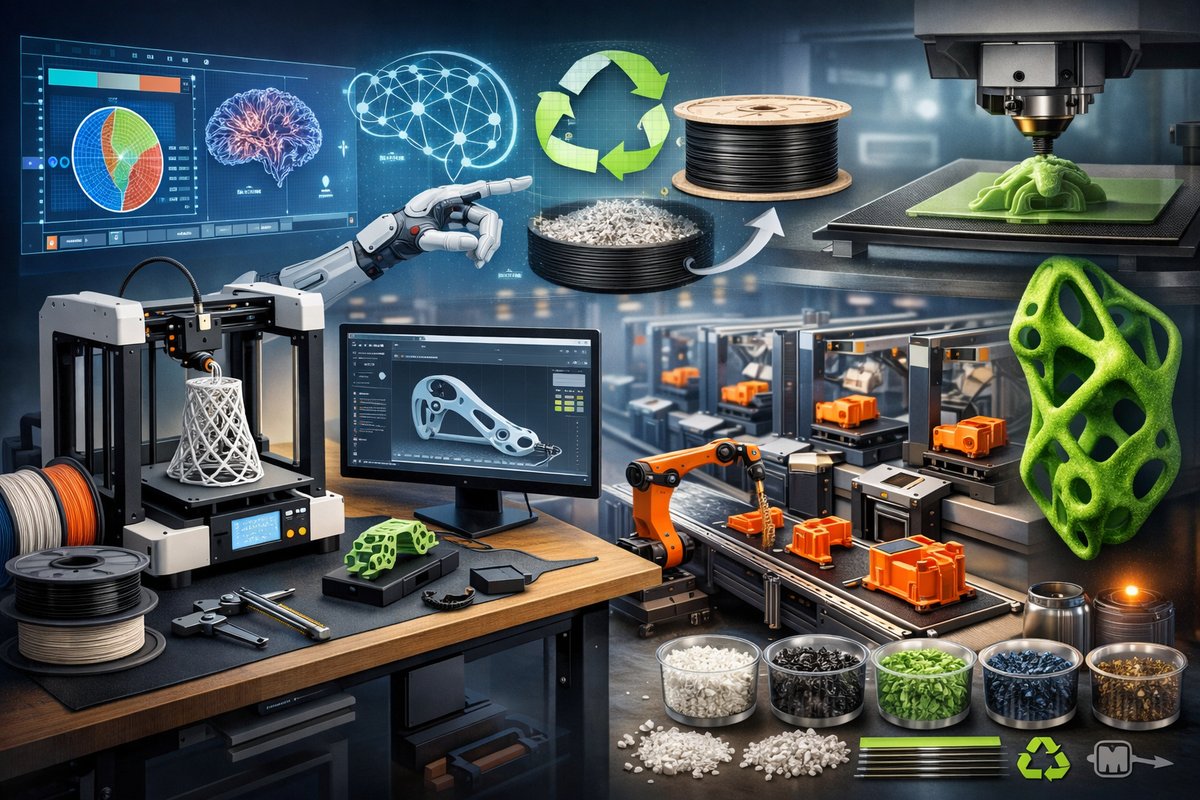

Additive manufacturing, or 3D printing, once carried a reputation for being both slow and expensive. Today, rapid innovations in hardware, software, and materials are transforming it into an approachable, cost-effective tool for anyone with a printer on their desk. By combining smarter part design, modular machine upgrades, new filament types, and automated workflows powered by machine learning, makers and small businesses can dramatically lower per-piece expenses while improving reliability. This article explores the latest techniques and technologies helping 3D printing reach new heights of affordability and success.
The first key to cutting costs lies in design optimization. Traditional solid models often waste time and material, but modern slicers offer infill patterns and variable density controls that hollow out bulky areas without sacrificing strength. Gyroid, honeycomb, and gyroid‐inspired lattices deliver a balance of rigidity and weight savings. For load-bearing parts, topology optimization tools-originally developed for aerospace-remove unnecessary material by analyzing real-world stress points and generating organic, skeletal structures. These lightweight geometries not only consume less filament but also reduce print time. At the same time, careful part orientation and support minimization can eliminate hours of wasted printing and tedious post-processing.
On the hardware front, open-source firmware and modular designs lower the barrier to entry. Affordable desktop machines now boast all-metal hot ends, automatic bed leveling, and enclosed build chambers once reserved for industrial systems. Upgrading a basic Cartesian printer with a multi‐material extruder or a direct-drive feeder can enable printing flexible TPU blends or wood-fill composites, opening up new use cases without buying an entirely new machine. High-speed delta and core-XY architectures push print rates to 300 millimeters per second or more, while belt‐driven systems sacrifice a fraction of precision in exchange for faster cycle times and reduced labor costs.
Material innovations play a huge role in driving down expenses. Recycled filament spools-made from reclaimed industrial plastics or post-consumer waste-cost 20-30% less than virgin ABS or PLA. Composite blends infused with metal or carbon fiber can deliver exotic surface finishes and mechanical properties at only a modest premium. For those seeking ultra-low running costs, pellets and filaments can be shredded and re-extruded on desktop filament makers, turning failed prints into fresh feedstock. Some enthusiasts even mix biodegradable polymers with agricultural byproducts to produce fully compostable parts. Meanwhile, resin printing has seen breakthroughs in reusable resin vat liners, reducing expensive resin waste during clean-up.
Speed and reliability often collide in 3D printing, but continuous printing processes are bridging that gap. Through a variant of stereolithography known as continuous liquid interface production, parts rise smoothly out of a resin bath rather than stepping layer by layer. This eliminates layer lines and slashes build times by as much as 10×. In filament printing, advanced sensors and AI-driven slicers can detect anomalies in real time-adjusting flow rates, retracting to prevent stringing, or pausing the build when a filament jam is imminent. Cloud-based monitoring platforms send alerts to your phone when prints finish or encounter errors, saving hours of wasted machine time.
For small shops and startups, turnkey solutions have begun to replace custom toolpaths and manual tinkering. Pre-configured print profiles for common filaments and technologies reduce setup iterations, while integrated post-processing stations handle washing, curing, and support removal with minimal supervision. Some systems can even scan a printed part, compare it against the original CAD file, and quantify dimensional accuracy within microns-ideal for quality control in medical, aerospace, and dental applications. By automating these routines, businesses can scale from prototype to pilot production without high overhead or specialized staff.
Beyond cost and speed, safety and sustainability are top of mind. Enclosed machines fitted with HEPA filters keep ultrafine particles and VOCs at bay while high-efficiency particulate air filtration systems in workshops ensure safe breathing environments. For solvent-based resin printing, closed‐loop recycling of wash liquids and solvent purification units help facilities comply with environmental regulations. Printers and post-processing workstations built from recycled aluminum frames and energy-efficient controllers also align with green manufacturing goals.
Case studies illustrate how these combined strategies pay off. A small design studio replaced an off-the-shelf hobby printer with a modular FDM machine upgraded to run recycled PLA and optimized for complex lattice structures. Their per-part costs dropped by nearly 40%, and turnaround times shrank by an hour per build. Another startup invested in a mid-range resin system featuring continuous production and in-machine curing. By leveraging built-in AI slicing and mesh repair, they reduced print failures by 75% and launched a line of consumer wearables six weeks earlier than anticipated.
In education and research, cost-effective 3D printing enables more experimentation with novel materials. Chemistry labs are testing conductive filaments for soft robotics, while art departments explore color mixing nozzles that blend pigments mid-extrusion. In the medical field, open-source protocols for patient-specific surgical guides and anatomical models accelerate development without the steep price tag of bespoke manufacturing.
Even as additive manufacturing becomes more accessible, there’s one final frontier in cost reduction: distributed networks of machines. Decentralized printing services let users send files to the nearest printing hub-whether it’s a makerspace, community center, or small contractor-eliminating shipping fees and transit delays. This peer-to-peer model also promotes local recycling loops for filament and resin, keeping waste out of landfills.
Looking ahead, the convergence of high-speed hardware, AI-powered workflows, and sustainable materials promises to make 3D printing an everyday tool both for hobbyists and professionals. Instead of accepting the traditional trade-off between cost, quality, and speed, modern additive manufacturing platforms equip you with the technologies needed to excel in all three domains. By harnessing smarter design, modular machines, recycled and composite materials, automated monitoring, and eco-friendly practices, anyone can join the quiet revolution of making that begins with a single, optimized layer.
Embrace these techniques and technologies to push the boundaries of what you can create while keeping budgets under control. Whether you’re producing one-off prototypes, small-batch production parts, or functional art, the future of economical, feasible, and successful 3D printing has never looked brighter.
Time to fire up your slicer, stock the filament dryer, and print the next breakthrough innovation-one layer at a time.