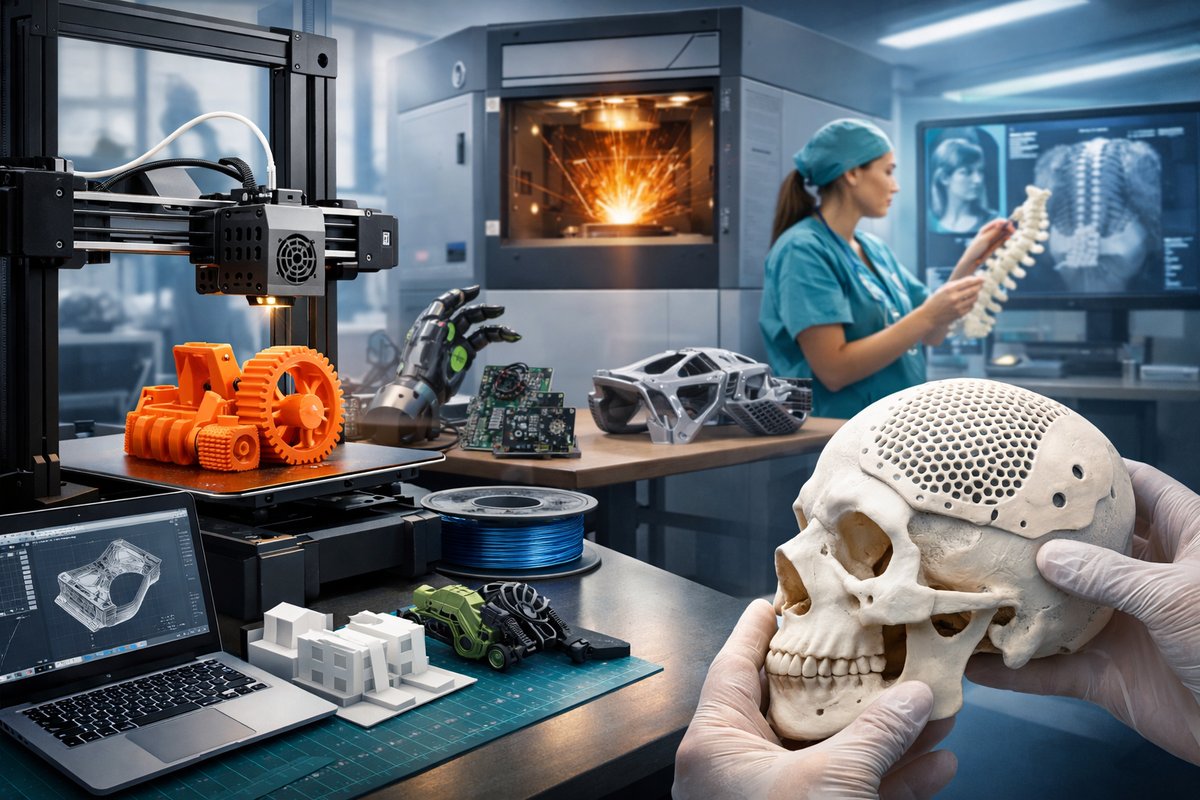

The promise of 3D printing has always been seductive: imagine sending a digital design to a machine that builds it layer by layer, turning electrons into atoms. Yet for years, hobbyists and small-scale entrepreneurs wrestled with high filament prices, finicky calibration, and limited material options. Today, a new wave of technologies and techniques is pushing additive manufacturing into more pockets and workshops, making the process more economical, feasible, and successful than ever before.
Early adopters remember the trial-and-error days of manual bed leveling, clogged nozzles, and brittle prints. Modern machines now feature auto-calibration routines that map hundreds of points on the build surface in seconds, adjusting the nozzle height dynamically as printing begins. This alone saves hours of fiddling, drastically reducing failed prints and wasted filament.
On the materials front, the rise of recycled composite filaments is a game-changer. Providers are collecting plastic waste-everything from water bottles to packaging scraps-then melting and reformulating it into robust PLA, PETG, or ABS blends. Makers can purchase bulk recycled filament spools at a fraction of the cost of virgin polymer, or even invest in desktop filament recyclers that grind failed prints into fresh material. The ecological payoff is twofold: printers run longer without restocking, and plastic refuse finds a second life in prototypes, models, and tools.
Hardware innovators are tackling energy consumption and throughput. Traditional fused deposition modeling (FDM) printers heat a small nozzle to melt plastic, then pause as each layer solidifies. Meanwhile, newer pellet-fed extruder attachments bypass the need for expensive filaments altogether. Plastic pellets-sold for a few dollars per kilogram-feed directly into a hot-end extrusion system, slashing material costs to pennies per gram. Pellet extruders also handle specialty engineering polymers like nylon and polycarbonate with ease, expanding the functional performance of printed parts without breaking the bank.
Resin printing has undergone its own renaissance. Stereolithography (SLA) and digital light processing (DLP) systems once seemed limited to high-end labs due to the expense of custom photopolymers and UV curing stations. Today, third-party resins offer comparable tensile strength, flexibility, and heat resistance at lower price points. Community-driven resin profiles in open-source slicer software enable out-of-the-box success, removing guesswork around layer exposure times. Meanwhile, compact resin cleaning and curing stations integrate wash cycles with controlled UV post-curing, delivering consistently reliable parts with minimal chemical handling.
Software developments are equally crucial to economizing the workflow. AI-powered slicing engines analyze complex geometries and automatically optimize support structures, reducing both print time and material use. Some platforms simulate heat flow during printing to predict warping or shrinkage, adjusting paths on the fly to maintain accuracy. Print farms-networks of multiple 3D printers-now rely on centralized job schedulers that distribute tasks according to each machine’s capabilities and queued workload, maximizing uptime and throughput.
Multi-material printing continues to open creative doors without significant cost penalties. Upgradable tool heads with dual extruders allow one printer to deposit rigid PLA alongside flexible TPU, or mix conductive and insulating filaments for functional electronics. Instead of buying entirely new machines, users can retrofit existing printers with affordable add-on kits, keeping capital expenses low and letting each device tackle a wider array of projects.
The maker community itself plays a pivotal role in driving down costs. Online repositories abound with open-source blueprints for upgrade parts-everything from snap-in cooling ducts to spare belt tensioners. A quick trip to a local makerspace grants access to networked printers, professional-grade tools, and experienced mentors, often for a modest membership fee. By pooling resources, hobbyists and startups can explore advanced techniques-like laser sintering or metal binder jetting-before committing to in-house hardware purchases.
Even at the industrial scale, layer-by-layer manufacturing is becoming more economical. Metal additive systems once reserved for aerospace budgets now find more affordable entry points through hybrid machines that combine milling with metal-powder 3D printing. Manufacturers can print near net-shape parts, then finish critical surfaces with traditional subtractive tools-saving time on raw material waste and machining hours.
Quality assurance methods are also becoming both accessible and cost-effective. Low-cost laser scanners and structured-light systems can validate each printed layer, detecting defects early and pausing the job for corrections. Paired with cloud-based analytics, these sensors chart performance over hundreds of prints, identifying maintenance needs before a machine goes offline. By catching issues in real time, users reduce scrap rates and ensure that the final parts meet dimensional tolerances without extensive manual inspection.
One of the most transformative trends is the democratization of education around additive manufacturing. Virtual reality simulators let students learn slicing, printer maintenance, and safety protocols without burning filament or risking UV exposure. Online courses-many free or heavily subsidized-cover everything from CAD modeling fundamentals to advanced process parameter tuning. By lowering the learning curve, these resources empower a new generation of makers to experiment boldly, refining their skills with minimal financial risk.
What does all this mean in practice? Hobbyists can now outfit a desktop 3D printer with a pellet extruder attachment for under a hundred dollars, turning discarded plastic into usable filament on demand. Small machine shops can upgrade a single FDM system with an auto-leveling kit and an AI-driven slicer subscription, doubling print success rates and freeing technicians to focus on design iteration. Medical research labs can invest in mid-range SLA printers paired with community-sourced resin formulas to produce anatomical models at a tenth of traditional costs. Even artists are experimenting with multi-material setups to layer vibrant resins with conductive inks, crafting sculptural pieces that respond to touch.
The quiet revolution of economical 3D printing is not defined by a single breakthrough but by a chorus of innovations converging to make additive manufacturing more accessible and reliable. As costs per part drop and reliability climbs, the true frontier becomes human ingenuity: how will creators harness these tools to solve problems, express ideas, and ship products that once belonged to science fiction? The answer arrives one layer at a time, in workshops and labs around the world, where anyone with curiosity and a CAD file can watch virtual dreams crystallize into tangible form.