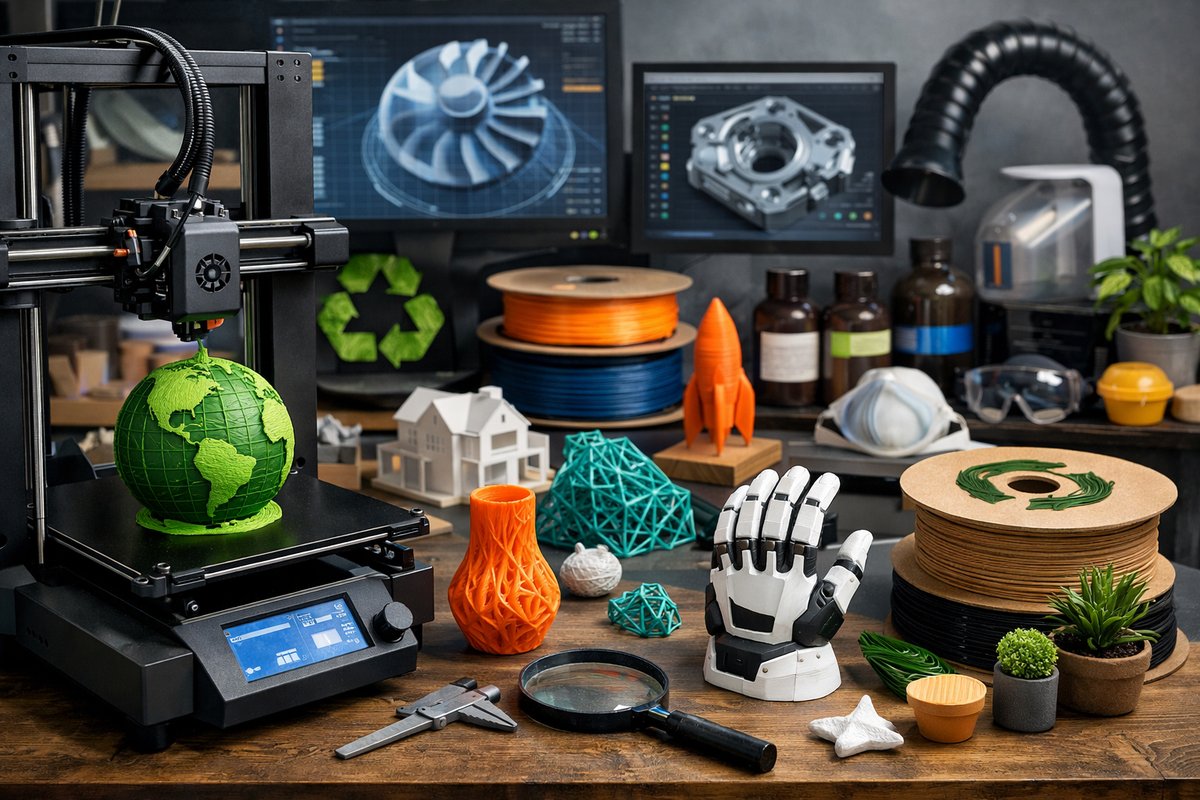

Within makerspaces and home workshops alike, three dimensional printing has transformed imaginative ideas into tangible objects. What once lived on computer screens now takes shape layer by layer under nozzles and lenses built for precision. As hardware becomes more accessible and materials more versatile, newcomers and seasoned tinkerers can explore a world where digital designs materialize in plastic, resin, and beyond. This guide sweeps across key elements of 3D printing, revealing essential tools, diverse materials, and techniques that empower creative experimentation without losing sight of sustainability and safety.
Selecting the right printer is the first step toward success. Filament based systems often employ fused filament fabrication nozzles that heat and extrude thermoplastics with reliable layer bonding. Resin based machines harness ultraviolet light to cure liquid polymers for ultra fine detail. Each technology brings trade offs in build speed, resolution, and part strength. When choosing a printer, consider build volume, resolution requirements, and whether cloud slicing is required. Opting for open source or offline slicing tools can safeguard design privacy while still offering sophisticated control over print parameters.
Before hitting print, assemble a small arsenal of essential accessories. A precision digital caliper helps verify dimensions and calibrate axes. A glass or textured build surface ensures reliable adhesion while allowing easy part removal. Bed leveling tools or automatic probes can save hours of troubleshooting. Add a basic maintenance kit with nozzle cleaning needles, lubricants, and spare PTFE tubing. These instruments transform occasional frustration into smooth operation, encouraging more frequent experimentation rather than downtime spent hunting for missing tools.
Materials science fuels the creative possibilities of FDM printing. Biodegradable PLA offers low warp, low odor operation and a wide palette of colors. ABS brings heat resistance and toughness but demands a heated enclosure to prevent warping. PETG strikes a balance between strength and ease of use while resisting moisture better than PLA. Flexible filaments like TPU allow springy, elastic parts, while composite blends infused with wood, carbon fiber, or metal powder introduce novel textures and improved stiffness. Each material benefits from tailored nozzle temperatures and cooling strategies according to manufacturer guidelines.
Resin printing unlocks detail at scales unreachable by filament. Standard photopolymer resins deliver glasslike finishes for miniatures and mechanical parts. Tough resins meet the demands of functional prototypes that require repeated stress testing. High temperature formulations withstand heat exposure for engineering applications, and biocompatible varieties enable dental models or hearing aid shells. While resin handling requires careful rinsing and post curing under UV light, the resulting surface fidelity can be so precise that layer lines disappear under fine grit polishing.
Choosing and mastering slicing software is key to translating digital models into printable instructions. Open source slicers run entirely on local machines, preserving privacy for proprietary designs and sensitive prototypes. Community driven tools often expose advanced settings for retraction, coasting, and dynamic layer height adjustments. By exploring variations in infill patterns, wall count, and print speeds, users can optimize parts for strength, weight, or aesthetic qualities. Keeping software versions up to date ensures compatibility with the latest material profiles and printer firmware.
Calibration is more art than chore. A simple calibration cube can reveal over extrusion or under extrusion, while a Benchy test prints a small boat to highlight issues in bridging, overhangs, and layer alignment. By iteratively adjusting steps per millimeter, flow rates, and temperature, makers dial in their specific printer and filament combination. Tracking settings in a concise journal or spreadsheet preserves successful configurations. When a new filament arrives, re running the calibration routine prevents surprises and maintains consistent print quality.
Advanced techniques expand capability beyond basic prints. Dual extrusion heads enable two colored parts or soluble support materials that dissolve away to reveal complex internal geometries. Multi material printing makes functional prototypes with rigid cores and flexible outer shells. Varying extrusion widths by toggling nozzle diameters can achieve fine detail in select areas while printing larger sections more quickly with a larger nozzle. Tuning travel and retraction helps minimize stringing when moving rapidly between islands of a model.
Finishing elevates printed objects from raw prototypes to polished end products. Sanding with progressive grits smooths ridges; priming and painting introduce color and depth. ABS parts benefit from acetone vapor smoothing to weld layer seams and yield a glossy finish. Resin components often require rinsing in isopropyl alcohol, followed by gentle sanding and UV post curing. For long lasting results, use epoxy coatings or clear acrylic sealers to protect against moisture and UV degradation.
Running an eco conscious workflow reduces waste and energy draw. Many printers consume less than 100 watts during operation, but extended prints add up over days. Scheduling prints during off peak hours or in well ventilated, insulated spaces can lower power bills while reducing heat loss. Collect filament scraps and failed prints for recycling into new filament pellets or use them as filler in compostable 3D printing pens. Exploring biodegradable materials and local recycling services turns plastic scraps into resources rather than landfill burdens.
Safety measures protect both operator and environment. Filament fumes vary by material; PLA is generally mild while ABS releases more volatile compounds. Ensure adequate ventilation or install an air purifier near the machine. When handling resin, nitrile gloves guard skin and safety goggles prevent splashes to the eyes. Keep isopropyl alcohol and solvents stored in flame resistant containers away from heat sources. A simple resin filtering funnel and disposable paper filter can separate cured particles from leftover liquid for safe disposal.
The world of 3D printing thrives on collaboration. Online forums, social media groups, and local maker clubs allow sharing of calibration settings, custom profiles, and troubleshooting tips. Design repositories host thousands of open source models ready for download and remix. Participating in community challenges and virtual hackathons sparks fresh ideas and fosters collective learning. By contributing back improvements and material test results, every user helps refine the ecosystem for more reliable, accessible printing experiences.
Looking ahead, additive manufacturing continues to evolve at a rapid pace. Metal powder bed fusion and directed energy deposition bring robust metal parts into the prototyping realm. Continuous liquid interface production techniques promise faster resin curing and larger build volumes. Bioprinting explores living tissues for medical research and regenerative medicine, while distributed manufacturing envisions on demand part production at supply chain nodes. As hardware and software integrate more tightly with artificial intelligence, printing workflows will become more adaptive, intuitive, and accessible to a broader audience.
Every successful print begins with curiosity, iterative learning, and a dash of persistence. Embrace the process of experimentation, knowing that each setback provides insights for the next attempt. Whether crafting functional enclosures, artistic sculptures, or educational models, 3D printing invites users to bridge the gap between imagination and reality. By combining essential tools, mindful material choices, and conscientious practices around sustainability and safety, makers can unlock the full potential of this layered craft and shape the physical world one filament or droplet at a time.