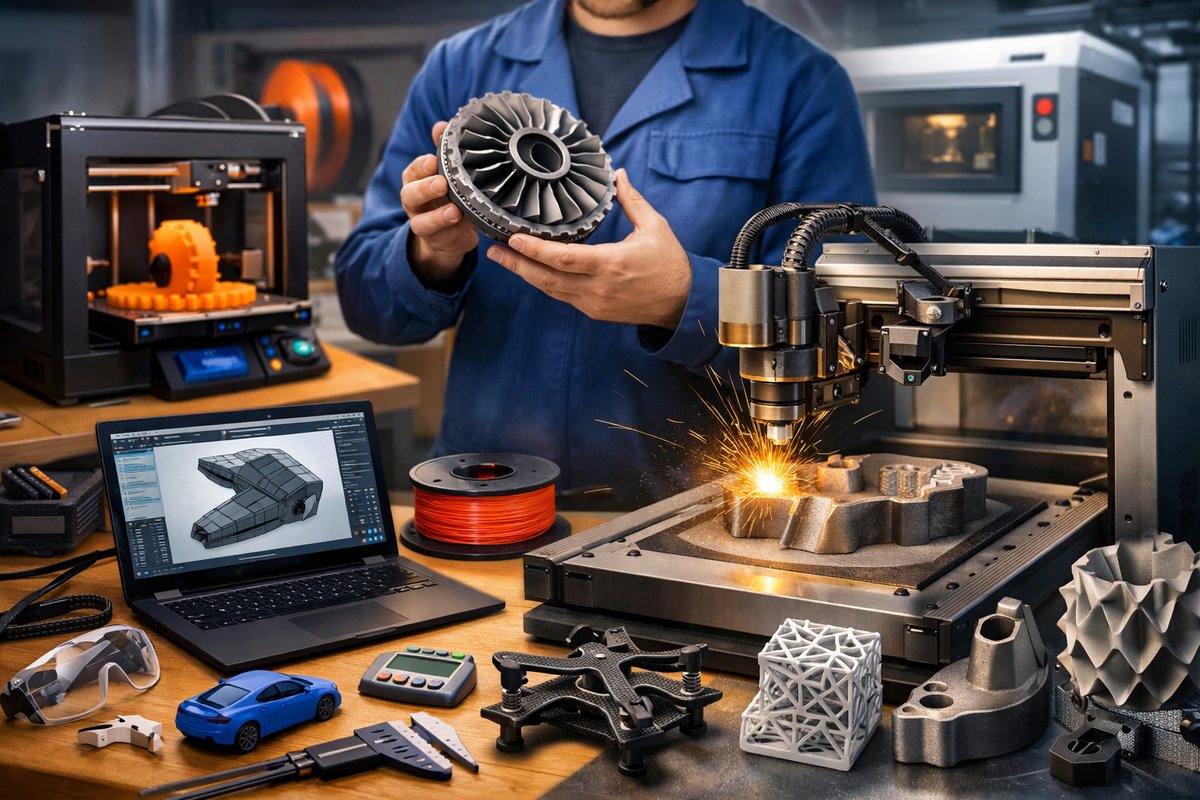

3D printing has transcended its origins in rapid prototyping to become a cornerstone of modern manufacturing, education, medical research, and creative expression. At its core, additive fabrication transforms digital designs into physical objects by building them layer by layer. Yet the real magic unfolds when the right combination of hardware, software, materials, and process know-how converges. This guide illuminates the specialized tools and techniques that drive success at every stage of a project-from choosing the right printer platform to mastering post-processing workflows.
Two major hardware platforms dominate the desktop landscape: fused deposition modeling (FDM) and vat photopolymerization (commonly known as resin or SLA printing). FDM systems extrude heated thermoplastic filament through a nozzle, depositing each layer with precision. They shine in versatility and ease of use, handling everything from basic PLA builds to engineering-grade PETG and flexible TPU components. SLA printers, on the other hand, cure liquid resin with a focused UV light source, delivering smoother surfaces and finer detail-ideal for jewelry prototypes, dental models, and complex geometries where resolution matters most.
Selecting the right 3D printer is only half the battle. A trustworthy slicing application serves as the bridge between a 3D model and the resulting print. Top-tier slicer software offers advanced settings for layer height, print speed, temperature control, retraction behavior, and support generation. Some platforms integrate directly with cloud libraries of optimized profiles, while others allow scripting and plug-ins that automate calibration routines. Alongside software, familiarizing yourself with CAD or 3D modeling tools-whether free open-source packages or professional suites-lays the groundwork for designs that print reliably without extensive trial and error.
Filament remains the workhorse of the FDM ecosystem. PLA, the biodegradable polymer derived from renewable sources, reigns supreme for beginners thanks to its low melting point, minimal warping, and forgiving print behavior. Stepping up in strength and temperature resistance, ABS and PETG demand heated beds and well-ventilated enclosures but reward with more durable parts. For specialized applications, consider nylon for impact resilience, flexible TPU for wearable prototypes, or composite blends that embed wood, metal, or carbon fiber particulates. Each material introduces its own handling quirks: moisture sensitivity, bed adhesion challenges, and unique extrusion temperatures.
Resin chemistries have also diversified to meet industry demands. Standard photopolymer resins produce crisp details and glossy finishes, while engineering resins boast impact resistance, heat stability, or biocompatibility for dental and medical models. Flexible and castable resins enable wearable prototypes and jewelry masters ready for mold making. Working with liquid resins requires dedicated post-processing tools-UV curing stations, isopropyl alcohol baths, nitrile gloves, and chemical-resistant trays-to ensure parts achieve full mechanical properties and safe handling.
Maintaining consistent performance hinges on careful calibration and routine upkeep. A clean hot end and nozzles free from burnt residue prevent under-extrusion, while a level build plate guarantees uniform layer adhesion. Digital calipers or dial gauges help verify dimensions of test cubes and bridges, confirming that extrusion multipliers and flow rates align with expected tolerances. For resin systems, regularly replacing the vat film and cleaning cured resin fragments avoids print failures and layer voids.
Optimal print settings emerge through methodical slicing and test prints. Layer height influences surface finish and build time; finer layers reveal intricate details but extend print durations. Print orientation can strengthen load-bearing sections or reduce support structures, but every angle introduces different stress points and visible layer lines. Strategic use of supports-tree-style for resin or minimal contact pads for FDM-balances ease of removal against the risk of overhang drooping. Temperature towers, retraction towers, and benchmark models serve as diagnostic aids for dialing in settings before committing to lengthy parts.
Once a print finishes, post-processing transforms a raw object into a polished deliverable. Resin prints require a two-stage approach: thorough rinsing in isopropyl alcohol to dissolve uncured resin, followed by UV curing to solidify internal bonds. FDM parts often benefit from sanding, vapor smoothing, or application of filler primers and paint, depending on the desired aesthetic. Specialty tools-micro-needle files, silicone sanding pads, and detail brushes-help refine corners, chamfers, and hidden cavities without damaging delicate features.
Advanced methods open new frontiers in additive fabrication. Dual-extrusion FDM printers allow simultaneous printing of rigid and soluble supports, streamlining complex geometries that would otherwise jam build plates. Multi-material deposits enable printing electronics traces or embedding heat-sensitive components directly into parts. Composite filaments infuse carbon fiber or glass beads for high-strength, low-weight structural components. On the industrial side, techniques like selective laser sintering (SLS) and direct metal laser sintering (DMLS) push the boundaries of metal and nylon printing for aerospace, automotive, and medical implant applications.
With innovation comes responsibility: sustainability and privacy demand careful consideration. Recycled filament made from post-consumer plastics reduces waste, while enclosed recycling systems can shred and re-extrude material on-site, closing the loop in small-scale workshops. Localized manufacturing via desktop printers reduces transport emissions and shortens supply chains, but secure handling of proprietary designs must accompany any cloud-connected printer. Keeping sensitive files on offline drives or encrypted local servers safeguards intellectual property.
Every journey in 3D printing includes moments of frustration: prints that warp, layers that shift, or supports that refuse to budge. Cultivating an emotionally intelligent mindset helps transform setbacks into learning opportunities. Engaging with online communities-forums, social media groups, local maker spaces-provides real-time troubleshooting tips and moral support. Celebrating small victories, sharing calibration files, or co-creating open-source designs fosters a culture of curiosity and mutual growth.
Safety protocols remain paramount, whether working with hot thermoplastics or volatile resins. Proper ventilation or activated carbon filters remove harmful fumes from ABS and odoriferous resins. Nitrile gloves and eye protection guard against skin contact and splash hazards during post-processing. Fire-resistant surfaces, smoke detectors, and an accessible fire extinguisher ensure peace of mind when operating high-temperature bed plates and extruders.
Looking ahead, additive manufacturing continues to evolve at breakneck speed. Artificial intelligence is already streamlining design-for-additive workflows, predicting warpage, and suggesting optimal print orientations before a single layer is deposited. Bioprinting technologies are experimenting with living cells to create tissue scaffolds and organ models. Large-format printers are constructing prototype homes and infrastructure elements-proof that the only limit is our imagination.
Whether you’re printing your first chess pawn or prototyping a complex robotic component, the layered journey of experimentation, calibration, and discovery remains endlessly rewarding. Armed with the right tools, materials, and techniques, every creator can push the boundaries of what’s possible, turning CAD blueprints into tangible reality-one precise filament strand or photopolymer cure at a time.