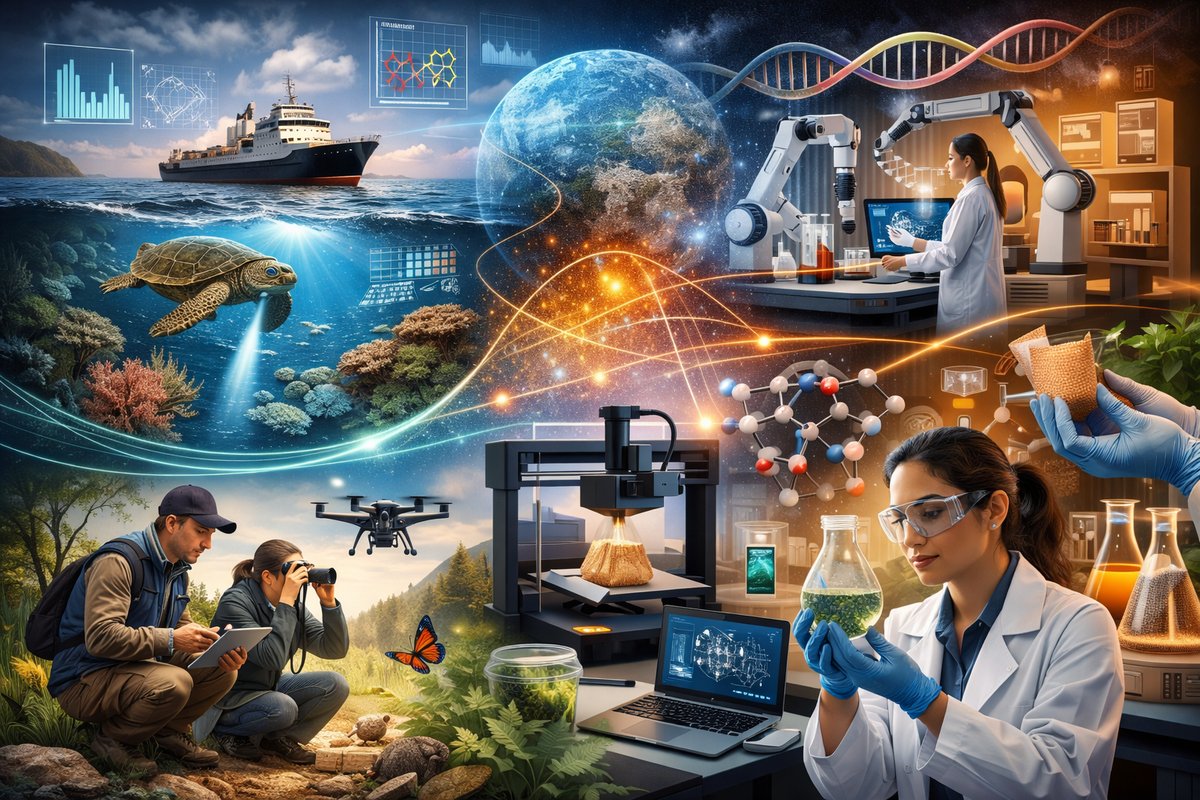

Science has always thrived on curiosity-the spark that sends a researcher chasing questions beneath glaciers or into distant galaxies. Yet in recent years, a subtler revolution has taken hold. Instead of disciplines standing alone, they are merging into vibrant constellations of expertise. Biologists collaborate with data scientists, chemists partner with engineers, and anthropologists work alongside climatologists to tackle challenges once considered too complex. This hidden tapestry of interdisciplinary teamwork is transforming how we explore the world and solve urgent problems.
In the early days of modern science, scholars often operated within narrow domains. A physicist might never consult a soil ecologist, and a microbiologist could be unaware of advances in robotics. Today, that siloed approach feels as outdated as a library without hyperlinks. Digital tools dissolve barriers that once kept specialists apart. Open data repositories allow a coding expert on one continent to analyze field measurements gathered on another, while cloud-based platforms host experiments designed by coalitions of minds scattered across time zones.
Consider the depths of the ocean, Earth’s final frontier. Autonomous underwater vehicles once depended on preset routines and limited sensors. Now, artificial intelligence algorithms learn on the fly, guiding submersibles toward unexpected features that warrant closer study. When a machine vision system flags a novel coral formation, it alerts marine biologists who can immediately adjust sampling protocols. This real-time feedback loop between robotics and ecological expertise accelerates discoveries that might otherwise take years to uncover.
On land, climate scientists fuse data from weather stations, satellite imagery, and historical records to build models predicting shifts in rainfall patterns or wildfire risk. Adding machine learning to this mix has sharpened forecasts and revealed subtle interactions between atmospheric chemistry and local topography. In remote regions where ground instruments are sparse, community volunteers equipped with low-cost sensors now fill data gaps. Their contributions feed back into global models, democratizing climate science and giving communities a stake in research outcomes.
Meanwhile, in labs around the world, synthetic biology and materials science teams are joining forces to create sustainable alternatives to conventional plastics. By examining the molecular machinery of bacteria that break down natural polymers, chemists design biodegradable materials with desirable properties-strength, flexibility, and resistance to moisture. Engineers then craft scalable manufacturing processes. When these materials replace single-use packaging, they offer a tangible win against plastic pollution and a powerful testament to cross-disciplinary innovation.
Far from ivory-tower isolation, today’s breakthroughs often originate in citizen science movements. Enthusiasts build DIY air quality monitors using off-the-shelf electronics, then share results on open platforms. That community-driven data has revealed pollution hotspots in cities around the globe, prompting local authorities to take action. In rainforests and grasslands, smartphone apps guide volunteers in photographing insects, fungi, and plants. Each submission helps map biodiversity and track shifts in species distributions as habitats change under human pressure.
Satellite-based remote sensing adds another layer to this collaborative fabric. Conservationists interpret multispectral images to identify illegal mining operations or detect deforestation in near real time. Hydrologists combine those insights with ground measurements of water tables to manage drought-prone regions. Economists then analyze the social and financial impacts of proposed interventions. By blending diverse skill sets, stakeholders forge holistic solutions that respect both ecosystems and local livelihoods.
Open science initiatives further nurture this spirit of cooperation. Journals now encourage sharing raw datasets and computational code, while preprint servers allow rapid dissemination of results before formal publication. Virtual workshops and hackathons bring together professionals from disparate fields to tackle specific challenges-be it optimizing renewable energy grids or designing low-cost water purification systems. This culture of transparency and experimentation stands in stark contrast to the competitive secrecy that once dominated high-stakes research.
Yet interdisciplinary work faces its own hurdles. The sheer volume of data can overwhelm even the savviest analysts. Reproducibility struggles persist when protocols lack standardization. And building trust across disciplinary languages requires patience-biologists may use the term “expression” differently than engineers, for instance. Institutions and funding bodies are adapting by creating hybrid research centers and offering grants that explicitly reward cross-cutting collaborations.
The scientific method itself is evolving in response to these shifts. Genome editing tools like CRISPR, once confined to specialized geneticists, now feature in ecological field trials aimed at controlling pests with minimal environmental harm. Quantum computing, still in its infancy, promises to simulate complex chemical reactions far beyond the reach of classical computers. Such powerful platforms demand combined expertise in physics, computer science, and chemistry to translate theoretical potential into practical breakthroughs.
Beyond machines and methods, the human dimension of interdisciplinary science carries profound emotional weight. Researchers from diverse backgrounds bring unique perspectives shaped by culture, gender, and lived experience. Inclusive lab environments foster creative problem-solving, as voices that once went unheard contribute critical insights. Mentorship programs pair early-career scientists with veterans from different disciplines, forging networks that not only produce papers but also cultivate empathy and intellectual humility.
Looking ahead, self-driving laboratories may automate entire experimental workflows. Robotic systems could test thousands of material formulations overnight, feeding results into machine learning algorithms that suggest the next batch of experiments. Such closed-loop platforms promise to accelerate discovery far beyond current timelines. Yet they also underscore the need for human oversight-to interpret unexpected outcomes, ask new questions, and ensure that technological advances align with societal values.
For lifelong learners and curious minds, the message is clear: science no longer belongs to isolated experts. Community workshops, citizen observatories, and online learning portals offer gateways into ongoing projects. Participants can lend their time, skills, or simply their curiosity. Whether analyzing acoustic recordings of bird calls or coding simulations of protein folding, lay contributors help shape research agendas and deepen their own understanding of complex systems.
Today’s scientific tapestry is still being woven, thread by thread. Each collaboration between a computational theorist and a field ecologist, each partnership between a materials scientist and a community organizer, adds texture and strength. As we face global challenges-from climate resilience to sustainable resource use-the best answers will emerge not from isolated breakthroughs but from a collective spirit of exploration and empathy.
Embrace the interdisciplinary promise. Seek out learning opportunities that bridge fields. Support open-science initiatives that invite diverse voices. And remember that every question you ask, every dataset you share, and every experiment you help design brings us closer to a future where knowledge flows freely, innovation knows no borders, and science serves humanity and the planet in harmony.
No affiliate links found for this post.