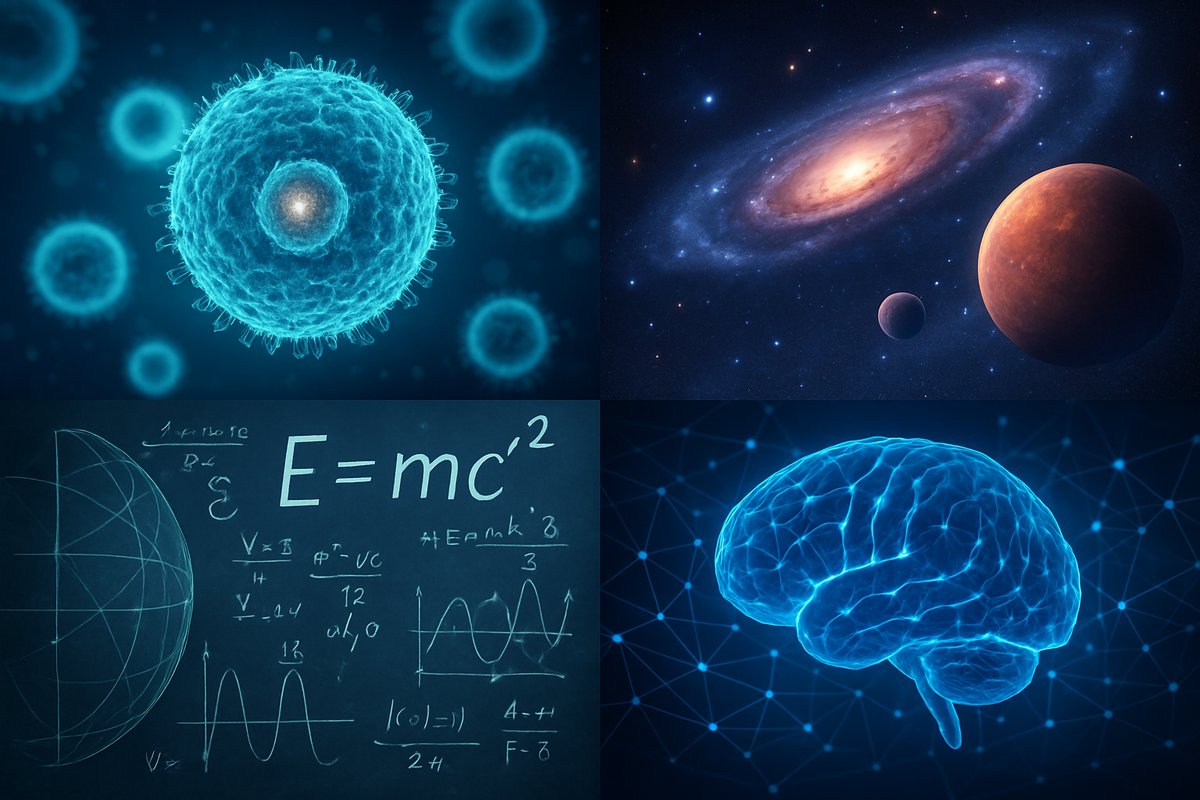

Human curiosity has always been the spark that lights the path of discovery. Long before theories of relativity or the structure of DNA, civilizations probed their surroundings with simple tools: sharpened stones, tracking the movement of stars, or observing the growth of plants. Today, that impulse remains at the heart of science, but the scale and sophistication of our investigations have grown exponentially. Modern laboratories can peer deep into living cells, detect whispers of gravitational waves, and simulate entire ecosystems on supercomputers. Yet the essence of scientific exploration still comes down to questions, experiments, and the thrill of uncovering something previously unknown.
At the level of atoms and molecules, tools like microscopes have allowed researchers to survey worlds invisible to the naked eye. A drop of pond water becomes a bustling metropolis of protozoa and microbes under magnification. In materials science, researchers manipulate crystalline structures one layer at a time to create new alloys, semiconductors, and even metamaterials that bend light in surprising ways. In biology, fluorescent tags highlight the activity of individual proteins, giving insights into how cells communicate, divide, or respond to stress. The digital USB microscope, once a niche instrument, is now accessible enough for high school classrooms and citizen scientists eager to catalog microorganisms. This democratization of technology ensures that the next breakthrough might come from a garage lab as easily as from a university facility.
Beyond the microscopic realm lies the cosmic stage, where telescopes and space probes reveal the tapestry of stars and galaxies. Amateur astronomers armed with entry-level telescopes can spot Jupiter’s moons, Saturn’s rings, or the craters on the Moon-experiences that once required large observatories. Professional observatories and space missions capture distant galaxies, map the surface of Mars, and even detect planets orbiting other suns. Gravitational wave detectors listen for the ripples in spacetime created by colliding black holes or neutron stars, opening an entirely new window on the universe. Each data point adds to a grand mosaic, challenging our assumptions about the origin and fate of the cosmos and reminding us how small yet connected our planet is in that vast ocean of space.
On the microscopic end and cosmic scale is the frontier of life itself. Modern genetic tools allow us to read and edit genomes with unprecedented precision. Techniques like CRISPR-Cas9 have accelerated research in agriculture, medicine, and conservation. Scientists are engineering crops to resist drought and pests, developing gene therapies to correct inherited disorders, and even reviving genetic diversity in endangered species. Ethical debates accompany these advances: who decides which traits to enhance or suppress? How do we ensure equitable access to life-changing technologies? As discussions unfold at international conferences, home science lab kits provide a hands-on introduction to genetic principles, allowing students to extract DNA from strawberries or observe bacterial transformations. These educational experiences plant the seeds of ethical reflection and inspire future researchers to approach powerful tools with responsibility.
While the frontiers of physics and biology captivate the imagination, the challenges of our planet’s changing climate demand scientific insight more urgently than ever. Climate models integrate atmospheric physics, ocean dynamics, land-surface interactions, and even socio-economic factors to predict future scenarios. High-performance computing clusters churn through traffic-level data, greenhouse gas inventories, and solar radiation measurements to show how temperatures and sea levels might shift. Field researchers deploy sensors across forests, glaciers, and coral reefs to collect real-time data, calibrating and validating those models. This science guides policymakers on emission targets, conservation strategies, and disaster preparedness plans. For the public, platforms offering interactive climate simulations bring home the urgency of reduction and adaptation. These digital tools, rooted in peer-reviewed science, empower communities to engage in local mapping projects, design sustainable solutions, and hold decision makers accountable.
In tandem with environmental applications, artificial intelligence and data science have become the connective tissue linking diverse fields. Machine learning algorithms identify patterns in genomic sequences, forecast extreme weather events, and optimize materials discovery pipelines. In medicine, AI systems assist radiologists by flagging anomalies in imaging scans; in agriculture, they predict disease outbreaks in crops; in ecology, they monitor wildlife populations through automated camera traps. Yet, this power comes with cautionary tales: biases in training data can propagate inequities, and opaque decision-making processes raise concerns about accountability. The most effective AI-driven research teams blend domain expertise with technical skill, ensuring that models address real-world problems while remaining transparent and interpretable.
Despite breakthroughs in every corner of science, the heart of discovery remains a human endeavor driven by curiosity, collaboration, and critical thinking. Laboratories are no longer isolated ivory towers; they are networks of open-access repositories, crowdsourced data drives, and international consortia. Citizen science projects enlist volunteers to classify galaxies, record bird migrations, or track plastic pollution along coastlines. This collective approach accelerates research and fosters a sense of shared ownership over scientific knowledge. It also bridges the gap between professional scientists and the broader public, demystifying methods and creating a more informed society.
Education continues to be a cornerstone of scientific progress. From elementary schools emphasizing hands-on experiments to universities offering interdisciplinary degrees in sustainability or computational biology, the next generation is being equipped to tackle complex challenges. Online platforms host lectures from global experts, virtual labs simulate experiments safely, and maker spaces provide tools for prototyping inventions. Science fairs, hackathons, and innovation challenges promote creative problem solving, urging participants to develop low-cost water purifiers, solar-powered devices, or data-driven apps for public health.
Looking ahead, the horizon of possibility stretches across multiple dimensions. Quantum computing may solve classically intractable problems in cryptography or chemical simulations. Fusion research inches closer to a clean energy future. Synthetic biology could create living materials that self-repair or capture carbon dioxide efficiently. Interdisciplinary collaborations between artists, social scientists, and engineers might reshape how we communicate and implement scientific solutions. Throughout all this, the ethos of transparency, sustainability, and ethical responsibility will guide how discoveries are shared and applied.
Science is not a static catalog of facts but a living, evolving process that reflects our collective drive to understand and shape the world. Whether peering through a microscope at microbial communities, training telescopes on distant nebulae, editing genetic code, or modeling climate change, each effort contributes to a richer picture of reality. By embracing open data, ethical foresight, and broad engagement, we ensure that science remains a force for progress, equity, and wonder-fuel for the next big question waiting just beyond the horizon.
No affiliate links found for this post.