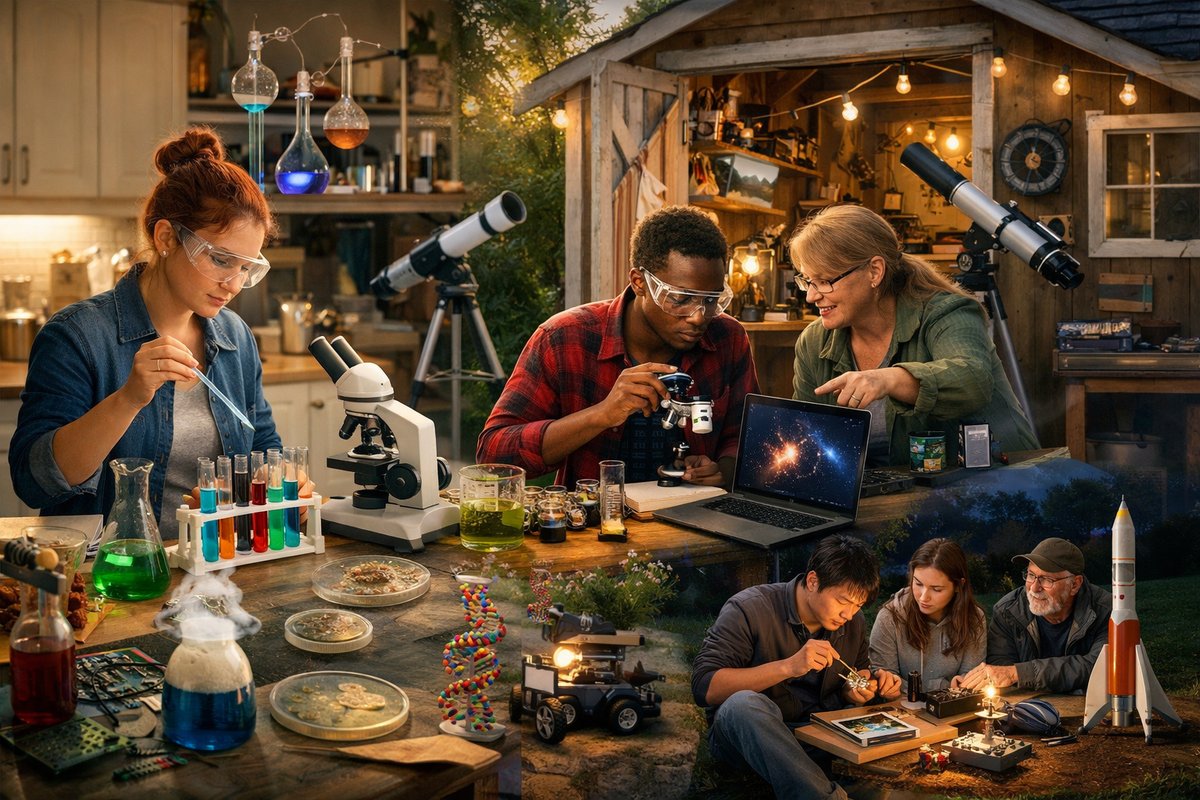

On a crisp morning, an amateur researcher sets out a tray of petri dishes across a kitchen table. Fueled by coffee and curiosity, they swab a patch of moss growing on a tree stump in their backyard, then examine the resulting cultures under a small digital microscope. In just days, unique bacterial colonies begin to emerge-colonies that might one day contribute to environmental remediation or novel antibiotics. This scene, once confined to university labs, is now unfolding wherever inquisitive minds find a surface to place a slide.
The rise of home laboratories is reshaping how we think about scientific discovery. No longer the exclusive realm of ivory towers, research is becoming a grassroots endeavor powered by everyday explorers. Well-equipped sheds, converted garages, or even repurposed closets serve as incubation chambers for experiments spanning microbiology, electronics prototyping, environmental monitoring and more. This decentralization of science is not a passing trend but a paradigm shift that democratizes knowledge and fosters a culture of shared learning.
At the heart of this movement lies a spirit of accessibility. Rather than relying on expensive, proprietary instruments, DIY researchers gravitate toward versatile, affordable tools. A digital microscope replaces bulky imaging setups. A portable pH meter stands in for a full benchtop suite. Modular glassware kits provide the flexibility to mix, heat and measure reagents safely. By focusing on multipurpose equipment, experimenters can explore a breadth of fields without breaking the bank.
But tools alone don’t make a researcher. Documentation and rigor remain crucial. Dedicated lab notebooks-designed with numbered pages and waterproof covers-help citizen scientists track protocols, record observations and note unexpected results. Well-organized records enable reproducibility and create a foundation for collaboration. When results are shared on open platforms, peers can critique methods, suggest improvements and build on preliminary findings. This feedback loop mirrors formal research, yet operates on a community scale fueled by collective curiosity.
Safety and ethics play an equally important role in home-based experimentation. Proper protective eyewear, chemical-resistant gloves and lab aprons are not optional extras but essential components of responsible practice. Clear guidelines on disposal of biological or chemical waste ensure that experiments don’t harm people or ecosystems. Many citizen science initiatives provide step-by-step safety protocols, bridging gaps in knowledge and offering mentorship. By adhering to established best-practices, DIY scientists can explore boldly without compromising well-being.
One of the most exciting aspects of decentralized labs is the ease of connecting with fellow innovators around the globe. Online forums dedicated to microscopy discoveries, soil testing projects or weather data collection transform isolated efforts into broad collaborations. Shared databases aggregate findings from hundreds of contributors, revealing patterns that would otherwise go unnoticed. Grid-linked environmental sensors can map air quality block by block, while microbiome swabs from disparate regions contribute to a pan-continental atlas of local bacteria. In each case, the sum of many small observations yields insights with outsized impact.
Despite the accessible nature of these setups, DIY scientists often achieve results rivaling those of established labs. Microbial strains isolated in home incubators have helped university researchers verify antibiotic activity. Backyard astronomers using custom-built telescopes have identified transient celestial events. Electronics hobbyists have prototyped sensors for monitoring water quality that are now being tested by environmental agencies. What was once novel now approaches mainstream validation, signaling that ingenuity and open-ended exploration can drive genuine progress.
This home lab renaissance also instills a deeper appreciation for the scientific process. Participants learn to troubleshoot failed trials, refine hypotheses and celebrate incremental wins. Children growing up in these environments see science not as a distant, intimidating subject but as a hands-on craft that anyone can master. Educators tapping into local citizen scientists bring authentic research experiences into the classroom, fostering the next generation of problem-solvers and critical thinkers.
Looking ahead, advances in miniaturized instruments and cloud-linked data services will further empower home-based researchers. Pocket-sized spectrometers could allow real-time chemical analysis in the field, while cloud-connected weather stations feed live telemetry into global climate models. Machine learning tools, once the preserve of large data centers, are being reconfigured for local use-helping DIY biologists identify cell types or flag anomalies in environmental datasets. As these innovations propagate, the threshold for meaningful contributions will continue to fall.
For those eager to embark on their own scientific journey, a handful of investments can transform a humble space into a fully functional lab. Sturdy bench surfaces, multi-channel pipettes, versatile glassware and reliable measurement devices lay the groundwork. Coupled with a network of supportive peers and an open mindset, home researchers are already making strides in fields ranging from microbiology to materials science. The real magic unfolds when disparate projects cross paths-when a chemist’s improvised sensor informs an environmentalist’s water testing, or a hobbyist’s gene-editing trial inspires a community-driven health initiative.
Science thrives on diversity of thought and experience. By welcoming explorers of all backgrounds into the fold, the home lab movement fuels innovation and broadens our collective perspective. Whether you’re isolating new yeasts for biofuel research or building a portable spectrometer for mineral analysis, each experiment adds a brushstroke to the grand canvas of discovery. The next breakthrough might emerge not from a high-tech institute, but from a curious mind tinkering at a kitchen counter.
In this era of democratized research, the line between professional and amateur science blurs. Enthusiasm, diligence and a willingness to share define the modern scientist more than institutional affiliation. As tools become more accessible and communities more interconnected, every home lab has the potential to spark discoveries that transform our world. So clear a corner of your workspace, assemble a few essential instruments and dive in. The frontier awaits just beyond your doorstep.
-
Frienda 50/100/250/500/1000ml Lab Glassware ... - Amazon.com
Amazon.com: Frienda 50/100/250/500/1000ml Lab Glassware Include Graduated Cylinder, Glass Beaker Set, Glass Dropper, Stirring Rod, Measuring Cups for ... -
Jiusion 40 to 1000x Magnification Endoscope, 8 LED ... - Amazon.com
Amazon.com : Jiusion 40 to 1000x Magnification Endoscope, 8 LED USB 2.0 Digital Microscope, Mini Camera with OTG Adapter Metal Stand, Compatible with Mac ... -
pH/Temperature Portable Meter - Milwaukee ... - Amazon.com
Buy pH/Temperature Portable Meter - Milwaukee Instruments MW102: pH Meters - Amazon.com ✓ FREE DELIVERY possible on eligible purchases. -
keebomed Hazmat Suits Hooded Coveralls ... - Amazon.com
Amazon.com: keebomed Hazmat Suits Hooded Coveralls Disposable Chemical-Resistant, Elastic, Unisex-Adult Industrial (1, BLue, L) : Industrial & Scientific. -
ELEGOO 37 in 1 Sensor Modules Kit and 3pcs ... - Amazon.com
Amazon.com: ELEGOO 37 in 1 Sensor Modules Kit and 3pcs Breadboard 830 Point Solderless Prototype PCB Board Kit and 120pcs Multicolored Dupont Wire ...