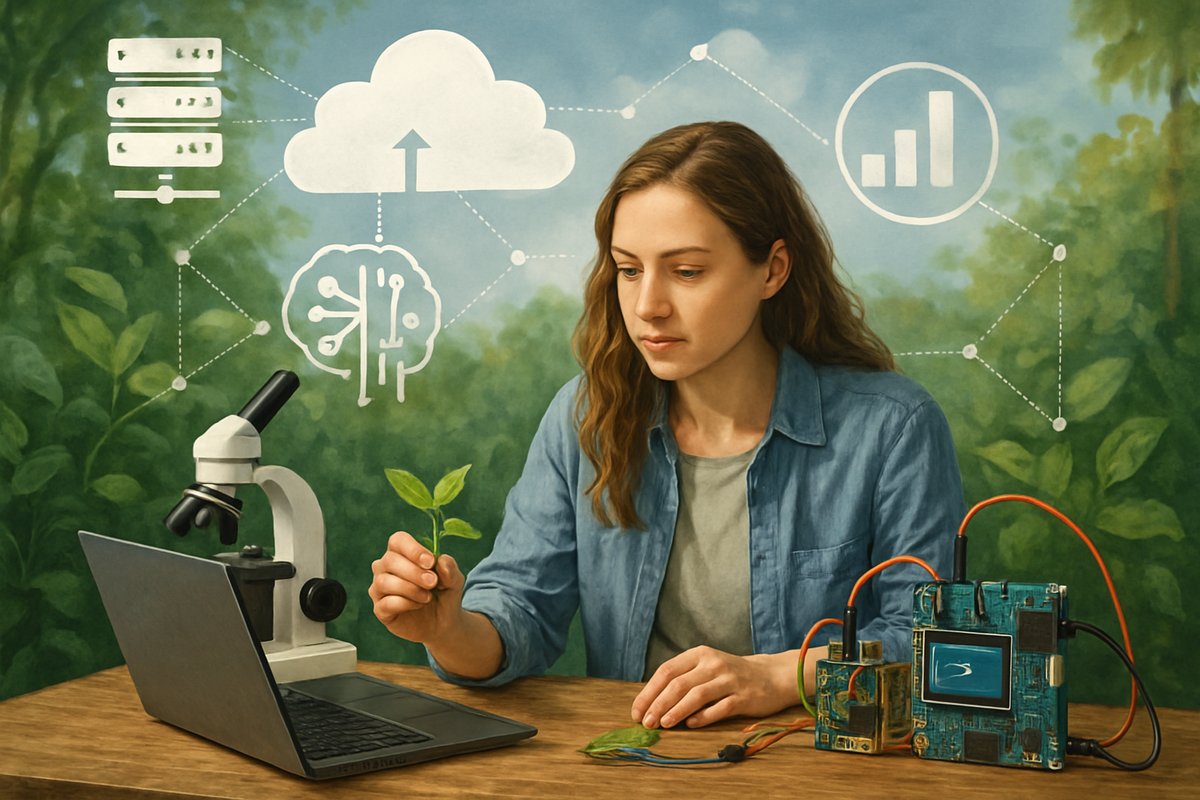

In a small workshop illuminated by LED task lights, a group of enthusiasts assembles compact modules for measuring water quality in a local stream. At the same time, halfway around the world, researchers in a university lab pore over neural network outputs predicting new antibiotic molecules. These seemingly disparate scenes share an undercurrent: a shift toward democratized, accessible science fueled by open-source tools, community collaboration, and a deep sense of stewardship for both people and planet.
Science once lived behind locked doors and served specialized journals. Today, projects as varied as gene-editing experiments and citizen-powered biodiversity surveys are unfolding in shared digital repositories and community spaces. Open hardware initiatives provide blueprints for modular lab equipment, from microfluidic pumps to portable spectrometers, enabling everyone with a 3D printer and a soldering iron to replicate experiments that once cost tens of thousands of dollars. This new ecosystem nurtures emotional intelligence and social accountability: participants continuously refine designs based on user feedback, ensuring tools are safe, inclusive, and aligned with sustainability goals.
The rise of AI-assisted discovery has supercharged this grassroots movement. Deep-learning models sift through massive datasets to reveal patterns invisible to the human eye. In drug discovery, for example, algorithms trained on molecular libraries can propose candidate compounds in days rather than years. When these digital predictions are paired with do-it-yourself chemistry rigs, small teams can validate promising leads in backyard labs outfitted with open-source controllers and safety features. Privacy is baked in: raw data from experiments can be processed on local devices or privately hosted servers, giving contributors control over sensitive information while still benefiting from collective intelligence.
One remarkable instance of open collaboration unfolded when a global network of amateur astronomers used smartphone adapters and affordable optics to capture transient astronomical events. By pooling timestamped photos on a secure, federated platform, the group refined measurements of a distant supernova’s brightness curve. This community-driven effort not only verified professional observatory data, but also provided critical early warnings for professional follow-ups. Such achievements illustrate how emotionally engaged participants, driven by curiosity and mutual respect, can accelerate science without sacrificing rigor.
At the same time, environmental monitoring has embraced miniaturized sensor arrays that measure air quality, soil moisture, and even acoustic biodiversity. Distributed networks of wireless sensor kits transmit encrypted data to regional hubs, where machine-learning pipelines flag pollution spikes or shifts in wildlife activity. Communities can respond in real time-planting buffer trees, adjusting farming practices, or lobbying for policy changes informed by hard evidence. This blend of emotional intelligence, privacy awareness, and technological savvy transforms passive citizens into empowered stewards of local ecosystems.
Behind these innovations lies a growing philosophy: treat knowledge as a shared resource rather than a commodity. Open-access repositories host everything from annotated genomes to circuit schematics for cloud-connected lab equipment. Each entry carries a license that ensures derivatives remain open, fostering a culture of reciprocity. Contributors from underrepresented regions can adapt protocols to local contexts-translating instructions, swapping materials for what’s available, and documenting results in multilingual formats. The result is a tapestry of diverse approaches that enriches global understanding of complex phenomena.
Yet this vibrant ecosystem isn’t without challenges. Quality assurance demands new norms: community-driven peer review, continuous integration of code and hardware tests, and transparent reporting of failures. Ethical considerations loom large when DIY biologists manipulate genetic material or when environmental data could impact property values and livelihoods. Addressing these concerns requires not only technical safeguards-such as digital watermarking of data streams and secure access controls-but also empathetic dialogue among scientists, policymakers, and the public.
To navigate these complexities, educational initiatives are adapting. Workshops now cover responsible data stewardship alongside soldering techniques; ethics seminars run in parallel with machine-learning coding sprints. By weaving emotional intelligence into STEM curricula, educators help budding researchers recognize the social impacts of their discoveries. Students learn how to write clear, inclusive documentation; how to build feedback loops that honor community input; and how to design experiments with environmental footprints in mind.
Institutions are also evolving. Some laboratories have embraced co-design models, inviting local residents to shape research priorities. A city-scale air quality project might start with a town hall meeting where families share concerns about respiratory health. Researchers then tailor sensor deployments to capture the most relevant data, round-trip results back to participants, and co-present findings at public forums. This collaborative loop fosters trust, reduces barriers to entry, and ensures that scientific advances align with everyday needs.
Meanwhile, frontier fields like quantum materials and synthetic biology increasingly rely on hybrid teams of domain experts, software engineers, and citizen contributors. Open simulation platforms enable anyone to test theoretical models on cloud-based quantum emulators. Successful configurations can be verified on lab-scale quantum devices operated by remote users. In synthetic biology, standardized DNA parts described in machine-readable registries allow automated assembly of genetic circuits. Enthusiasts can order DNA fragments from bio-foundries, assemble circuits in community labs, and share performance metrics via online dashboards.
As science becomes ever more interconnected, sustainability remains paramount. Researchers are rethinking supply chains, favoring recycled plastics for 3D-printed parts and sourcing electronic components from circular-economy suppliers. Software is designed to run on low-powered hardware to reduce energy consumption. Data centers leverage renewable energy and advanced cooling techniques. This holistic mindset underscores a fundamental truth: accelerating discovery must go hand in hand with safeguarding the planet that inspires curiosity in the first place.
In this unfolding narrative, the distinction between professional scientist and amateur explorer is blurring. Laboratories expand into living rooms, field stations into digital forums, and learning becomes a lifelong dialogue across cultures and disciplines. By embracing open science, DIY innovation, and a values-driven approach grounded in privacy, sustainability, curiosity, and emotional intelligence, we stand on the cusp of a new era: one where anyone, anywhere, can contribute a verse to humanity’s greatest experiment.
No affiliate links found for this post.