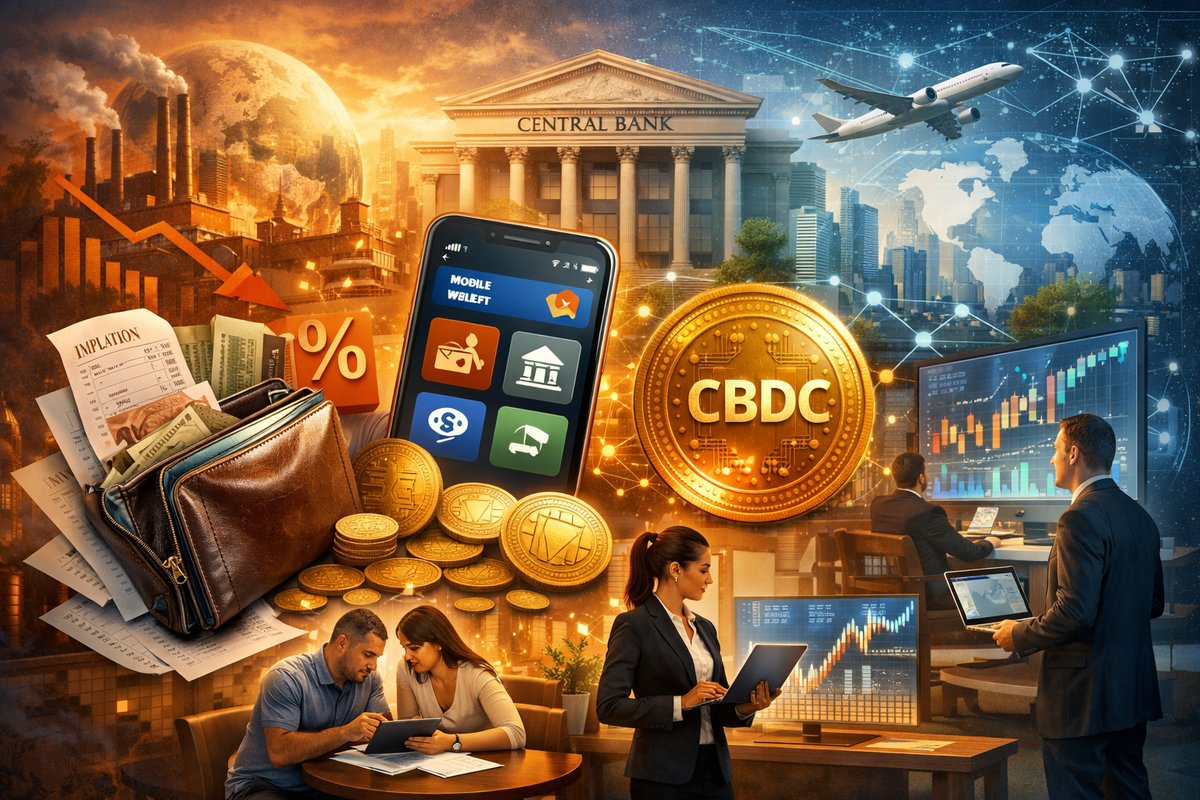

Household budgets are being tested like never before. Consumers in major economies are feeling the pinch as prices for essentials-from groceries to fuel-rise at rates unseen in recent decades. Central banks have responded with swift interest rate hikes, aiming to tame inflation without tipping economies into recession. Meanwhile, a parallel revolution is underway in the way money itself is created, distributed, and used. Whether tapping a smartphone to pay for coffee, trading stablecoins on peer-to-peer platforms, or tracking investments with robo-advisors, individuals are increasingly relying on digital tools to manage their finances. The pandemic accelerated this shift, and now a blend of necessity and innovation is reshaping the fundamentals of commerce and saving.
Consumers who once relied on cash and conventional bank cards are adopting mobile payment apps in record numbers. In markets where QR codes and near-field communication have become ubiquitous, small businesses report faster check-out times and higher customer satisfaction. These apps often integrate budgeting features, sending push notifications when spending in a given category exceeds predefined limits. Early data from fintech providers show that users who engage with built-in expense trackers reduce discretionary spending by up to 15 percent over three months.
At the same time, traditional banks are rolling out their own digital wallets and partnering with fintech startups. A growing number of accounts now offer instant peer-to-peer transfers without fees, automated savings plans that round up every purchase to the nearest dollar, and real-time alerts for potential fraud. In a world where a data breach can cost millions and ruin consumer trust, these security features have become table stakes. Recent incidents underscore the importance of strong encryption and multi-factor authentication. Industry analysts estimate that by next year, more than 80 percent of mainstream financial institutions will require hardware-based security keys or biometric verification for high-risk transactions.
Beyond payments and personal accounts, digital finance has reached the institutional level. Central banks in several major economies have launched pilot programs for central bank digital currencies (CBDCs). These government-backed digital units of account promise greater transparency in payments, faster cross-border settlements, and reduced reliance on private stablecoins. In one pilot, participants used a smartphone app to transfer digital currency instantly between wallets issued by different banks. Settlement settled in seconds rather than days, slashing counterparty risk and lowering transaction costs.
Yet the road to wide adoption is far from smooth. Privacy advocates warn that a state-issued digital currency could enable unwanted surveillance of individual spending. Regulators in multiple jurisdictions are grappling with how to strike a balance between preventing illicit activity and safeguarding personal data. Some proposals call for tiered wallets: small balances could be maintained anonymously, while larger holdings would require full identity verification. Tech architects are debating offline-capable wallets that store encrypted tokens directly on a device, reducing the risk of a total blackout if centralized servers go down.
At the retail level, a boom in digital finance education is underway. Virtual workshops and social media channels dedicated to financial literacy have seen explosive growth. One online platform reports a 200 percent increase in enrollment for digital-economy courses over the past six months. Topics range from building an emergency fund to understanding how tokenized assets work on decentralized networks. Instructors emphasize that technology is only as useful as the person behind it. Mastering basics-such as balanced portfolios and dollar-cost averaging-remains essential even in the most cutting-edge environments.
Investment practices are evolving in tandem. Robo-advisors have gained credibility by delivering portfolio allocations calibrated to users’ risk profiles, with fees often a fraction of those charged by traditional brokers. Some platforms now integrate environmental, social, and governance (ESG) ratings, allowing investors to align holdings with broader values. At the same time, peer-to-peer lending and crowdfunding sites enable direct financing of small businesses and sustainable projects. Average annual returns on certain loans have hovered between 4 and 8 percent, though these carry higher credit risk. Investors are learning that digital finance ecosystems are not a guaranteed path to riches but can be tailored to individual goals, from short-term savings to long-horizon retirement planning.
Corporate treasury departments, too, are upgrading digital capabilities. Automated cash-management algorithms sweep excess liquidity into short-term money-market funds at the end of each business day, avoiding idle balances that earn negligible interest. Meanwhile, real-time dashboards display foreign exchange exposures, allowing treasurers to hedge currency risk with a few clicks. Blockchain-based trade finance solutions are streamlining letters of credit and reducing paperwork by up to 70 percent, cutting settlement times from weeks to days.
Nevertheless, challenges remain on the regulatory front. Cross-border payment systems remain fragmented, with correspondent banking networks struggling to clear low-value transactions efficiently. Industry consortia are experimenting with interoperable protocols to link local digital wallets across regions. In Asia, one consortium connected five pilot wallets spanning three countries, enabling workers to send remittances home with near-zero fees. Global adoption will require careful coordination among regulators, central banks, and private sector developers.
Against this backdrop, households are revisiting age-old principles of financial resilience. Building an emergency fund that covers three to six months of living expenses, paying down high-interest debt, and investing for long-term goals remain foundational. Digital tools can accelerate these objectives, but they cannot eliminate them. Budgeting apps offer real-time visibility, while automated investments enforce discipline. Mobile banking notifications keep consumers informed, but nothing replaces a clear understanding of cash flows and liabilities.
The next phase of this digital transformation may hinge on the emergence of programmable money. Smart contracts-self-executing code stored on a distributed ledger-could automate rent payments, subscription renewals, or even micro-insurance claims without manual intervention. Think of a lease agreement that releases monthly rent automatically, with late-fee penalties coded in from the outset. Or agricultural insurance that pays out instantly if satellite data indicate extreme weather conditions. Pilot projects in these areas are underway, but widespread use will depend on robust legal frameworks and technical interoperability standards.
In many ways, the current moment recalls earlier financial innovations: the advent of paper money, mechanical calculators, or online banking in the 1990s. Each breakthrough raised questions about trust, access, and the nature of value itself. Today’s digital shift carries the same blend of promise and uncertainty. For individuals, the tools at hand-from budgeting apps to hardware security modules-offer unprecedented control over money management. For institutions, central bank digital currencies and blockchain-based settlement systems portend faster, cheaper, and more transparent finance. Policymakers face the dual task of fostering innovation while protecting consumers from new forms of vulnerability.
Ultimately, the balance between stability and progress will determine how these technologies reshape the global economy. Inflation may ebb and flow, interest rates may rise or fall, but the digital foundations being laid now are likely to endure. Those who embrace both traditional financial principles and cutting-edge tools will find themselves better positioned to navigate the currents ahead. In an age where money is as much code as it is currency, understanding both halves of that equation becomes the greatest asset of all.
-
Security Keys - Amazon.com
Browse security keys offering passkey support and advanced authentication protocols. Protect personal and work accounts with trusted hardware solutions. -
External Solid State Drives / Data Storage - Amazon.com
Samsung T7 Portable SSD, 1TB External Solid State Drive, Speeds Up to 1,050MB/s, USB 3.2 Gen 2, Reliable Storage for Gaming, Students, Professionals, MU-PC1T0T/ ... -
Active Noise Cancelling Headphones, Upgraded Wireless Bluetooth ...
BERIBES Bluetooth Headphones Over Ear, 65H Playtime and 6 EQ Music Modes Wireless Headphones with Microphone, HiFi Stereo Foldable Lightweight Headset, Deep ... -
SENSYNE 62" Phone Tripod for iPhone, Extendable Selfie Stick ...
iPhone, Android phones, smartphones, cell phones, digital cameras, action cameras, webcams, camcorders, devices with universal 1/4-inch screw mountiPhone, ... -
Budget Notebook - Amazon.com
Elevate your budgeting experience with high-quality, feature-rich planner notebooks. Streamline your finances and stay on top of expenses, bills, ... -
Hardware Wallet - Amazon.com
Results · TANGEM Crypto Wallet Pack of 2 – Trusted Cold Storage Hardware Wallet for Bitcoin, Ethereum, NFTs & Altcoins – 100% Offline Crypto Cold Wallet · More ...