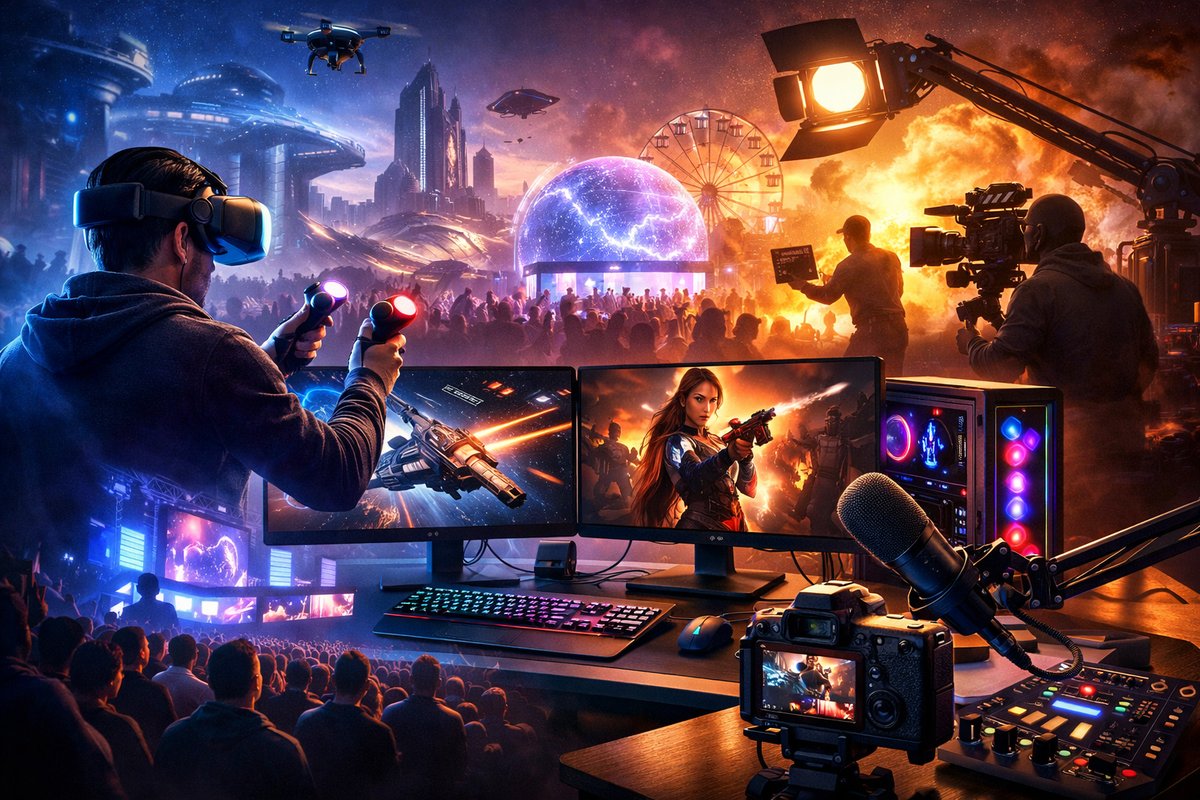

The gaming landscape is undergoing a seismic evolution. What began as simple pixelated adventures has exploded into sprawling open worlds, lifelike simulations, and virtual realms where the only limit is the player’s imagination. As traditional trade shows give way to digital showcases, and new delivery models rise to prominence, both hardware and software innovators are racing to keep pace with growing demand for immersive experiences.
One of the most visible shifts is the move from crowded expo halls to streamed announcements and on-demand demos. In recent digital showcases, developers have clocked millions of eager downloads during week-long demo festivals on major PC platforms. These events allow studios-both indie and AAA-to roll out playable slices of upcoming titles without the logistical hurdles of a physical booth. For players, it’s a low-commitment way to sample everything from quirky side-scrollers to ambitious role-playing epics.
Meanwhile, console and PC manufacturers continue to refine the performance race. Faster loading times, ray-tracing graphics, and higher frame rates have become baseline expectations. Yet the latest competition is in sensory realism: immersive audio drivers, haptic controllers, and even eye-tracking modules that respond to where you look. This push toward seamless engagement reflects a belief that blurring the boundary between real and virtual will be the next frontier.
Virtual reality (VR), long touted as the future of play, is finally finding its stride in both standalone headsets and PC-tethered systems. Recent headsets boast inside-out tracking, enhanced resolution, and more ergonomic designs that improve comfort during marathon sessions. In addition, eye-tracking integration delivers foveated rendering-boosting performance by focusing graphical fidelity where the user is looking. For developers, these advancements lower barriers to creating polished VR titles, fueling a growing library of interactive worlds.
Augmented reality (AR) is also inching closer to mainstream adoption. While early smartphone experiments were often viewed as novelty, new AR glasses prototypes promise untethered, transparent displays that overlay game elements onto the real world. If research and pilot programs scale effectively, AR could transform environments-turning urban streets into live battlegrounds or living rooms into escape-room puzzles.
On the software front, subscription passes and cloud-streaming bundles have expanded libraries at a fraction of traditional costs. Gamers now subscribe to services that grant access to hundreds of titles across multiple generations of consoles and PCs. Cloud streaming, in turn, unlocks high‐end performance on midrange devices by offloading rendering to remote servers. Although network latency remains a concern, recent trials in dense urban areas demonstrate that sub-40-millisecond response times are achievable over fiber and 5G networks.
Esports and live events share in this momentum. New franchised leagues and international tournaments are filling stadiums and pulling spectators online. Top teams attract tens of millions of live views, rivaling traditional sports broadcasts. To keep audiences engaged, producers are incorporating interactive overlays, real‐time statistics, and community polling features that blend spectator and participant roles.
For independent creators, the barrier to entry has never been lower. Accessible development engines, robust marketplaces, and crowdfunding platforms enable small teams to reach global audiences. Some indie titles have gone from bedroom prototypes to best-selling sensations within weeks, underscoring the appetite for fresh ideas and experimental mechanics. The democratization of tools also means modding communities flourish, extending the lifespan of classic titles through custom content.
Amid all these innovations, one constant remains: the player’s environment. A living room once defined by a single TV screen now sports multi-monitor arrays, immersive chairs with force feedback, and ambient lighting synchronized to on-screen action. As game worlds grow more detailed, players invest in hardware that complements these virtual landscapes-high-dpi mice for pinpoint precision, curved monitors for panoramic vistas, and surround-sound speaker systems for directional cues.
Comfort and ergonomics have taken center stage, too. Long hours of competitive play can tax the body, so adjustable gaming chairs, wrist supports, and desk setups that encourage movement are in high demand. Voice-controlled lighting and thermostat profiles tailor the atmosphere for each title, from brooding horror scenarios to vibrant fantasy realms.
Accessibility remains a critical concern. Developers and hardware makers are collaborating to introduce customizable controller layouts, text-to-speech options, and adaptive peripherals for players with mobility challenges. These inclusive design efforts not only open doors for new audiences but also spark innovation in mainstream products.
Cross-platform compatibility is another hallmark of today’s scene. Title launches are often simultaneous across consoles, PCs, and mobile devices, with cross-save and cross-play features bridging communities. This interconnected approach encourages friends on different systems to game together, contributing to a more unified ecosystem.
As entertainment merges further, gaming influences film, television, and live theater. Interactive movie-style narratives invite viewers to shape the plot, while live action events incorporate game mechanics like leveling up and choice-driven outcomes. In turn, filmmakers draw inspiration from game cinematography, employing dynamic camera movements and real-time rendering techniques for previsualization.
Looking ahead, advancements in artificial intelligence promise smarter NPCs, procedural world generation on an unprecedented scale, and dynamic narrative systems that respond to player behavior. Cloud-based AI agents could moderate voice chat, personalize difficulty, or even co-author in-game stories alongside players.
The convergence of these trends paints a future where play is more social, adaptive, and multisensory than ever before. Whether you’re donning a headset for a VR expedition, tuning into a high-stakes esports final, or simply streaming your favorite open-world saga from the couch, the ecosystem supporting these experiences is richer and more diverse. For enthusiasts, that means investing in gear that can keep pace-and for creators, an open invitation to push boundaries.
From the ergonomic desk that cradles your wrists to the immersive lighting that syncs with every explosion, the right setup transforms gaming from an activity into a fully realized experience. As both technology and imagination accelerate, our collective journey further blurs the line between reality and the digital cosmos.
-
MageGee Mechanical Gaming Keyboard, New Upgraded Blue ...
104 mechanical keys are conflict free, allowing you to press or hold multiple keys simultaneously. 12 multimedia combination keys on the top of the keyboard ( ... -
Surround Sound Headphones - Amazon.com
Corsair HS65 Surround Multiplatform Wired Gaming Headset – Dolby Atmos – SonarWorks SoundID – iCUE Compatible – PC, Mac, PS5, PS4, Xbox, Nintendo Switch, Mobile ... -
Led Ambient Lighting - Amazon.com
Discover a wide range of LED ambient lighting options. Find smart floor lamps, strip lights, and projectors with customizable colors and music sync. -
Ergonomic Gaming Chair - Amazon.com
Discover gaming and office chairs with advanced ergonomic features. Get adjustable support, reclining capabilities, and sturdy construction for all-day ... -
RAPIQUE Bluetooth Wireless Mouse - (BT1/BT2+USB) Tri-Mode ...
Amazon.com: RAPIQUE Bluetooth Wireless Mouse - (BT1/BT2+USB) Tri-Mode High Performance, Rechargeable, Quiet Click, Multi-Device Compatibility for Laptop, ...