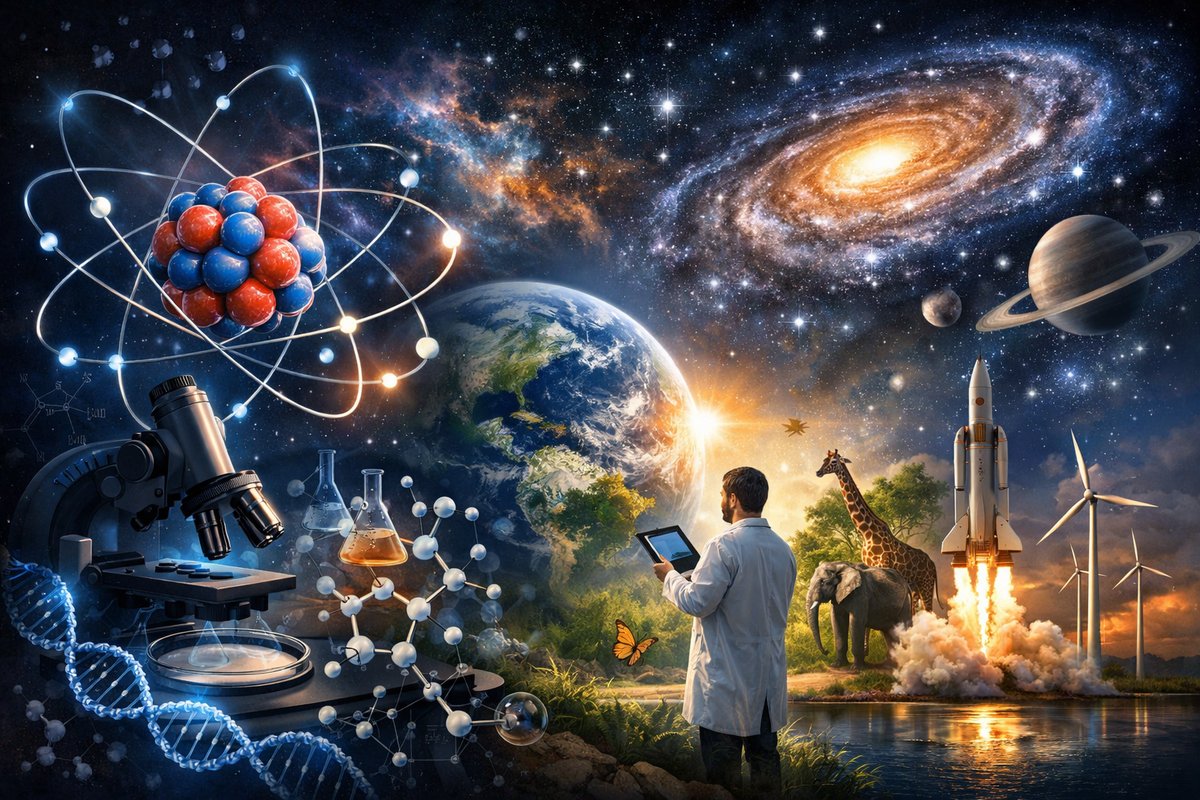

Science begins with a simple spark of curiosity: a question about how the world works. This impulse drives us to observe patterns in nature, to wonder why leaves unfurl in spring or why metal rusts in the rain. Over centuries, scholars and experimenters refined that impulse into a systematic approach-a cycle of hypothesis, testing, analysis, and revision. Whether probing the quantum realm or charting climate trends, science combines imagination with rigor, balancing playful exploration and disciplined methods.
At the core of science lies the empirical cycle. Observation invites hypotheses-tentative explanations that frame an experiment. Those experiments can be as grand as launching a telescope into orbit or as humble as testing soil acidity in your backyard. Data gathered through measurement and sensing tools then shapes our understanding. Patterns emerge, leading to new questions and refinements in theory. This iterative loop ensures that scientific knowledge is provisional, always open to new evidence. It guards against bias and encourages transparency: researchers share raw data, methods, and results so that others can verify, replicate, and build on their work.
Science branches into many interconnected fields. Physics explores matter, energy, and the forces that govern motion, from subatomic particles to black holes. Chemistry investigates the composition, structure, and reactions of molecules, unlocking processes that power our bodies and fuel industry. Biology studies living systems-from the genetic code inside a cell to the dynamics of entire ecosystems. Earth science deciphers the planet’s layers, climatic systems, and shifting tectonic plates. Then there’s computation and data science, which harness algorithms to uncover patterns in massive datasets, from genomics to social networks. Each discipline has its own tools and vocabulary, but they intersect constantly. Advances in materials science, for example, often depend on insights from physics, chemistry, and engineering in tandem.
Tools are the extensions of scientific vision. In a classroom or home setting, a basic compound microscope reveals hidden universes on a slide of pond water-rotifers, algae, microscopic invertebrates dancing in a droplet. A digital multimeter lets students probe electrical circuits, measuring voltage and current to understand the principles behind lighting an LED or running a motor. Portable weather stations collect temperature, humidity, and barometric pressure data, turning a backyard into an environmental observatory. Molecular model kits let learners assemble representations of chemical structures, grasping how atoms bond into complex molecules. Field notebooks-hardbound, weatherproof-capture sketches, measurements, and observations in real time, preserving raw data for analysis. These everyday instruments democratize science, empowering anyone to collect meaningful evidence and cultivate hands-on skills.
The rise of citizen science and do-it-yourself experimentation has further expanded participation. Community members install air-quality sensors outside schools to map pollution hotspots, then share the data on collaborative platforms. Amateur astronomers contribute to asteroid tracking by capturing images through backyard telescopes. High-schoolers build low-cost spectrometers using borrowed lenses and smartphone cameras, analyzing light signatures from everyday materials. Such projects underscore key values: open access to information, respect for privacy when sharing personal data, and long-term sustainability through reusable or low-waste materials. As participants become both data collectors and audience for scientific discoveries, they learn not only technical skills but also the ethics of responsible inquiry.
Science is woven into daily life in ways we often take for granted. When you bake bread, you rely on microbiology and thermodynamics-yeast ferments sugars, releasing gas that makes dough rise under precise temperature control. Gardening connects you to soil chemistry and plant biology, guiding choices about compost, pH balance, and water cycles. Fitness tracking on a mobile device uses sensors and algorithms to estimate distance, calories burned, and sleep quality. Architecture and design draw on materials science and statics to create structures that are both functional and resilient. Even choices in nutrition reflect biochemical insights into macronutrients and metabolic pathways. Recognizing these connections deepens our appreciation for the science at work behind everyday tasks.
Yet scientific advancement brings responsibilities beyond technical mastery. Emotional intelligence matters when communicating results, managing collaborative projects, or engaging with communities affected by research. Clear, empathetic dialogue helps build trust in areas like public health and environmental policy. Attention to data privacy ensures that personal or location-based measurements-such as air-quality monitoring near residential zones-are collected and shared ethically. Sustainability lies at the heart of contemporary science: whether developing renewable energy technologies, minimizing laboratory waste, or designing circular-economy systems for resource reuse. These values create a framework for science that honors both human well-being and planetary health.
Looking ahead, science continues to evolve through interdisciplinary convergence. Artificial intelligence and machine learning accelerate pattern recognition in fields from genomics to climate modeling. Nano-engineering manipulates matter at atomic scales, promising breakthroughs in medicine, electronics, and materials. Bioinformatics merges biology and computation, unlocking new treatments and personalized medicine. Citizen-driven networks of sensors and open databases fuel real-time monitoring of environmental phenomena. Virtual and augmented reality create immersive simulations, training students and professionals to explore complex systems safely. All these frontiers depend on a foundation of curiosity, collaboration, transparency, and ethical stewardship.
To engage with science is to embrace lifelong learning. Anyone can start by asking questions and seeking answers through simple experiments. A magnifying glass can reveal insect anatomy; a homemade pH indicator from red cabbage can map acidity in local streams; a freely available data-analysis tool can visualize rainfall trends from publicly posted archives. As skills grow, so do opportunities to contribute: from submitting wildlife observations to global biodiversity platforms to participating in online challenges that classify galaxies or transcribe historical documents. Every act of scientific exploration-whether in a formal lab or a kitchen table-adds to our collective understanding and helps tackle shared challenges.
Ultimately, science is more than a body of knowledge; it’s a habit of mind. It combines rigorous methods with wonder, precision with creativity, community with individual initiative. By valuing transparency, privacy, sustainability, and empathy, we ensure that scientific progress benefits all. So pick up a notebook, calibrate a sensor, peer through a lens, and ask your own questions. The next discovery might be just around the corner, waiting for your observation to spark a new cycle of inquiry.