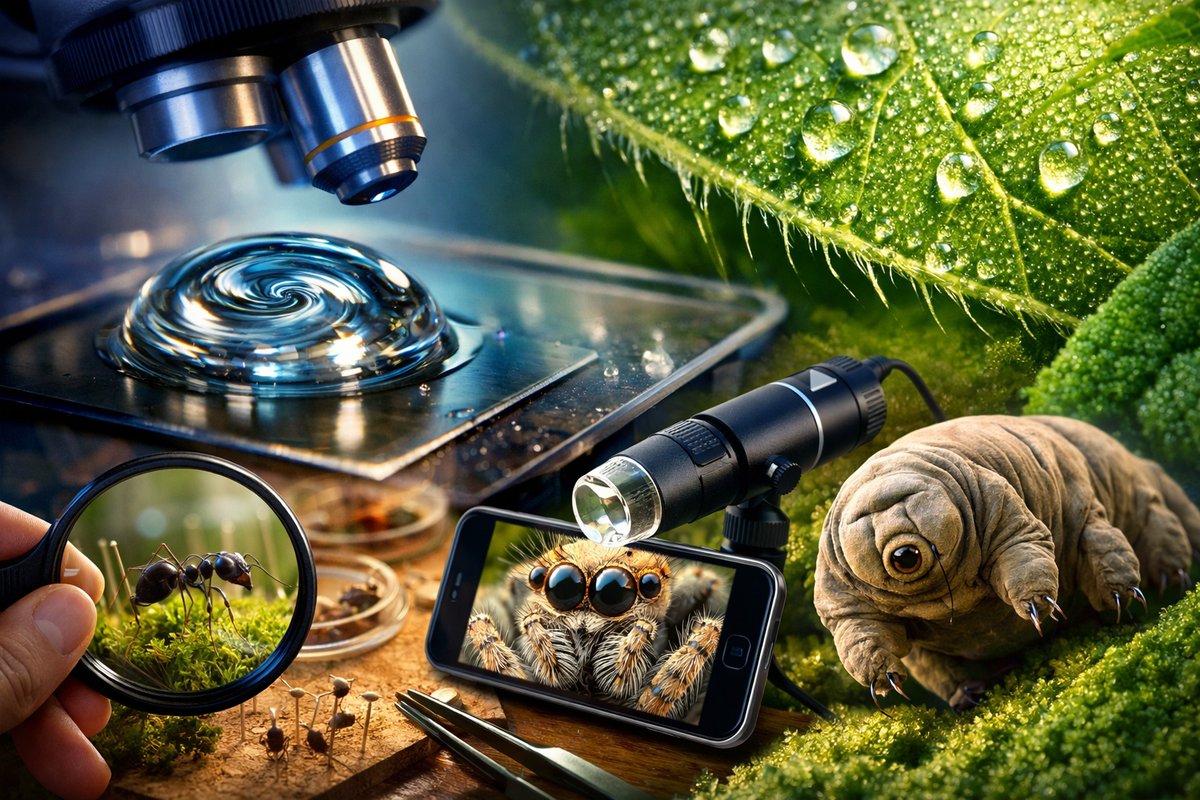

The sensation of peering through a lens and discovering a hidden landscape can shift how we see the world. In that small window entire ecosystems of intricate forms and unexpected life thrive beyond the reach of our senses. From the swirling patterns of pond water to the crystalline lattices forming on drops of kitchen syrup, microscopic realms invite curiosity and delight.
Everyday items often conceal rich stories waiting to be revealed. A speck of dust on the windowsill may harbor fibers, pollen grains, and traces of fungal spores. A smear of yogurt on a slide can bring bacterial clans into sharp relief. Even a strand of hair shows cellular scale detail when placed under magnification. These moments remind us that the boundary between visible and invisible is only a matter of perspective.
Setting up a basic home microscope station can be surprisingly affordable. A sturdy stand, a selection of low and high power eyepieces, and a small collection of prepared slides provide a gateway to tiny worlds. Natural light or a simple LED illuminator can replace expensive lighting rigs. A budget friendly metal carrying case keeps components organized and portable, so exploration can move from desk to backyard and back again.
One of the most enchanting first experiments uses pond water as a living tapestry. Collect a sample from a local stream, fountain, or rainwater puddle in a shallow dish. Under low power you may see protozoa darting in elliptical paths, algae filaments waving like underwater grass, and minute animal larvae pulsating with life. Switching to higher magnification reveals cilia beating against the current and cell bodies outlined in vivid contrast.
The kitchen also hides microscopic marvels. Dust off a slice of onion skin or the epidermis of a leaf to reveal cell walls and nuclei. Squeeze grape juice and watch sugar crystals aggregate. Sprinkle table salt into water and catch crystals forming in minutes. Even dried spices harbor fungal spores and particulate fragments that trace their journey from field to pantry.
Preparing samples safely and cleanly is essential. Always wash hands before and after handling slides. Use disposable pipettes to transfer fluids and gloves if working with fermented or soil based specimens. After observation, slides can be rinsed under running water and air dried. Avoid using harsh chemicals unless you have proper ventilation and protective gear, reserving those tests for more advanced investigation.
For those curious about light beyond the visible spectrum, a simple diffraction grating tucked in front of a smartphone camera can act as a makeshift spectrometer. By pointing an LED lamp, candle flame, or compact fluorescent bulb through the grating, you can capture spectral bands on screen. This lets you compare emission lines, observe absorption patterns, and even identify elements in familiar light sources.
Documenting discoveries deepens engagement. A dedicated notebook, paired with smartphone micrographs, tracks observations, sketches, and questions. Note the date, sample source, magnification level, and any color or movement you notice. Over weeks and months you will begin to chart seasonal fluctuations in pond life, track the growth of crystal formations, and discover patterns you had never suspected.
Citizen science platforms welcome contributions from home explorers. Upload micrographs of diatoms found in local waterways, report counts of pollen grains drifting through filters, or share time lapse images of crystal growth. Open access databases and mobile apps connect backyard naturalists with professional researchers, ensuring that small scale experiments can feed into large scale studies of biodiversity, climate impact, and environmental health.
The micro realm also offers fertile ground for interdisciplinary mashups. Pair your microscope with simple electronics to measure pH or electrical conductivity of samples. Use open source image analysis software to classify organisms by shape and movement. Develop machine learning classifiers that help sort and tag hundreds of images overnight. These cross disciplinary experiments teach coding, instrumentation, and analytical thinking alongside pure wonder.
Beyond data and analysis there is an emotional connection in witnessing the hidden vitality around us. Recognizing that we share our environment with countless unseen organisms can foster humility, respect, and even empathy for living systems. Moments of awe under the lens remind us that no matter how small, every life form has a place in the grand design of nature.
Sustainability minded explorers will rejoice in reusing glass slides, repurposing light sources, and sourcing samples ethically. Rustle up fallen leaves instead of tearing off living ones. Collect rainwater rather than disturbing sensitive wetlands. When experiments are finished, photographs endure without creating waste. This ethic extends the joy of discovery while preserving the environments that inspire it.
As confidence grows you may design new experiments. Measure the rate of crystal growth under different temperatures. Compare cell shapes from urban storm drains and rural ponds. Time how quickly turbid kitchen wastewater clears as particles settle. Every experiment teaches more than microscopy itself-it builds patience, observation skills, and a lifelong habit of asking why.
Whether you are a student building a science fair project or a lifelong learner seeking fresh perspectives, the microscopic frontier awaits. All you need is a lens, a dash of curiosity, and the willingness to see the world anew. Charting these miniature landscapes reveals connections between disciplines, environments, and even the tiniest threads that weave the fabric of life.
Charting New Frontiers in Micro Worlds