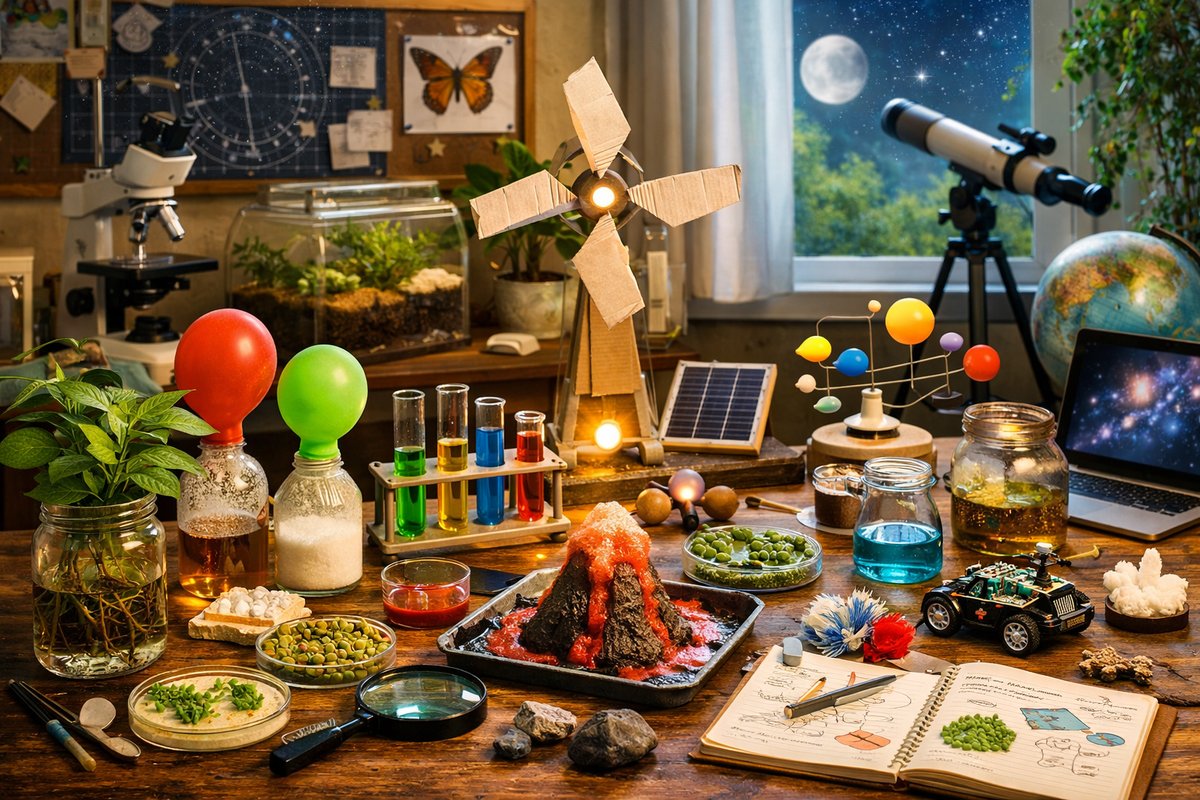

Curiosity doesn’t require a high ceiling or a grand laboratory; it flourishes wherever you see the world as a question waiting to be asked. In the spaces between your kitchen counter and windowsill, you can cultivate experiments that reveal biology’s hidden dances, chemistry’s color transformations, physics’ playful laws, and astronomy’s cosmic wonders. By combining improvised tools with a sustainable mindset and a dash of digital technology, you’ll discover that science is less about specialized equipment and more about the spark of inquisitiveness.
Begin with biology by harnessing the genius of germination. Place a few bean seeds between damp paper towels in a clear glass jar and watch roots unfurl within days. Use small labeled containers to test variables-light versus dark, warm versus cool. Chart growth rates in a reusable lab notebook or free spreadsheet software, and capture time-lapse images with your phone. A basic plant grow lamp can simulate spring conditions during overcast weeks, and simple pH test strips will reveal whether your homemade potting mix leans acidic or alkaline. Soon you’ll understand how soil chemistry shapes plant health.
Water quality is another frontier waiting in your faucet, creek, or rain barrel. Fill clear plastic containers with local water samples, then dip in pH strips and ammonia test kits from a home aquarium supplier. Record changes after adding a pinch of baking soda or a splash of distilled white vinegar-two kitchen staples that teach fundamental acid-base reactions. Observe how a tiny change in pH can affect clarity, odor, and microbial growth. Each data point brings you closer to understanding local ecosystems and the science of water treatment.
Chemistry becomes an engaging spectacle when you explore acid-base indicators and simple titrations. Heat vinegar and baking soda in a glass bowl, capture the carbon dioxide fizz, and measure the final volume of gas with a balloon tied around the rim. For a more refined approach, build a DIY spectroscope using a cardboard tube, aluminum foil, and a diffraction grating disc. Shine different light sources-LED, incandescent bulb, even your phone’s flashlight-through the slit, and observe the rainbow patterns. You’ll learn how spectral lines reveal the elemental fingerprints of each light source.
Physics experiments let you play with light and sound every day. A small prism can split sunlight into a colorful fan on a white wall, teaching refraction angles. Suspend a pendulum from a sturdy shelf and time its swings with your smartphone’s stopwatch to calculate the period and estimate gravity’s local value. Plug a pair of inexpensive headphones into a tone generator app, then tap on different surfaces to study resonance and frequency. These hands-on activities introduce momentum, energy transfer, and wave behavior without bulky lab equipment.
Astronomy might seem distant, but even a basic tabletop telescope can open worlds beyond your backyard fence. Mount it on a steady tripod and learn to align it with bright stars as calibration points. Attach a simple smartphone adapter to photograph the Moon’s craters, Jupiter’s cloud bands, or the rings of Saturn. A star chart app will help you identify constellations, while long-exposure night-scape photography can capture the Milky Way stretching overhead. Don’t overlook binoculars-affordable and portable, they offer a gentle introduction to observing lunar phases and major star clusters.
Environmental science comes alive when you test soil samples for nutrient content and moisture. Scoop soil from different garden patches or a nearby park, then use a home soil testing kit to measure nitrogen, phosphorus, and potassium levels. Compare results from a native soil bed to a container garden, and brainstorm ways to improve any deficiencies-compost tea, wood ash, or leaf mulch all provide real-world lessons in sustainable amendment. By integrating recycled containers and biodegradable pots, you’ll minimize waste and learn about circular resource use.
Accurate data logging is vital to turn observation into insight. A digital kitchen scale with gram precision can measure reactant masses for small-scale chemistry or ingredient ratios for plant nutrient solutions. Pair that with a simple analog or digital multimeter to measure voltage in homemade batteries made from salt-water cells or lemon juice. Organize your results in a bound lab notebook-one with recycled paper-or in cloud-based spreadsheets for remote collaboration. Consistent record-keeping builds scientific rigor and fosters a sense of accomplishment as your charts fill with curves and trends.
Once you’ve collected data, consider sharing it with citizen science platforms to contribute to global research. Whether you’re logging local bird sightings, tracking plant phenology, or measuring nocturnal light pollution, these community-powered databases value observations from every backyard. Respect privacy by avoiding geotags on sensitive data, and follow each platform’s protocols for data quality. The thrill of seeing your results appear alongside professional studies deepens your connection to the scientific community.
Designing experiments follows the classic cycle: ask a question, form a hypothesis, plan controls, vary one factor at a time, and analyze outcomes. Test how varying light color affects plant height. Investigate whether sugar concentrations influence yeast bubble production. Compare inert surface materials to see which best reflects heat under a small LED lamp. These self-directed investigations build critical thinking and provide practical insights into experimental design without requiring a formal lab environment.
Challenges inevitably arise-restless seeds that refuse to sprout, spectroscope slits that blur, or data points that don’t fit your expectations. Embrace these obstacles as learning opportunities. Troubleshoot by checking alignment, cleaning equipment, or refining your procedure. Reach out to online science forums or local maker spaces for tips and moral support. Cultivating resilience and patience is as important as any technical skill in science.
Technology integration enriches your home lab. Smartphone apps can log temperature, humidity, or ambient light with built-in sensors. Affordable USB-powered pH probes and temperature sensors interface with free software on your laptop, automating data collection. Microcontroller boards and simple breadboard kits empower you to build a digital thermometer or moisture sensor for your plants. Combining analog curiosity with digital precision bridges traditional experiments with the modern Internet of Things.
Finally, science flourishes when shared. Host a backyard open house, invite friends to compare observations, or organize a mini science fair for neighbors. Create simple posters or digital slides showing your methods and findings. Encourage children and adults alike to ask questions and try hands-on activities. By building a local science community, you ignite curiosity beyond your own experiments and foster a culture of lifelong learning.
Stepping back from the microscope or telescope, you’ll see that the true experiment is transformation-of your perspective, of materials you repurpose, and of your role in a vast network of citizen scientists. Whether you’re charting germination curves or mapping star positions, the thrill of discovery is the same: a moment when the invisible order of nature reveals itself. Armed with everyday tools, a flexible plan, and a collaborative spirit, your homegrown lab becomes a portal to endless exploration and deep connection with the world around you.