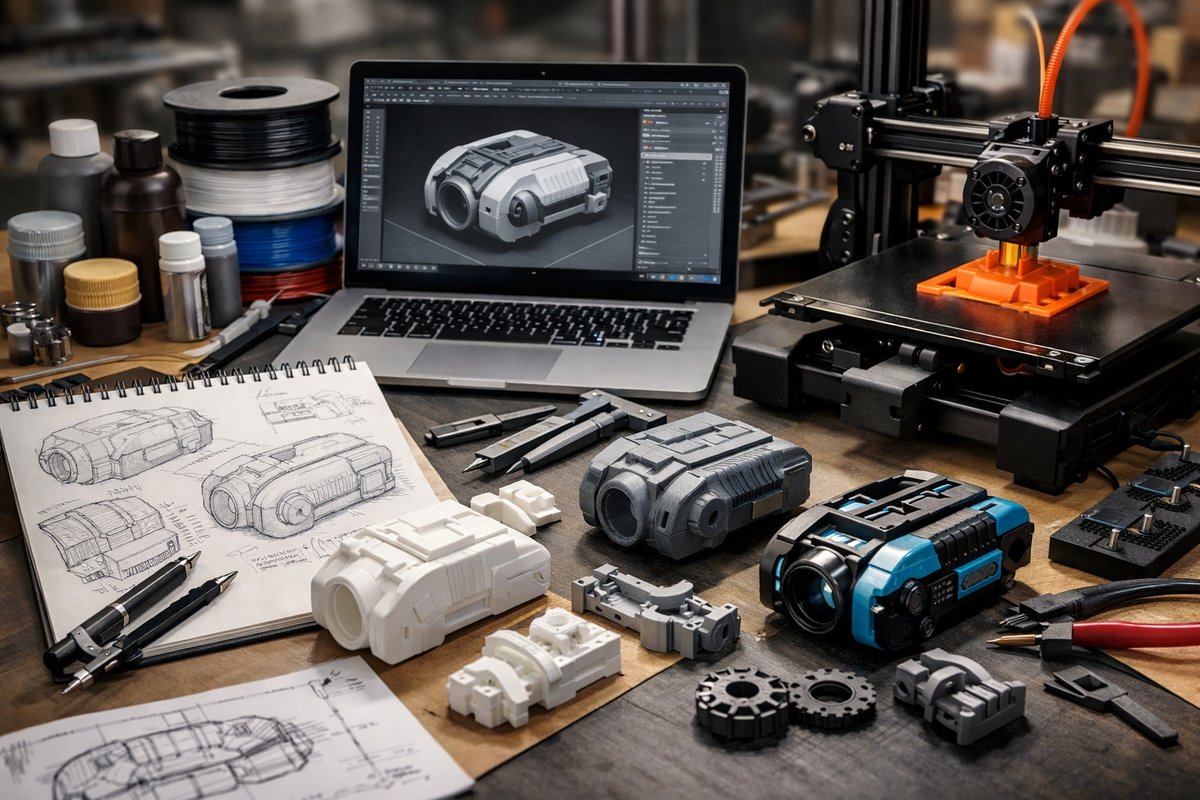

Every extraordinary object begins as a spark of imagination. At its core, 3D printing bridges the gap between concept and creation, empowering makers, designers, and entrepreneurs to bring their visions to life layer by layer. Whether you’re crafting a custom phone stand, rapid prototyping an industrial part, or exploring the mesmerizing world of resin miniatures, understanding the interplay of machines, materials, and methods is essential. In this guide, we’ll explore how to choose the right equipment, navigate diverse material choices, and master advanced techniques that elevate your prints from functional to phenomenal.
The foundation of any successful 3D printing journey is selecting a machine that aligns with your goals. Desktop fused deposition modeling (FDM) printers remain the most accessible entry point. Their open filament systems allow experimentation with PLA for beginners, tougher ABS for enduring parts, or flexible TPU for cushioning prototypes. Meanwhile, stereolithography (SLA) and digital light processing (DLP) devices cater to those chasing ultra-fine detail. Tiny desktop resin printers harness ultraviolet light to cure liquid monomers into intricate forms-ideal for jewelry casting patterns or highly detailed figurines. As you weigh factors like build volume, resolution, and speed, consider how each printer’s capabilities support your creative or professional aspirations.
Materials extend far beyond the classic PLA filament that introduces many to the craft. PLA remains prized for its low-warp properties, biodegradability, and ease of printing, but exploring specialty blends unlocks new functionalities. Carbon-fiber-infused filaments add rigidity and strength for drone components, while wood- or metal-filled composites mimic natural textures in home decor. For mechanically demanding applications, nylon or polycarbonate filaments deliver superior durability and heat resistance. On the resin side, standard photopolymer resins excel at capturing fine details, whereas engineering-grade resins offer impact resistance and high-temperature tolerance. Food-safe resins open possibilities for custom cookie cutters or moldable kitchen tools without risking contamination.
Beyond raw materials, the ecosystem of tools and accessories dramatically influences print quality and workflow efficiency. A reliable bed leveling sensor or auto-leveling upgrade can spare hours of frustration on large prints. Heated build platforms minimize warping and improve first-layer adhesion, especially when transitioning to high-temperature filaments. Nozzle upgrades-stainless steel for abrasive composite filaments or hardened steel for extended wear-preserve precision over thousands of hours. Cleaning resin prints demands its own toolkit: isopropyl alcohol baths, ultrasonic cleaners, and UV curing chambers ensure hardened parts reveal every micro-detail. Investing in quality hand tools like flush cutters, fine-tipped tweezers, and miniature files refines each printed edge into a polished finish.
Mastering the slicing software represents a pivotal step between designing in CAD and watching your object emerge. Popular slicers grant granular control over layer height, infill density, and print speed. Lower layer heights create smoother surfaces at the expense of longer print times, while infill patterns-from honeycomb to gyroid-balance strength-to-weight ratios. Support structures, often mandatory for overhangs, can be optimized using tree-like supports to reduce material waste and simplify removal. Experimental features like adaptive layer heights dynamically adjust settings within a single print, applying finer layers in detailed regions and thicker layers elsewhere. Learning to tweak these parameters fosters a deeper understanding of how the printer, material, and design converge.
Every enthusiast eventually confronts their first printing challenge-adhesion failure. A seemingly solid filament journey can sputter to life only to detach midway. Simple remedies often suffice: applying a thin layer of glue stick or specialized adhesive sheets improves bed grip, while a clean build surface free of oils or dust makes all the difference. Enclosed printer chambers regulate temperature, reducing drafts that cool layers too quickly. Cooling fans, critical for PLA’s bridging performance, might need adjustment when working with ABS to avoid warping. Patience and methodical troubleshooting-each change tested in isolation-transform frustration into a lesson in physics and materials science.
3D scanning technology elevates personalization by capturing real-world objects and translating them into printable meshes. Turn a favorite keychain into a digital model or replicate antique hardware with remarkable precision. The marriage of handheld scanners and photogrammetry software empowers hobbyists to archive cultural artifacts or retrofit missing parts for heirloom restoration. Scanned data often requires cleanup-repairing mesh errors, reducing polygon counts, and ensuring watertight geometry. When tuned properly, reverse-engineered pieces blend seamlessly with brand-new prints, enabling repairs or redesigns that respect historical authenticity.
As the community of makers grows, sustainability emerges as both a responsibility and an opportunity. Recycling programs collect failed prints and support filament remanufacturing, cutting down plastic waste. Open-source recycling extruders let innovators experiment with turning their own discarded prints back into usable filament. Bio-based resins and filaments made from recyclable feedstocks signal a shift away from petrochemicals. Energy-efficient printers, optimized for minimal standby power and faster print cycles, contribute to a smaller carbon footprint. By sharing best practices-ranging from print orientation to material selection-makers foster a collaborative culture centered on environmental stewardship.
Collaboration platforms and online communities magnify the impact of individual experimentation. Open libraries of free STL files enable instant access to designs for everything from gadget accessories to educational tools. Customizable parametric models let newcomers adjust dimensions and features without mastering CAD. More advanced designers leverage version control systems for complex projects, tracking changes and collaborating across time zones. Virtual events, workshops, and mentorship networks promote continuous learning, where a single troubleshooting tip shared in a forum can save days of trial and error.
Beyond the hobbyist workbench, 3D printing reshapes industries. Engineers harness direct metal laser sintering to fabricate lightweight aerospace components, reducing part counts and assembly complexity. Medical professionals adopt biocompatible materials for surgical planning models and custom prosthetics, tailoring solutions to individual patient anatomy. Architects produce scale models with unprecedented speed, exploring form and function before committing to full-scale construction. In the automotive sector, rapid tooling and small-batch production streamline product development cycles, saving time and capital on mold fabrication.
Despite these advances, mastery of 3D printing remains a journey of curiosity and iteration. Each failed print bears insight about the relationship between geometry, temperature, and material behavior. Recording observations-ideal extrusion temperatures, retraction settings, layer heights-and comparing them across materials fosters a personal knowledge base that improves every subsequent build. Balancing experimentation with incremental adjustments ensures steady progress, preventing overwhelm when tackling ambitious multi-material or large-format projects.
The future promises even more transformative possibilities. Multi-material printers that deposit conductive inks alongside structural polymers pave the way for embedded electronics. Continuous liquid interface production (CLIP) technology slices through cure times with uninterrupted resin bathing. Bioprinting treads the boundary between fabrication and living systems, constructing tissue scaffolds for regenerative medicine. As artificial intelligence streamlines design optimization, generative algorithms create organic, load-optimized structures beyond conventional human imagination.
Ultimately, 3D printing is more than a manufacturing method-it’s an invitation to reimagine the world around us. Whether you’re a curious newcomer or an industry professional, embracing the tools, materials, and techniques explored here equips you to push the boundaries of possibility. Every layer you print tells a story of trial, learning, and triumph. Begin with a single extrusion, and you’ll discover an ever-expanding horizon where creativity and technology converge.