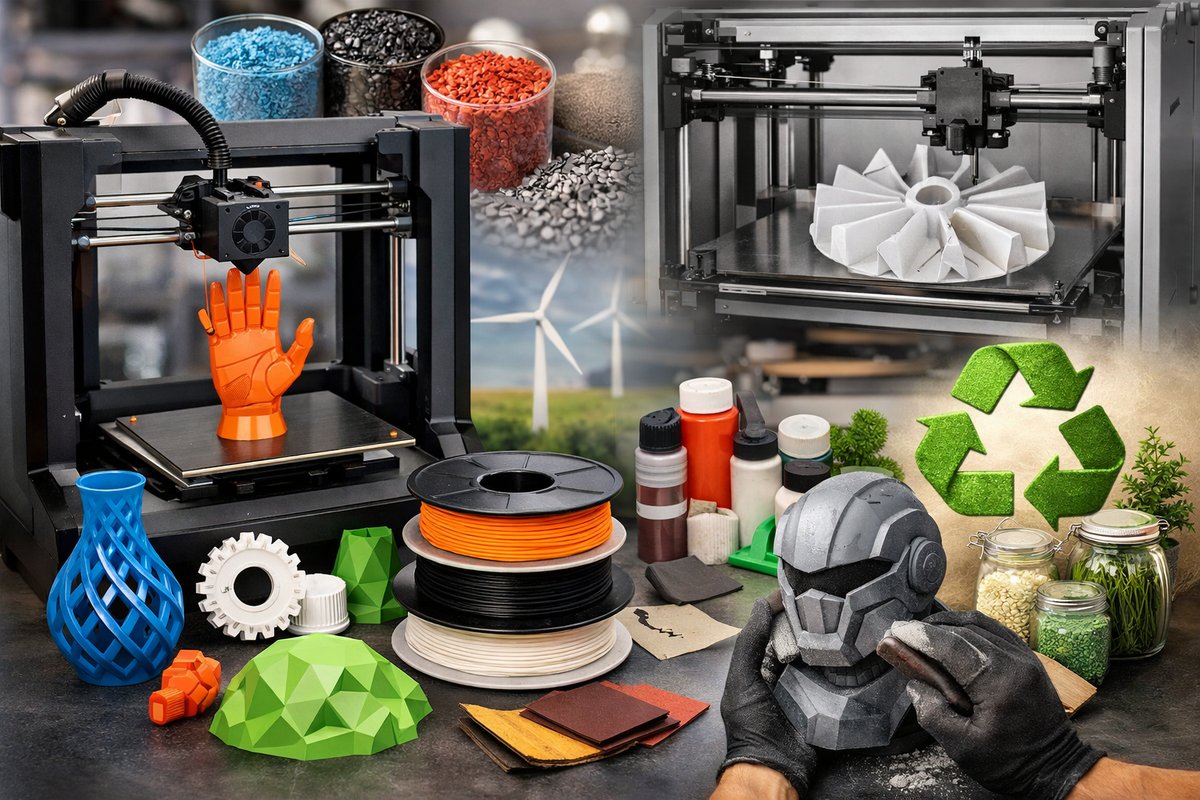

From hobbyist setups in home workshops to industrial production lines, 3D printing has transformed how we design, prototype, and manufacture objects. What started as a novelty for rapid prototyping has blossomed into a versatile ecosystem that spans biomedical models, architectural scale models, custom consumer goods, and even sustainable building blocks. Yet with a dizzying array of printers, filament blends, resin chemistries, and post-processing tools, it’s easy to feel overwhelmed. This article offers a comprehensive roadmap to help you choose the right tools, materials, and techniques for your next 3D printing project-and to build skills that scale from simple parts to complex assemblies.
3D printers range from compact desktop units aimed at beginners to industrial machines that deposit metals and ceramics. At the entry level, fused deposition modeling (FDM) printers use filament spools-commonly PLA or ABS-to melt and deposit layers. These machines are affordable, easy to set up, and ideal for learning core concepts like slicing, calibration, and print bed leveling. On the other end, stereolithography (SLA) and digital light processing (DLP) printers cure liquid resin with UV light, achieving finer resolution but requiring more post-processing steps such as washing and UV curing. Beyond hobbyist and prototyping uses, large-format FDM machines and selective laser sintering (SLS) printers produce functional end-use parts and small-batch manufacturing runs. Understanding each technology’s strengths and limitations ensures that you select a printer aligned with your goals, whether that’s crafting detailed miniatures, fabricating jigs and fixtures, or producing functional prototypes for mechanical testing.
Selecting the right tools is as important as picking a printer. Build plate surfaces vary-from glass and magnetic steel to textured polymer sheets-each offering different adhesion properties and ease of print removal. Digital calipers provide precise measurements for critical parts, and a metal scraper or flexible removal tool helps release prints without damage. A reliable set of nozzles in different diameters lets you optimize for speed or detail. Temperature-resistant gloves shield you from heated beds and nozzle assemblies, while safety glasses protect eyes during resin handling or when removing support structures. For more advanced users, an enclosed chamber with active cooling and filtration stabilizes temperature fluctuations and captures ultrafine particles-key for materials like nylon or carbon fiber blends, which emit more fumes. Investing in a small set of common hand tools-flush cutters for trimming supports, a deburring tool for smoothing edges, and fine-grit sandpaper for finishing-pays dividends in part quality and user safety.
Materials have evolved far beyond the standard PLA and ABS plastics. PLA remains the go-to for beginners thanks to its low warping, sweet-smelling prints, and biodegradable properties. ABS offers greater toughness and heat resistance but demands an enclosure to prevent layer delamination. PETG strikes a balance with good layer adhesion, chemical resistance, and minimal warping, making it a favorite for functional parts. Families of specialty filaments now incorporate additives such as carbon fiber, glass beads, wood fibers, or metal powders, each lending unique aesthetics and mechanical characteristics. On the resin side, general-purpose resins deliver sharp details for miniatures and dental models, while flexible and impact-resistant blends support custom gaskets or wearable prototypes. Bio-based resins derived from plant oils are emerging as more sustainable options, though they often require fine-tuned curing parameters. Working with each material calls for adjustments in print temperature, speed, cooling, and support strategies-experimenting with small test towers can save time and filament on larger builds.
Beyond raw materials, mastering slicing software is key to successful prints. Slicers translate 3D models into layered instructions that dictate nozzle movements, extrusion rates, and cooling patterns. Top-rated open-source slicers offer extensive customization for infill patterns, wall thickness, retraction settings, and variable layer heights. Fine-tuning retraction helps eliminate stringing when the nozzle travels between sections, while adaptive infill optimizes strength-to-weight ratios by varying density where needed. Temperature towers and retraction calibration cubes are simple test prints that reveal the ideal settings for a given filament and printer. Many advanced slicers also support modifiers-masking areas for different layer heights or changing print parameters mid-job-which expands creative possibilities for multi-material prints and variable surface finishes.
Post-processing is where raw prints transform into polished products. Removing support structures with flush cutters and cleaning up nub marks with hobby knives or rotary tools sets the stage. Sanding from coarse to very fine grits yields smooth finishes ready for paint or dye. For filament prints, thin layers of primer fill small layer lines, and an acetone vapor bath on ABS can create a glossy, almost injection-molded surface. Resin prints benefit from UV curing stations that ensure full polymerization, boosting mechanical strength and resisting yellowing over time. Painting techniques-from airbrushing base coats to hand-brushed details-add both realism and personalization. When producing functional assemblies, standard hardware like nuts, bolts, and embedded magnets or threads can be incorporated during the print or pressed in afterward, simplifying mechanical integration.
With growing use of additive manufacturing in education, healthcare, and industry, sustainability and ethical considerations have come into sharper focus. Plastic waste from failed prints or support material can be managed with dedicated recycling systems that grind and extrude new filament spools, closing the loop on material life cycles. Biodegradable and bio-based filaments reduce dependence on fossil fuels, and research into recycled PET bottles as feedstock demonstrates a circular approach to plastic. Energy consumption also varies widely between machines and materials; monitoring printer power draw and consolidating multiple small jobs into larger batch prints can improve efficiency. Safe disposal of uncured resin and proper ventilation mitigate health risks, while transparent labeling of material data sheets ensures compliance with local regulations. By adopting sustainable workflows, makers can minimize environmental impact without sacrificing creativity or durability.
Real-world applications of 3D printing continue to expand at a rapid clip. In architecture, full-scale foam and polymer models give early form-finding insights, while concrete extrusion techniques are being trialed for affordable housing. In medicine, patient-specific models guide surgical planning, and bioprinting research explores tissues and organ scaffolds. Automotive and aerospace engineers use metal-powder bed fusion to produce lightweight, complex geometries that reduce weight and fuel consumption. Meanwhile, artists and designers leverage multi-material printing to craft interactive installations with embedded electronics. Education programs integrate 3D printers into STEM curricula, nurturing creativity alongside problem-solving skills. Across industries, the ability to iterate quickly-from digital sketch to physical prototype-accelerates innovation and democratizes access to manufacturing tools once reserved for large corporations.
Looking ahead, hybrid workflows that combine 3D printing with subtractive machining or injection molding are gaining traction. Multi-axis printing systems and robotic arms open new paths for complex, overhanging shapes without supports. Smart materials that change shape in response to heat or moisture promise dynamic structures that adapt to their environment. With advances in software, cloud-based slicing and real-time print monitoring empower remote collaboration and scalable production pipelines. As communities of makers and open-source developers continue to share improvements-from custom firmware tweaks to novel material recipes-the pace of innovation shows no signs of slowing. Whether you’re printing your first calibration cube, iterating a functional end-use part, or exploring bio-inks for medical research, the tools and techniques at your disposal are richer and more accessible than ever.
Ready to take your next step? Begin by defining project requirements-strength, flexibility, surface finish, or thermal resistance-and match them to printer capabilities and material properties. Start small with calibration prints, gradually dialing in slicer settings and post-processing routines. Keep a print journal that logs temperatures, speeds, and outcomes; patterns emerge over time, making future tuning faster and more reliable. Engage with online communities and local maker spaces to swap tips, troubleshoot errors, and discover new materials or hardware mods. With the right combination of equipment, materials, and techniques, you’ll transform digital ideas into tangible innovations-layer by layer, print by print.