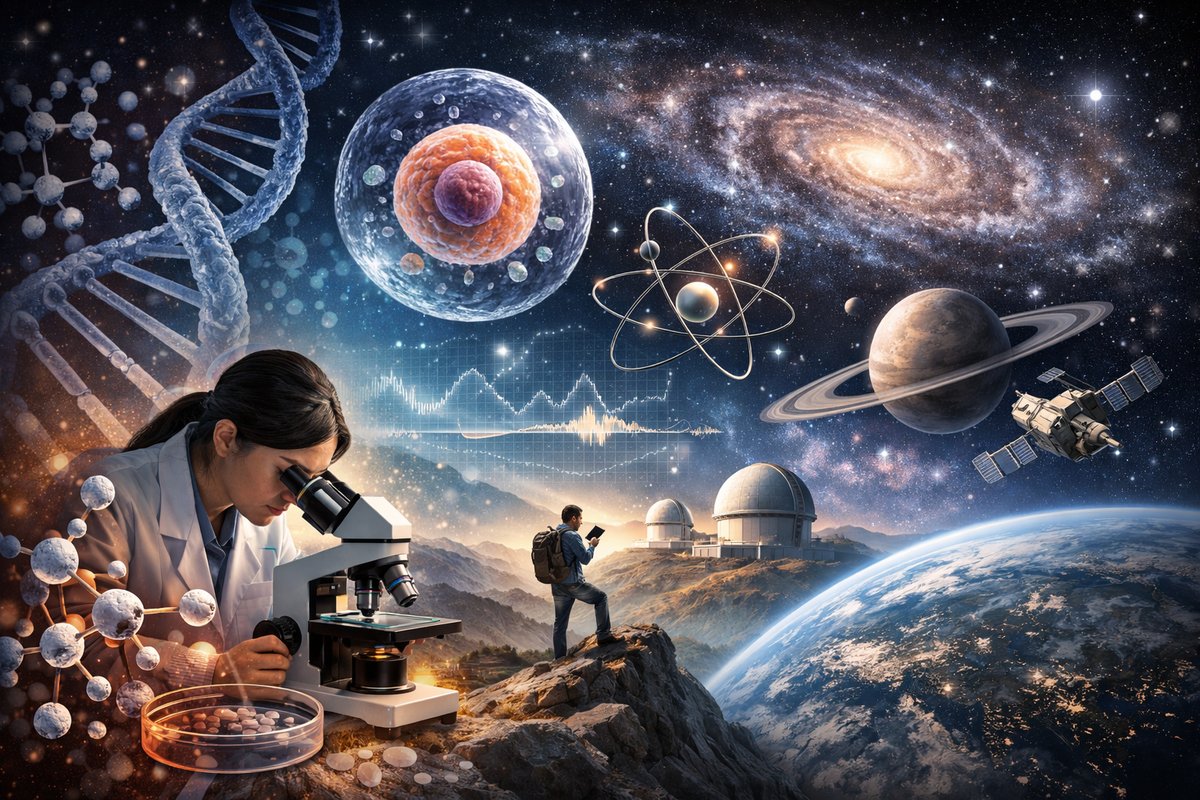

There’s a peculiar thrill in the moment when the universe shifts into focus. It may be the up-close reveal of a single cell membrane under magnification, or the faint shimmer of a distant galaxy pinpointed by a telescope. Science invites us to follow curiosity where it leads, armed with instruments that extend our senses and amplify our imagination. This spirit of inquiry, at once playful and rigorous, drives every step of discovery.
Early scientific pioneers relied on nothing more than keen eyesight and simple tools. Over centuries, lenses were ground, glassware perfected, and thermometers calibrated. Each incremental improvement in precision unlocked new realms-tiny organisms became visible, elemental reactions were recorded, and the sky above yielded its secrets. Today’s instruments stand on that lineage, combining centuries of craftsmanship with cutting-edge electronics and software.
At one end of the scale, the compound microscope penetrates the infinitesimal. A drop of pond water can teem with life in ways invisible to the naked eye; a histological slice can reveal the architecture of tissues that orchestrate health and disease. On another frontier, telescopes peer deep into space, capturing photons that began their journey before our planet even existed. Both vantage points remind us that reality is layered, and every layer offers a story worth uncovering.
Recent advances have accelerated exploration even further. Digital simulation platforms recreate molecular interactions in silico, allowing researchers to predict how proteins fold or chemicals react. Quantum sensors harness exotic physical properties to detect minute changes in magnetic fields or gravitational waves. Machine learning algorithms mine vast datasets-from genomic sequences to climate records-spotting patterns that humans alone might overlook. These tools are not mere accessories; they reshape the questions we dare to ask.
Science no longer adheres to rigid disciplinary borders. Biologists tap into computational methods originally developed by physicists. Chemists design materials inspired by biological scaffolds. Environmental researchers deploy drones equipped with sensors to monitor remote ecosystems. Each collaboration opens unexpected avenues: a telescope mount repurposed for tracking bird migrations, or a machine-learning model trained on astrophysical data applied to medical imaging. This interdisciplinarity broadens the landscape of what’s possible.
Parallel to high-tech labs, an evolving culture of citizen science brings exploration to living rooms, classrooms, and community centers. Amateur astronomers contribute to supernova hunts. Backyard naturalists log observations of pollinators. Open-source hardware projects enable DIY spectrometers and weather stations. By inviting nonprofessionals to participate, science becomes more transparent, more inclusive, and more resilient. People gain ownership of the questions they care about and the data they collect.
At the same time, ethical and sustainability considerations have taken center stage. Green chemistry principles seek to reduce toxic waste. Open data initiatives champion reproducibility by making methods and raw observations freely accessible. Lab managers optimize energy use by running equipment in batch cycles. Researchers are asking how to balance the quest for knowledge with the imperative to protect communities and ecosystems.
Real-world breakthroughs illustrate how powerful this blend of curiosity, collaboration, and responsibility can be. Cryo-electron microscopy revolutionized structural biology by imaging proteins in near-native states. Gravitational-wave observatories confirmed Einstein’s century-old prediction while opening a new window on cosmic collisions. Genome-editing techniques have offered promising paths toward treating genetic diseases. These achievements remind us that every tool, every method, is part of a larger tapestry woven over generations.
But the essence of science isn’t confined to professional labs or major facilities. Anyone can nurture scientific thinking. A kitchen countertop becomes a chemistry bench when pH indicators reveal hidden acidity. A smartphone sensor logs acceleration data during a home-built roller coaster. Sketching a model of DNA on paper lays the groundwork for deeper questions about heredity. Keeping a simple journal to record observations cultivates the habit of noticing the unexpected.
This commitment to curiosity spills into everyday life, too. Engineers prototype water-purification devices for off-grid communities. Urban planners use crowdsourced air-quality data to advocate for cleaner streets. Educators develop playful modules that introduce complex topics through storytelling and games. Each effort demonstrates that science is not a static body of knowledge but a living practice, evolving as it responds to new challenges and aspirations.
Innovation often thrives at the intersection of play and purpose. A weekend hackathon might yield a sensor network for monitoring soil moisture. A summer internship can spark a lifelong passion for renewable energy. A casual conversation about star clusters under a backyard sky can inspire the next generation of astronomers. By creating spaces where questions are as welcome as answers, we feed the lifelong hunger to understand, to create, and to share.
As we look ahead, the landscape of exploration promises to grow ever richer. Advanced robotics will probe the ocean’s deepest trenches. Next-generation telescopes will image planets around distant suns. Portable diagnostics will bring lab-quality testing to the world’s most remote corners. Yet the greatest discoveries will always trace back to that first spark of curiosity in a single mind.
In every lecture hall, garage workshop, and field expedition, we carry forward a tradition that prizes humility, precision, and empathy. By pairing sophisticated instrumentation with a collaborative ethos and a sense of responsibility, science charts a course that benefits both people and the planet. And when we see the world anew-whether through a lens or a line of code-we honor the spirit of those who came before us and open the door to those who will follow.
May your next question lead you to uncharted realms. Pick up the tools, forge connections across disciplines, and imagine possibilities yet unseen. After all, the heart of science beats strongest in the act of exploring.