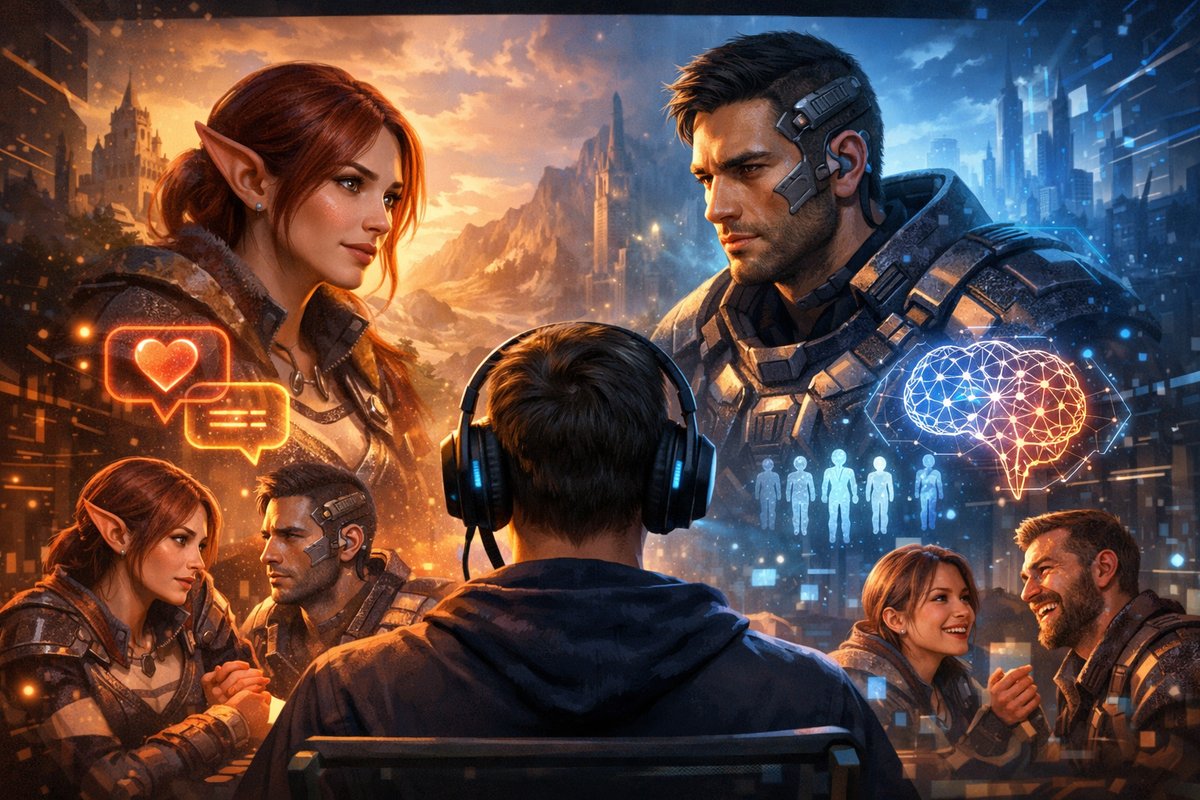

The gaming industry has always thrived on innovation, pushing boundaries to craft more immersive and engaging experiences for players worldwide. In recent years, artificial intelligence (AI) has taken center stage, not merely as a tool for game development but as a transformative force reshaping how games tell stories and interact with players. Among the most exciting advances is the emergence of AI-driven non-player characters (NPCs) that can learn, adapt, and respond emotionally, fostering richer narratives and deeper player engagement.
Traditionally, NPCs have followed predefined scripts or decision trees, limiting their interactions to preset dialogues and behaviors. This approach, while effective in delivering structured storytelling, often results in predictable and repetitive experiences. The new wave of AI-powered NPCs, however, leverages machine learning and natural language processing to break these molds. They can interpret player actions, remember past interactions, and even exhibit unique personalities that evolve over time. This shift enables a more organic and personalized gaming experience where players feel truly heard and responded to.
One illustrative example is the integration of advanced AI chat systems within open-world RPGs, where NPCs no longer simply hand out quests or recite lines but engage in meaningful conversations that can alter storylines based on player choices and emotional tone. This capability enhances the game’s replayability and emotional resonance, inviting players to invest more deeply in their virtual relationships.
Beyond dialogue, AI-driven NPCs contribute to dynamic world-building. They can autonomously react to environmental changes, form alliances, or rivalries, and pursue their own goals, creating emergent gameplay scenarios that were previously impossible. This living ecosystem of characters transforms static game worlds into vibrant social landscapes, mirroring the complexities of real human interactions.
This evolution also intersects with the growing trend of social and multiplayer gaming. AI companions can fill roles traditionally occupied by human players, providing cooperative support or competitive challenges that scale with player skill levels. Moreover, these NPCs can serve as emotional anchors in games, offering companionship and narrative depth in solo play, which is especially valuable in an era when players seek meaningful connections in digital spaces.
From a development perspective, AI-driven NPCs pose new challenges and opportunities. Game designers must balance unpredictability with narrative coherence, ensuring that AI behaviors enrich rather than disrupt storytelling. Additionally, ethical considerations arise regarding AI personalities and player attachment, requiring thoughtful design to foster positive experiences without manipulation.
The technology powering these NPCs is rapidly advancing thanks to breakthroughs in deep learning models and computational power. Developers are increasingly incorporating AI frameworks that allow NPCs to learn from aggregated player data, improving their responsiveness and realism over time. This adaptive learning also opens doors for personalized content delivery, tailoring challenges and story arcs to individual play styles and preferences.
Looking ahead, the fusion of AI with other emerging technologies like augmented reality (AR) and virtual reality (VR) promises even more immersive interactions. Imagine stepping into a VR world where every character you meet remembers your past encounters, adapts their behavior accordingly, and engages with you in a manner indistinguishable from human interaction. This level of immersion could redefine entertainment and social connection within digital realms.
Furthermore, AI-driven NPCs have the potential to enhance accessibility in gaming. They can adjust difficulty dynamically, provide contextual assistance, or serve as guides for players with diverse needs, making games more inclusive and enjoyable for broader audiences.
In conclusion, the rise of AI-powered NPCs marks a significant leap forward in gaming and interactive entertainment. By enabling dynamic, emotionally rich, and adaptive characters, this technology deepens player engagement, enriches storytelling, and fosters social connections within virtual worlds. As developers continue to refine these systems, players can look forward to more vibrant, personalized, and immersive experiences that blur the line between scripted fiction and living worlds.
-
Monster Mission ANC200 Gaming Headset, 2.4 GHz/Bluetooth ...
Amazon.com: Monster Mission ANC200 Gaming Headset, 2.4GHz/Bluetooth Gaming Headphones with Active Noise Cancellation, 7.1 Virtual Surround Sound, ... -
SteelSeries Arctis Nova Pro Wireless Gaming Headset - Walmart
Experience immersive gaming with SteelSeries Arctis Nova Pro Wireless Headset. Features Noise Cancellation and ClearCast Gen 2 Mic. -
Redragon K671KS Wireless Mechanical Gaming Keyboard, Tri ...
... Keyboard, Tri Mode BT/2.4G/USB-C Hot Swappable Custom Keyboard, RGB Backlit Computer Gaming Keyboards, PBT Keycaps, Programmable for PC/Tablet/MAC : -
Mini Keypad 4 Key Mechanical Gaming Keyboard Programmable ...
Buy Mini Keypad 4 Key Mechanical Gaming Keyboard Programmable Key Double USB at Walmart.com. -
Amazon.com: SANSUI 32 Inch Curved 240Hz Gaming Monitor High ...
Amazon.com: SANSUI 32 Inch Curved 240Hz Gaming Monitor High Refresh Rate, FHD 1080P | Gaming PC Monitor HDMI DP1.4, 1500R Curvature, 1Ms MPRT, ... -
Gawfolk 24.5 inch 200Hz Gaming Monitor FHD 1080P - Walmart
Gawfolk 24.5 inch 200Hz Gaming Monitor FHD 1080P - High Refresh Rate, Versatile for White Computers.