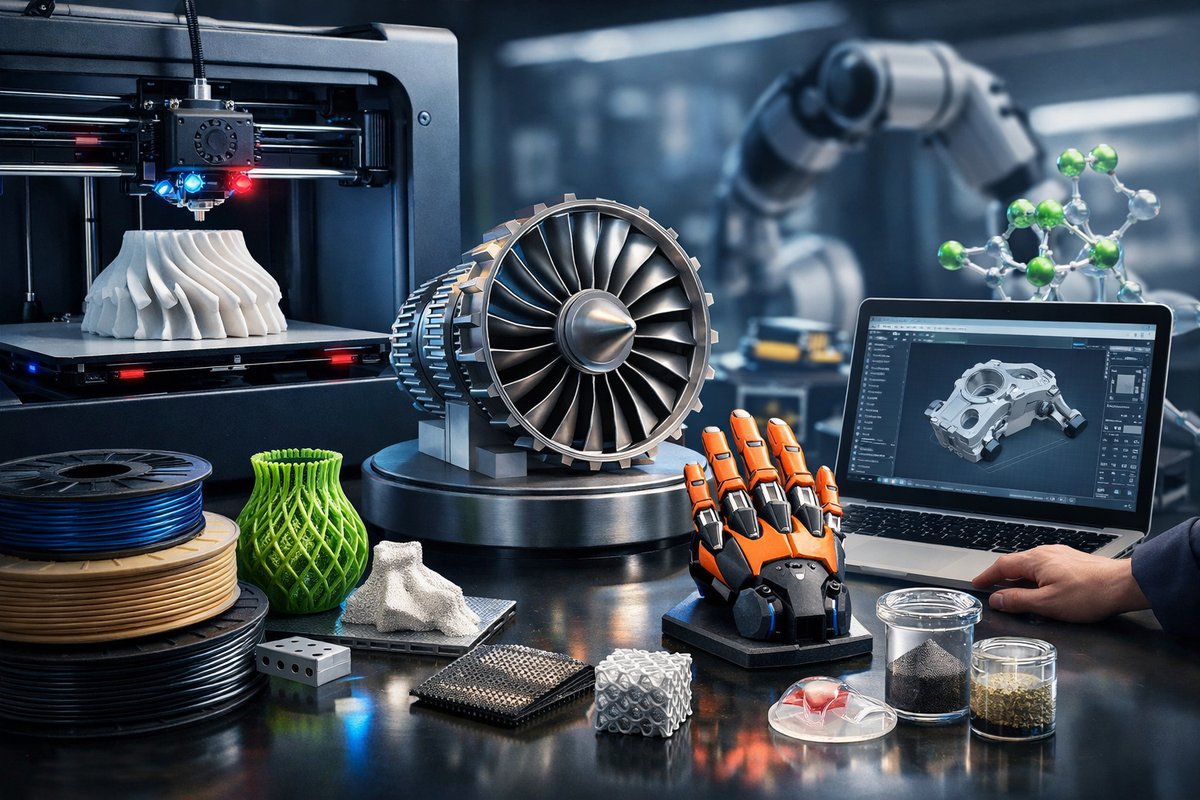

Three-dimensional printing, once a niche technology reserved for specialized industries and experimental prototyping, has now firmly established itself as a transformative tool across countless domains. The essence of 3D printing lies in its layer-by-layer construction, turning digital designs into tangible objects through a variety of processes such as fused filament fabrication (FFF), stereolithography (SLA), and selective laser sintering (SLS). Yet, despite its widespread adoption, challenges remain around cost, speed, material properties, and accessibility. The latest wave of innovations aims to address these hurdles, making 3D printing more economical, feasible, and successful for creators ranging from hobbyists to engineers and medical professionals.
One of the most significant drivers of affordability in 3D printing is the development of new materials and more efficient printing methods. Traditional filaments like PLA and ABS remain popular due to their low cost and ease of use, but emerging composite filaments infused with carbon fiber, metal powders, or biodegradable additives are expanding the range of applications. These materials often provide enhanced mechanical strength, thermal resistance, or environmental benefits, enabling parts that perform reliably under demanding conditions without excessive expense.
Alongside material innovation, hardware improvements have played a pivotal role in boosting feasibility. Modern 3D printers increasingly incorporate features such as auto-bed leveling, enclosed build chambers, and improved extruder designs to reduce print failures and improve dimensional accuracy. Additionally, multi-material and multi-color printing capabilities have become more accessible, allowing users to create complex, functional prototypes and finished products in a single print job. The integration of sensors and real-time monitoring systems also enhances print success rates by detecting issues like filament jams or temperature fluctuations early, minimizing waste and downtime.
Software advances complement these hardware strides by streamlining the design-to-print workflow. User-friendly slicing software now offers more sophisticated algorithms that optimize print paths for speed and strength, while cloud-based platforms facilitate remote monitoring and collaboration. Artificial intelligence and machine learning are beginning to influence print preparation by predicting potential defects and recommending parameter adjustments tailored to specific printers and materials. This intelligent automation lowers the barrier to entry for novices and accelerates iteration cycles for professionals.
Another critical aspect of making 3D printing more successful is the embrace of sustainable practices. The environmental impact of additive manufacturing is under increasing scrutiny, prompting manufacturers and users alike to seek greener alternatives. Recyclable filaments, biodegradable resins, and closed-loop material recycling systems are gaining traction, reducing plastic waste and resource consumption. Energy-efficient printer models and optimized print strategies further contribute to sustainability goals without sacrificing quality or performance.
Beyond the technology itself, the ecosystem supporting 3D printing continues to mature. Open-source communities, online repositories of free and paid 3D models, and accessible educational resources empower a diverse range of users to experiment and innovate. This democratization of knowledge and tools accelerates the pace of discovery and broadens the technology’s impact, from personalized medical implants and architectural components to artistic sculptures and functional household items.
Looking ahead, hybrid manufacturing techniques that combine additive and subtractive processes promise to overcome current limitations in surface finish and material properties. Innovations such as continuous liquid interface production (CLIP) and multi-jet fusion (MJF) are pushing the boundaries of speed and resolution, enabling industrial-scale production with additive methods. Furthermore, the integration of 3D printing with robotics and automation is paving the way for fully autonomous fabrication lines, reducing human error and increasing repeatability.
In summary, the latest developments in 3D printing technology and techniques are making the craft more accessible, reliable, and environmentally conscious. By leveraging advanced materials, smarter hardware, intelligent software, and sustainable practices, creators can realize their visions with greater confidence and efficiency. This quiet revolution in manufacturing is not only reshaping how objects are made but also expanding the very notion of what can be created-one layer at a time.
-
FLASHFORGE AD5X Multi-Material 3D Printer 4-Color Printing ...
Seamless Printing, Precise Control: Full auto leveling sensor measures multiple points on the print bed to ensure consistent distance between nozzle and bed. As ... -
Multi-Material 3D Printer, Fully Assembled 3D Speed 1-Click Print ...
YiJuHui 1pcs 3D Printer Fully Assembled with Auto Leveling, Heated Bed & Silent Operation, Mini Desktop 3D Printer for Home & Beginners, High Precision Printing ... -
FLASHFORGE Carbon Fiber PETG Filament 1.75mm Black ...
Amazon.com: FLASHFORGE Carbon Fiber PETG Filament 1.75mm Black, Reinforced 3D Printer Filament 1kg, Lightweight & High-Strength PETG-CF Filament, ... -
PETG Carbon Fiber 3D Printer Filament, 1.75mm, Carbon Fiber ...
Buy PETG Carbon Fiber 3D Printer Filament, 1.75mm, Carbon Fiber Reinforced, Dimensional Stability,Wine Red at business.walmart.com Facilities Maintenance, ... -
Matte PLA Filament, High Tenacity, Eco Friendly, 1kg Refill for AMS ...
CONSISTENT QUALITY & DIAMETER CONTROL: With precise 1.75mm diameter and ±0.03mm tolerance, this filament ensures reliable, jam-free performance. Advanced ... -
MakerBot PLA Filament for Method 3D Printer - Walmart.com - Walmart
Buy MakerBot PLA Filament for Method 3D Printer - Biodegradable Corn-Based Plastic for Office-Friendly Prototyping (True Black, 0.75kg) at Walmart.com.