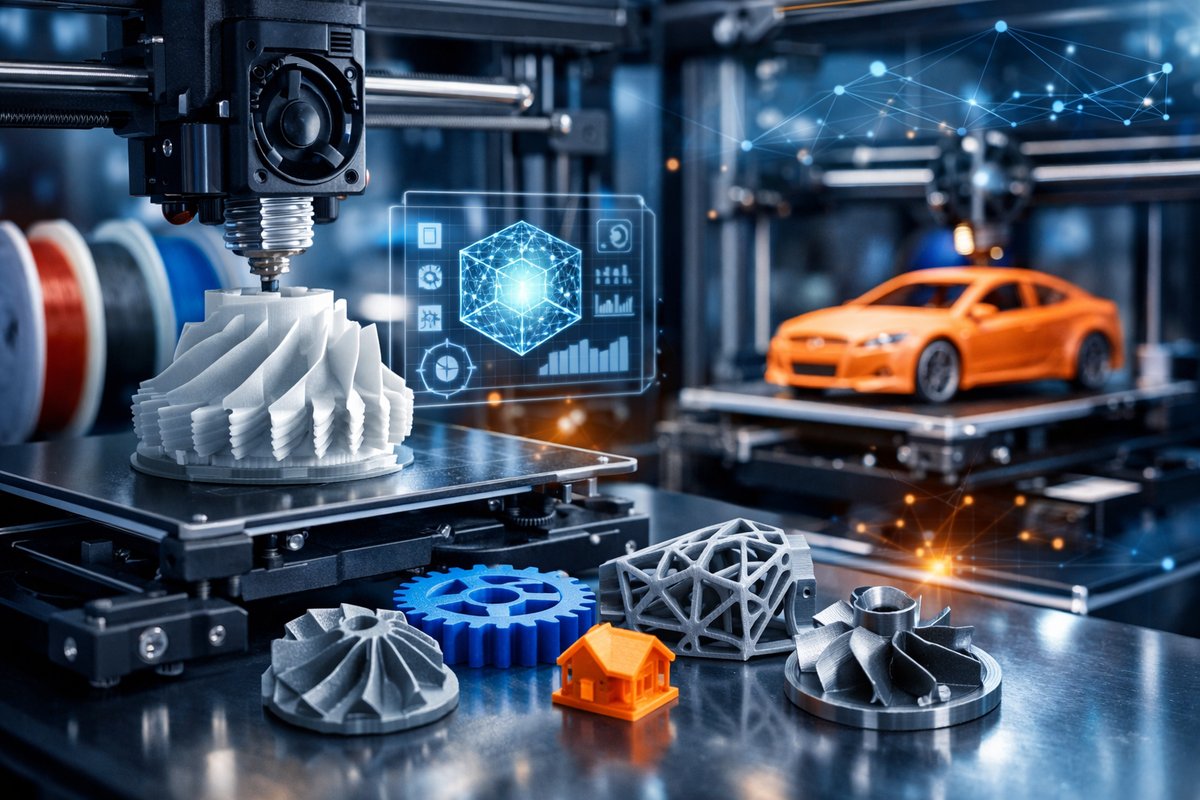

Three-dimensional printing, once a niche technology reserved for specialized industries, has blossomed into a versatile tool that bridges imagination and reality. By building objects layer by layer from digital blueprints, 3D printing enables rapid prototyping, custom manufacturing, and artistic expression across countless fields. Yet, despite its transformative potential, the technology has faced challenges related to cost, speed, material limitations, and reliability. Recent developments, however, are addressing these hurdles head-on, making 3D printing more economical, feasible, and successful than ever before.
At the heart of this evolution lies a suite of technological innovations and novel techniques that optimize every stage of the 3D printing process. These advancements not only reduce waste and energy consumption but also expand the range of printable materials and improve the quality of finished products. The result is a quiet revolution in making, where hobbyists, engineers, and artists alike can create with greater confidence and lower barriers to entry.
One significant stride forward is the refinement of material extrusion methods, commonly known as fused filament fabrication (FFF). This technique, which melts and deposits plastic filament layer by layer, has become a staple for affordable desktop 3D printers. Recent improvements in filament formulations have introduced composites that blend plastics with wood fibers, metals, or carbon fiber, enhancing strength and aesthetic appeal without dramatically increasing costs. Additionally, manufacturers have developed filaments with lower melting points and better flow characteristics, enabling printers to operate more efficiently and reduce energy consumption.
On the hardware side, innovations in print head design and motion control systems have improved precision and speed. For example, multi-nozzle extruders allow simultaneous printing with different materials or colors, opening up possibilities for complex, multi-functional parts. Enhanced stepper motors and linear rails contribute to smoother, more accurate layer deposition, minimizing defects and post-processing requirements. These upgrades collectively shorten print times and increase reliability, making 3D printing more practical for both prototyping and small-batch production.
Beyond extrusion, vat photopolymerization techniques such as stereolithography (SLA) and digital light processing (DLP) have seen remarkable progress. These methods cure liquid resin with ultraviolet light to create highly detailed parts with smooth surface finishes. Recent advances include the development of faster-curing resins and more energy-efficient light sources, which reduce print times and operational costs. Moreover, biocompatible and flexible resins have expanded applications in medical modeling and wearable devices. The introduction of open-source resin formulations also fosters experimentation and cost savings for users seeking tailored material properties.
Another frontier gaining momentum is powder bed fusion, which uses lasers or electron beams to sinter or melt powdered materials like metals and polymers. Traditionally reserved for industrial use due to high equipment costs, new approaches are democratizing this technology. Innovations such as modular laser systems and improved powder recycling techniques reduce material waste and lower operational expenses. Additionally, hybrid machines that combine additive and subtractive processes enable precise finishing and dimensional accuracy, addressing one of the key limitations of powder bed fusion.
Software advancements complement hardware and material progress by streamlining the design-to-print workflow. Intelligent slicing algorithms optimize layer paths to minimize print time and material usage while preserving structural integrity. Machine learning models predict and compensate for common defects such as warping or layer delamination, improving first-time success rates. Cloud-based platforms facilitate remote monitoring and management of multiple printers, enhancing scalability and collaboration for businesses and makerspaces.
Environmental sustainability is another critical consideration shaping the future of 3D printing. The adoption of biodegradable and recycled materials helps reduce the ecological footprint of additive manufacturing. Energy-efficient printers and optimized printing parameters contribute to lower power consumption. Furthermore, closed-loop recycling systems enable users to reclaim and reuse failed prints or support structures, fostering a circular economy within the 3D printing community.
These technological and methodological advances are already manifesting in diverse real-world applications. In healthcare, customized implants and surgical guides produced with high precision improve patient outcomes while reducing costs. In aerospace and automotive industries, lightweight yet strong components fabricated additively contribute to fuel efficiency and performance. Artists and designers leverage multi-material and multi-color printing to realize complex visions that were previously impossible or prohibitively expensive to create.
Despite these exciting developments, challenges remain. Material diversity still lags behind traditional manufacturing, and scaling additive processes for mass production requires further innovation. Quality assurance and standardization are ongoing concerns, especially for safety-critical applications. Nevertheless, the trajectory is clear: 3D printing is becoming more accessible, economical, and reliable, empowering a broader spectrum of creators to bring their ideas to life.
In conclusion, the latest technologies and techniques in 3D printing mark a pivotal moment in the craft of layered creation. By enhancing material options, refining hardware, advancing software intelligence, and embracing sustainability, the industry is making additive manufacturing a practical and inspiring tool for all. Whether shaping miniatures at home, fabricating bespoke tools in a workshop, or producing medical devices in a hospital, the quiet revolution of making continues to unfold one layer at a time.
-
Independent Dual Extruder 3D Printer Motherboard with TMC2208 ...
Top highlights · DMP Motherboard with TMC2208 Driver · Work quieter and more stable · Every Tenlog DMP Motherboard need 7 pcs TMC2208 Driver · Pre-installed ... -
Whoamigo Dual Z-Axis Adjustment Blocks for CR10 3D Printer
NoClogger The Must-Have 3D Printing Tool 3D Printer Extruder Nozzle Cleaning (Blue) ... Flashforge Creator Max Dual Extruder 3D Printer. Add. $87900. current ... -
Protopasta Electrically Conductive Composite Black PLA 3D Printer ...
As a conductive 3D printer filament, it is engineered for making sensors and low current circuit applications. Let your creativity run while printing safe, ... -
OFFIGAM Grey PLA Refill Filament 3D Printing High ... - Walmart
Buy OFFIGAM Grey PLA Refill Filament 3D Printing High Molecular Composite Material 1 Roll for and Precise Printing at Walmart.com. -
3D Printer UV Curing Light Box for LCD/DLP/SLA Resin ... - Walmart
Upgrade your 3D printing with our DIY 405nm UV Resin Curing Station. Features 360° turntable and intelligent time control.