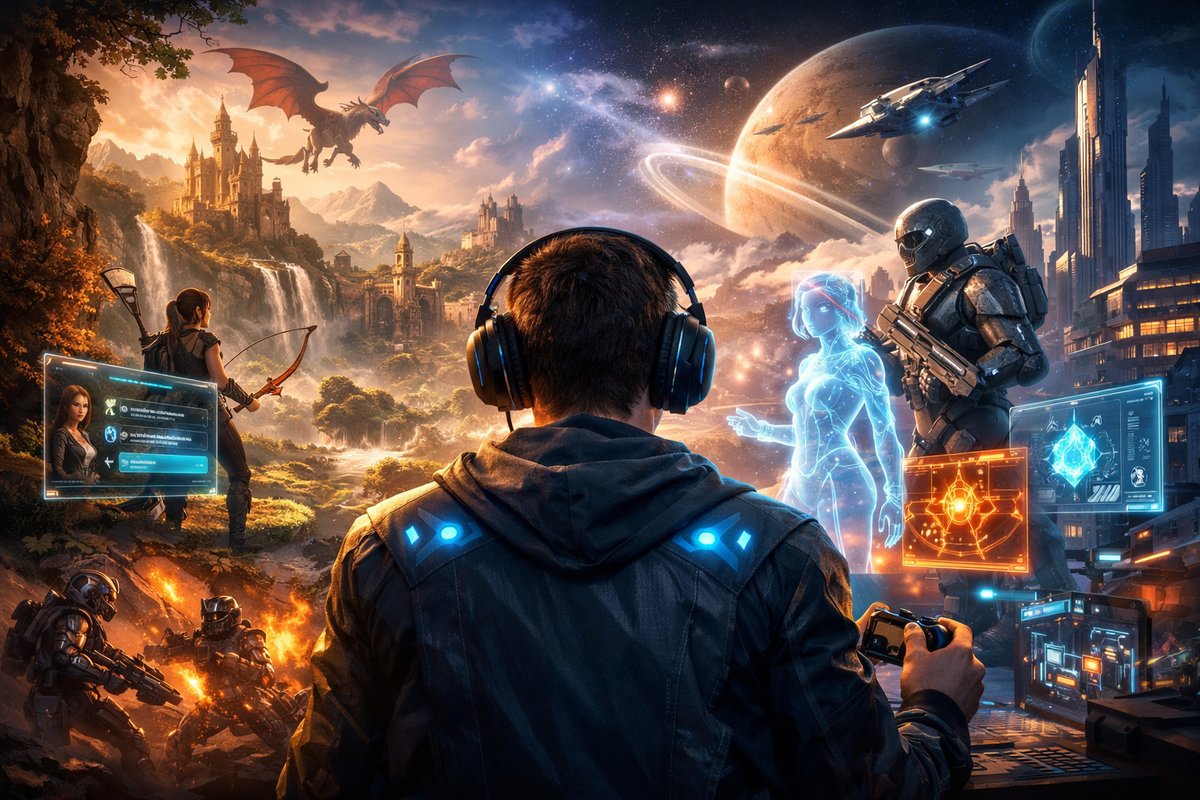

In recent years, the boundary between gaming and storytelling has increasingly blurred, giving rise to experiences where players shape the narrative through their choices and actions. This evolution reflects a growing desire for deeper engagement and emotional connection within digital entertainment. Interactive storytelling, powered by advances in artificial intelligence, virtual reality, and procedural content generation, is driving this transformation and redefining the relationship between player and story.
Traditionally, games and movies presented fixed narratives that audiences consumed passively. However, interactive storytelling invites players to co-author their journey, resulting in unique experiences tailored to individual preferences and decisions. This approach fosters a profound sense of agency and immersion, encouraging players to invest emotionally in the characters and world around them.
One compelling example of this shift is the rise of branching narratives and choice-driven gameplay. Modern titles often feature complex decision trees where each choice influences subsequent events, character relationships, and endings. This non-linear structure enhances replayability and personal investment, as players explore alternate outcomes and consequences. It also challenges developers to craft intricate storylines that maintain coherence while accommodating diverse player paths.
Artificial intelligence has become a pivotal tool in facilitating these dynamic narratives. AI-driven characters can respond intelligently to player input, exhibiting nuanced behaviors and adapting their responses to maintain narrative consistency. Procedural generation techniques further enable the creation of vast, varied environments and story elements on the fly, ensuring that no two playthroughs are exactly alike. These innovations empower developers to build living worlds that feel organic and responsive.
Virtual reality (VR) and augmented reality (AR) technologies amplify immersion by placing players directly within the story’s environment. In VR, players can physically explore narrative spaces, interact with objects, and engage in conversations with characters, heightening the sense of presence. AR blends fictional elements with the real world, creating hybrid experiences that expand storytelling beyond traditional screens. Together, these technologies open new frontiers for experiential storytelling that engages multiple senses and emotional registers.
The social dimension of interactive storytelling is also gaining prominence. Multiplayer narrative games and shared virtual spaces enable collaborative storytelling, where groups of players influence the story collectively. This communal aspect enriches the experience by introducing unpredictability and social dynamics, transforming narrative engagement into a shared creative act.
This convergence of technology and narrative artistry is inspiring fresh genres and hybrid forms of entertainment. For instance, narrative-driven escape rooms, interactive theater performances, and transmedia storytelling projects leverage interactivity to deepen audience involvement. The cross-pollination between gaming, film, and literature is fostering innovative storytelling ecosystems that invite participation and exploration.
As interactive storytelling matures, it also raises important questions about authorship, agency, and the nature of narrative itself. When players shape the story, the traditional role of the author shifts from sole creator to facilitator of possibilities. This democratization of storytelling challenges creators to design frameworks that balance player freedom with meaningful narrative arcs. It also invites reflection on how stories function as tools for empathy, identity exploration, and cultural dialogue.
Moreover, the ethical implications of immersive and adaptive storytelling warrant attention. Developers must consider how to handle sensitive content responsibly, respect player autonomy, and avoid manipulative design practices. Transparent communication about narrative mechanics and data use is essential to maintain trust and safeguard player well-being.
Looking forward, the integration of emerging technologies such as brain-computer interfaces and haptic feedback promises to deepen interactivity and emotional resonance even further. These advancements could enable storytelling experiences that respond to players’ physiological and emotional states in real time, creating profoundly personalized narratives.
For players and creators alike, the ongoing evolution of interactive storytelling represents an invitation to reimagine entertainment as a collaborative, dynamic, and emotionally rich endeavor. As technology continues to expand the possibilities for engagement, the stories we tell-and how we experience them-are poised to become more diverse, inclusive, and impactful than ever before.
-
Oculus Go Standalone Virtual Reality Headset - 64GB - Amazon.com
Oculus Go is a whole new way to watch in VR. With crystal clear optics and state-of-the-art 3D graphics, the headset feels more like a personal theater. Just ... -
Hype ATVCYNO Cynoculars Virtual Reality Headset - Walmart.com
Transforms iOS/Android smartphones (up to 3.875"W x 6"H) into a virtual reality player. Cinematic Immersion View. Cinematic Immersion View. Wide- ... -
Razer BlackWidow Elite Mechanical Gaming Keyboard: Green ...
Controllable Keys to customize lighting and macros. Every single key of the Razer BlackWidow Elite is customizable, so you can rebind it to another key or ... -
Blackmore Gaming Nocturna Mechanical Gaming Keyboard - Walmart
Key item features · Aluminum top cover · 13 RGB lighting modes with a preset recorder · Double shot keycaps · Height-adjusting feet. View all item details ... -
Amazon.com: Ozeino Gaming Headset for PC, Ps4, Ps5, Xbox ...
Amazon.com: Ozeino Gaming Headset for PC, Ps4, Ps5, Xbox Headset with 7.1 Surround Sound Gaming Headphones with Noise Canceling Mic, LED Light Over Ear ... -
onn PC Virtual 7.1 Surround Sound Gaming Headset - Walmart
Onn+ Gaming Headset with 7.1 Virtual Surround Sound features 7-color LED lighting, a noise-canceling boom microphone, durable metal frame, ...