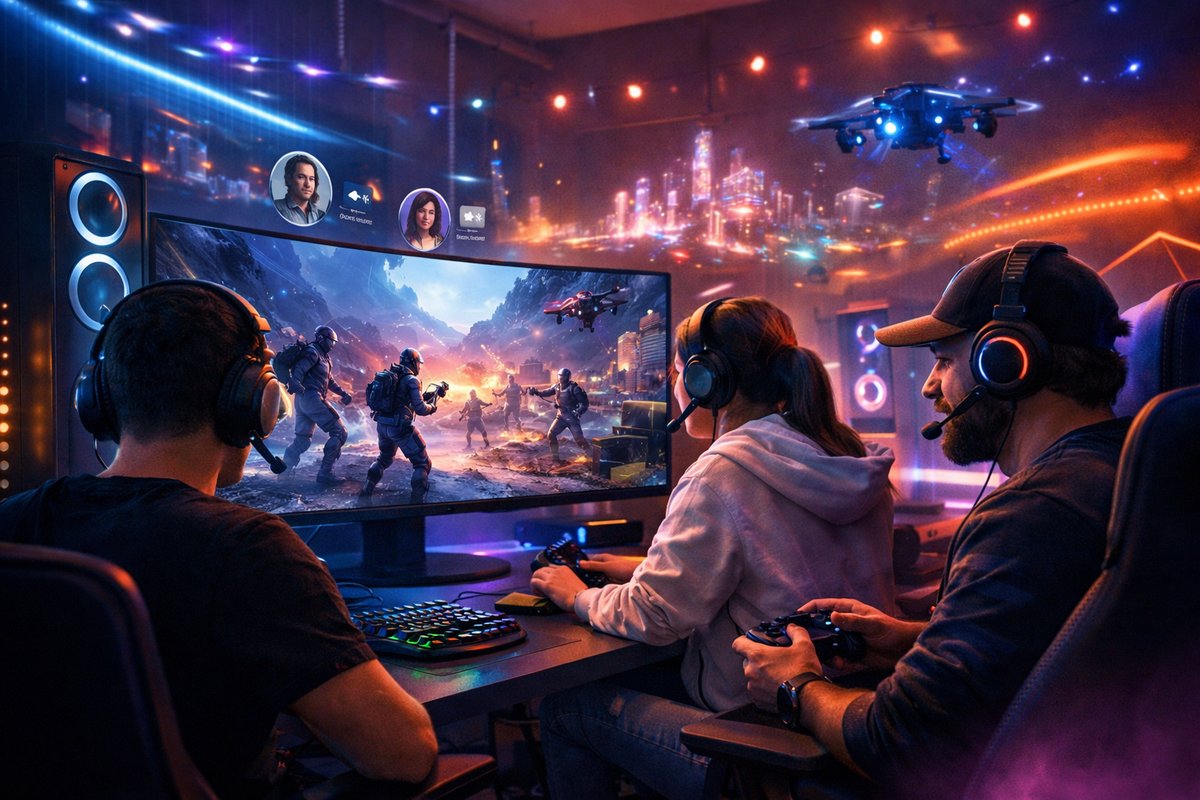

In recent years, the landscape of games and entertainment has undergone a significant transformation, driven by advances in immersive technology and a cultural shift toward social connectivity. No longer confined to simple screen interactions, gaming now envelops players in multisensory experiences that stimulate sight, sound, and even touch, fostering deeper engagement and emotional connection. This evolution is not just about graphics or frame rates; it’s about crafting environments that invite players to lose themselves in richly textured virtual worlds while simultaneously connecting with others in meaningful ways.
The integration of spatial audio technologies, for example, has redefined how sound is perceived in gaming spaces. By simulating three-dimensional soundscapes, players can detect the directionality of footsteps, ambient noises, and environmental cues with remarkable precision. This not only enhances gameplay mechanics but also heightens immersion, making encounters feel more authentic and suspenseful. Coupled with advanced visual effects and customizable lighting systems that respond dynamically to in-game events, these elements combine to create an atmosphere that transcends traditional screen-based entertainment.
Social interaction plays a pivotal role in the current entertainment paradigm. Multiplayer games and online platforms have evolved into digital gathering spaces where friendships are forged, strategies debated, and communal victories celebrated. The rise of live streaming and spectator modes further democratizes participation, allowing audiences to engage with gameplay in real-time, fostering a shared sense of excitement and community. This social dimension extends beyond the game itself, influencing the design of gaming setups that encourage comfort and communication, such as ergonomic seating arrangements and integrated voice communication hardware.
Moreover, the growing emphasis on personalization allows players to tailor their gaming environments to reflect individual tastes and optimize performance. From mechanical keyboards with programmable keys to high-fidelity gaming headsets that balance clarity and noise cancellation, the market offers an array of tools designed to enhance focus and reduce fatigue. Adjustable desks and ambient lighting not only contribute to ergonomic well-being but also set the tone for immersive sessions, enabling players to remain engaged over extended periods without discomfort.
In addition to hardware innovations, software advancements are pushing boundaries in content delivery and interaction. Virtual reality (VR) and augmented reality (AR) platforms continue to mature, offering players novel ways to explore game worlds through intuitive motion controls and spatial mapping. These technologies invite users to physically engage with their surroundings, blending digital and real-world elements in seamless ways. Although still emerging, VR and AR experiences are increasingly accessible and are expected to become mainstays in entertainment ecosystems, expanding the possibilities for storytelling and gameplay mechanics.
Importantly, the gaming community is also witnessing a growing consciousness around sustainability and inclusivity. Developers and manufacturers are beginning to address environmental impacts by optimizing energy consumption and utilizing recyclable materials in hardware production. Simultaneously, efforts to design games that are accessible to players with diverse abilities and backgrounds are reshaping narratives and gameplay structures, ensuring that entertainment is welcoming and representative.
Looking ahead, the fusion of cutting-edge technology with human-centered design principles promises to redefine what it means to play. Gaming setups will likely become more modular and adaptive, allowing seamless transitions between solo exploration, competitive play, and social collaboration. Advances in AI-driven content generation may introduce dynamic storylines that respond uniquely to each player’s choices, further personalizing the entertainment experience. Meanwhile, cross-platform connectivity will continue to blur boundaries between devices and communities, fostering a truly global culture of play.
In sum, the current era of games and entertainment is characterized by an intricate dance between technology and human connection. As players seek richer, more immersive experiences, the industry responds with innovations that engage multiple senses and nurture social bonds. Whether through the crackle of surround sound, the glow of responsive lighting, or the thrill of shared victory, modern gaming is not just about the game itself-it’s about crafting spaces and moments that resonate deeply with our innate desire for storytelling, challenge, and companionship.
-
Wireless Gaming Headset for PC PS5 PS4 Mac Switch 7.1 Surround ...
Wireless Gaming Headset for PC PS5 PS4 Mac Switch 7.1 Surround Sound 100-Hr. 2.4Ghz USB Gaming Headphones, Bluetooth 5.4 & Type-C, Noise Canceling Mic, RGB ... -
HyperX Cloud Revolver Gaming Headset, HyperX 7.1 Surround ...
Experience HyperX Cloud Revolver with HyperX 7.1 surround sound, vivid studio-grade sound stage, memory foam, steel frame, and a detachable noise-canceling ... -
Redragon K671KS Wireless Mechanical Gaming Keyboard, Tri ...
... Keyboard, Tri Mode BT/2.4G/USB-C Hot Swappable Custom Keyboard, RGB Backlit Computer Gaming Keyboards, PBT Keycaps, Programmable for PC/Tablet/MAC : -
Sleek Wired Mechanical Gaming Keyboard RGB | N-Key Rollover
Buy Sleek Wired Mechanical Gaming Keyboard RGB | Programmable Mechanical Switches | Waterproof RGB Backlit | N-Key Rollover | Wired Mechanical Gaming ... -
Amazon.com: Veratric Ergonomic Office Chair - Computer Desk ...
Buy Veratric Ergonomic Office Chair - Computer Desk Chairs Comfy, Mesh High-Back Gaming Chair with Adjustable Lumbar Support, Executive Task Chair for ... -
EDX Ergonomic Gaming Chair High Back Office Chair with Lumbar ...
Shop Black Friday 2024 Deals on EDX Ergonomic Gaming Chair High Back Office Chair with Lumbar Support and Adjustable Armrests Swivel Racing Chair, ...