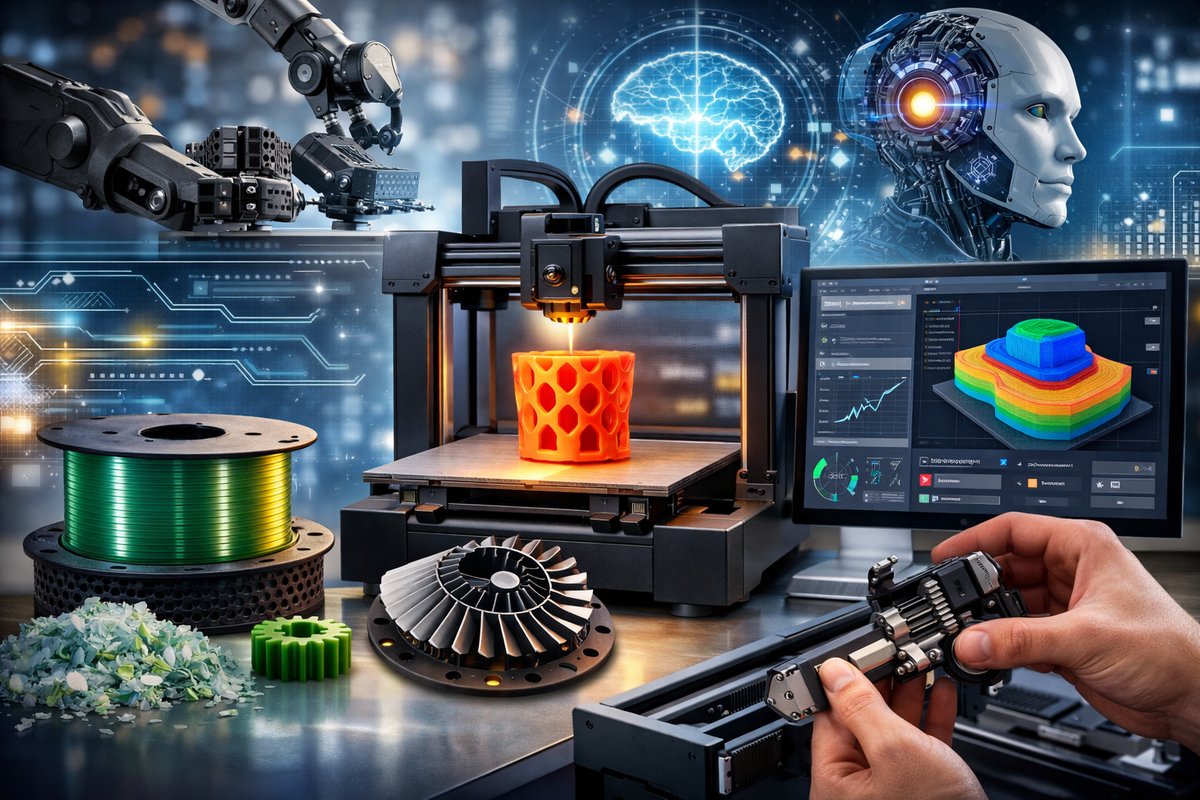

The essence of 3D printing lies in its unique marriage of imagination and precision. Today, hobbyists, educators, engineers, and designers stand at a crossroads where innovation and affordability intersect. As the technology matures, new techniques and hardware advancements are making it possible to produce high-quality prototypes and end-use parts without breaking the bank. This article delves into the strategies and tools that are reshaping additive manufacturing-showing how cost-savvy makers and large-scale operations alike can achieve remarkable results with tighter budgets.
At the heart of economical 3D printing is smart material selection. Traditional PLA remains popular for its low cost and ease of use, but specialty blends have emerged to tackle specific challenges. For instance, composite filaments embedded with wood fibers or metal powder offer authentic surface finishes that mimic natural materials, reducing the need for post-print coatings or laborious painting. Bio-based alternatives derived from agricultural residues cut environmental impact and, when sourced locally, shrink shipping costs. On the resin side, hybrid formulas that combine standard photopolymer with recycled resin from old prints can lower per-part expense by up to 30 percent-provided a compatible curing workflow is in place. Powder-based systems also benefit from reuse loops: sieving and annealing uncured powder extends shelf life and cuts down the volume of virgin material used for each batch of nylon or polystyrene builds.
Driving down expenses begins even before the first layer is laid. Open-source slicing software has transformed the way we negotiate between speed, strength, and surface detail. Modern slicers employ adaptive or variable-height layering, automatically adjusting layer thickness in zones where fine details matter while coarsening layers on gentler slopes. This not only slashes print times but also conserves filament in regions that don’t require full resolution. Built-in supports shaped by organic algorithms have replaced traditional blocky scaffolds; they consume less material and detach more cleanly, cutting down on cleanup time and wasted support filament. Some platforms now integrate AI-powered defect detection that analyzes G-code before printing-calling out potential weak spots, bridging issues, or nozzle collisions, and offering corrective tweaks within seconds.
Hardware innovations have been equally transformative. Upgrading to all-metal hot ends capable of handling temperatures above 300°C opens the door to engineering materials like polycarbonate and carbonfiberfilled nylon, which command higher resale value in industrial markets. Modular toolheads enable seamless switching between extrusion, laser engraving, and paste dispensing; this multi-function approach spreads capital cost across multiple use cases. Linear guide rails and anti-backlash lead screws have begun to replace budget printers’ basic rod-and-bearing assemblies, dramatically improving positional accuracy. Coupled with closed-loop stepper motor drivers that detect missed steps in real time, these upgrades ensure that prints remain on-track even during long runs.
For those seeking turnkey solutions, integrated enclosures are gaining popularity. Maintaining a stable thermal environment minimizes warping in high-performance polymers and speeds up first-layer adhesion. Enclosures with HEPA filters also address workplace safety by capturing ultrafine particles released during melting. More advanced boxes include built-in lighting, camera ports for remote monitoring, and modular racks to store spare spools or tools without straying from the print lab. Though an enclosure can add around 10 to 20 percent to the total system cost, the reduction in failed prints and improved part consistency often makes it a worthwhile investment.
Post-processing has historically been a time sink and a cost center, but new methods are easing the pain. Automated wash and cure stations for resin prints provide uniform cleaning without manual dipping, and programmable UV arrays assure even polymerization, reducing the incidence of crunchy or tacky spots. For filament builds, chemical smoothing solutions eliminate layer lines on ABS or ASA with minimal handling risk. Vacuum-based deburring stations remove loose powder from SLS parts in bulk, speeding up pre-assembly. And robotic polishing arms-once the domain of large factories-are now available in benchtop formats to finish intricate features with consistent pressure and motion profiles.
Sustainability and resourcefulness go hand in hand with cost reduction. Desktop filament extruders that recycle support structures and failed prints are more accessible than ever. By shredding plastic waste and feeding it back into a melting chamber, these units turn scrap into fresh filament for a fraction of the retail price. While the resulting filament can exhibit slight diameter inconsistencies, pairing it with an intelligent filament monitoring sensor and an enclosure keeps prints reliable. Paperless workflows also play a role: cloudbased print queues reduce onsite hardware needs, and remote job scheduling lets multiple makers share a single machine without physical handoffs.
Innovations in energy use are also making a splash. Solar powered filament dryers that run off portable panels help remote makers or off-grid schools maintain filament quality without adding to power bills. Lowcurrent standby modes in newer printers draw only a few watts when idle, and programmable power thresholds allow complete shutdown after a specified idle time. These green practices dovetail with corporate sustainability goals and can be highlighted when selling custom parts to environmentally conscious customers.
Beyond hardware and materials, community and collaboration remain vital. Online repositories of machine profiles and calibration settings let newcomers leapfrog setup hurdles. Crowdsourced firmware patches add advanced features-like pressure advance and linear advance compensation-to entry-level boards, boosting extrusion consistency on budget machines. Virtual makerspaces host design challenges that spur regional partnerships and bulk discounts on filament or hardware upgrades. This cooperative spirit makes it possible to negotiate better shipping rates and share specialized accessories like hardened steel nozzles or glass beds in communal workshops.
As 3D printing continues its quiet revolution, the boundary between prototype and production blurs. Cost-effective methods once reserved for hobbyists are now mainstream tools for designers and engineers. With DIY recycling stations, AI-driven slicers, temperature-controlled enclosures, and modular hardware kits, the barriers to entry keep falling. Yet the drive toward affordability does more than save money-it broadens creative horizons, empowers more voices in the maker community, and fuels the next wave of sustainable innovation. When a single layer can transform an abstract idea into a tangible form, investing in smart, economical workflows ensures that visionaries at every level can participate in shaping tomorrow.
Embrace this era of layered ingenuity, where careful material choices, open-source intelligence, and modular design converge to deliver both affordability and excellence. By leveraging the techniques outlined here- and experimenting with your own custom setups- you can produce stronger, cleaner, faster prints at lower cost. The quiet revolution of making thrives on curiosity, collaboration, and the relentless pursuit of improvement. Your next breakthrough might be just one recycled filament spool, adaptive slice, or enclosure upgrade away.
-
ANYCUBIC Wash & Cure Max 3.0, 15.1L Ultra-Large Washing Volume
Detergent Saving 50%, Customizable Wash & Cure Process, Compatible with Photon Mono Series/Saturn Series Resin 3D Printer. -
Christopher Knight Home Modern Plush King Bed Frame with Soft ...
Buy Christopher Knight Home Modern Plush King Bed Frame with Soft Padded Headboard, Wood Frame, White at Walmart.com. -
Creality Original Ultra-Flexible Removable Magnetic Build Surface ...
Amazon.com: Creality Original Ultra-Flexible Removable Magnetic Build Surface Heated Bed Cover for Ender 3 V2 Neo/ pro/ S1/Ender 5 3D Printer 235X235MM ... -
Belkin BoostCharge Pro Flex Braided USB Type A to Lightning ...
1. Silicone Jacket Inside · 2. Extended Soft Strain Relief · 3. Lightning Connector · 4. Satin Aluminum Cable Head · 5. Braided Exterior · 6. Magnetic Cable ... -
Digital Caliper, Caliper Measuring Tool with Stainless Steel ...
Measuring Range:0 - 150mm (6") / Resolution: 0.01mm (0.0005")/Accuracy: ±0.02mm (0.001"); [Stainless Steel Material]: The vernier caliper is made of high ... -
150mm Digital Electronic Caliper, 0.01mm Precision Measuring Tool ...
Buy 150mm Digital Electronic Caliper, 0.01mm Precision Measuring Tool, Stainless Steel Vernier Micrometer with IP54 Waterproof for Origin Measurement at ...