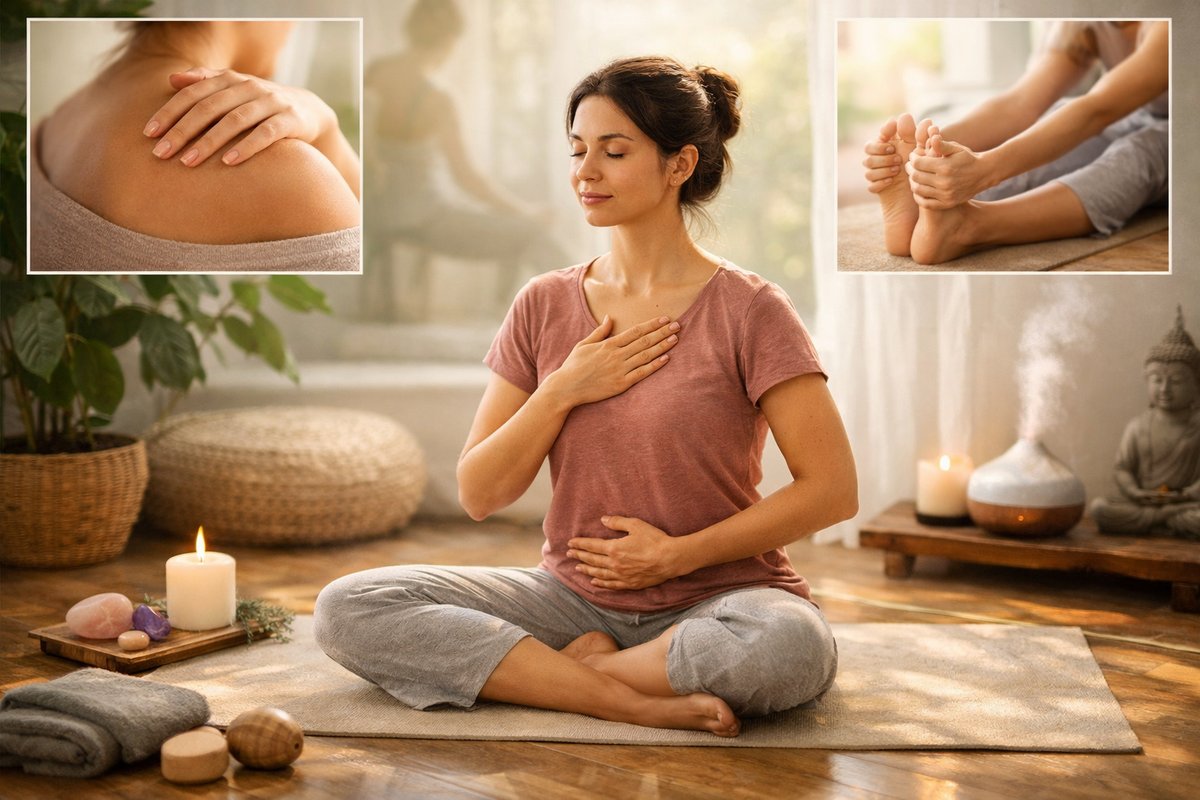

In a busy world of constant stimulation, wholistic massage offers a chance to pause, breathe, and reconnect with your body. By blending thoughtful touch with mindful breathing and gentle movement, this approach eases muscle tension, soothes the nervous system, and fosters a sense of grounded calm. Whether you have just a few minutes or a longer window for self-care, you can use these techniques to restore balance to body, mind, and daily life.
Presence Through Breath
Before you begin any self-massage technique, take a moment to tune in. Sit or lie comfortably and close your eyes for a few breaths. Draw air gently into your belly, allowing the diaphragm to expand, then release slowly through the nose or mouth. Research in mind-body medicine shows that even brief periods of diaphragmatic breathing can lower heart rate and reduce stress hormones. This simple centering practice helps you notice areas of tightness or discomfort, guiding your hands to the spots that need the most attention.
Mindful Touch and Pressure
Wholistic massage is not about rough kneading or forceful manipulation. Gentle, sustained pressure encourages the body to let go. Start with a warm carrier oil or lotion-lightly warming it in your palms before applying to the skin. Glide your hands over large muscle areas, such as the shoulders or thighs, using long, even strokes. When you reach a tender spot, pause and hold still for 10-20 seconds. Known as myofascial release, this technique allows fascia (the connective tissue around muscles) to soften and reorganize.
Aligning Movement and Massage
Integrating gentle movement with massage further enhances body-mind connection. For example, while applying circular strokes to your upper back, gently lift and lower your arms. This small range of motion maintains blood flow and encourages joint lubrication. In the legs, you might press along the calf muscles as you flex and point your feet. Moving the joints through their natural range can help reduce stiffness and improve body awareness in everyday activities like walking or sitting at a desk.
Layering Sensory Soothers
Engaging the senses can deepen the experience. Play soft instrumental music or nature sounds to create a relaxing soundscape. If you enjoy aroma, choose a mild essential oil-such as lavender or sweet orange-diluted in a neutral carrier oil. Gently inhale the scent as you work, letting each breath invite calm. Warmth can also help: a heated towel or moist heat pack placed on tense areas before massaging boosts circulation and makes tissues more receptive to touch.
Adapting Techniques for Tight Spots
Some areas resist easy release-neck knots, low-back tension, or tight hips may hold onto stress longer. A small massage ball or trigger-point tool can target these spots with controlled pressure. While seated, place the ball between your back and a chair, then lean into it, adjusting body position until you feel a gentle, tolerable intensity. Hold for 15-30 seconds, then roll slightly to explore adjacent areas. Always listen to your body: the goal is productive tension, not pain.
Creating a Daily Practice
Consistency is key to lasting benefits. Block out even five minutes each day for a mini self-massage routine. Focus on one region-perhaps your calves after a day on your feet, or your shoulders after hours at a screen. Use breath to guide the depth of pressure: inhale to pause and tune in, exhale as you apply gentle encouragement to tight tissues. Over time, these small rituals add up, enhancing circulation, reducing stiffness, and reinforcing a habit of self-attention.
Evidence-Informed Benefits
Studies published in journals such as the International Journal of Therapeutic Massage and Bodywork highlight reductions in stress markers and improvements in range of motion from regular massage. While full-body sessions with a trained therapist remain invaluable, self-massage empowers you to address daily stressors in real time. It also complements other wellness practices-like yoga or meditation-by keeping connective tissues supple and ready for movement.
Infusing Self-Care Into Daily Life
Wholistic massage extends beyond designated sessions. You can bring mindful touch into everyday moments: press along your forehead and temples while waiting for your coffee to brew, or knead your palms and fingers during a brief screen break. These micro-pauses help interrupt tension build-up and invite a sense of ease that ripples through your day.
A Gentle Path Forward
Exploring wholistic massage at home is an act of kindness toward yourself. By weaving together breath, touch, and mindful movement, you create a personalized sanctuary of calm. Begin each session with curiosity-notice the subtle shifts in your muscles and the ebb and flow of sensation. Over time, you’ll cultivate a deeper relationship with your body, one that honors both tension and release as part of a balanced whole.
Invite these practices into your routine and observe how small moments of wholistic care can transform daily stress into grounded presence. Your body holds wisdom; through mindful touch, you can learn to listen and respond with compassion.
-
Monoprice Height Adjustable Standing Foot Rest - Black - Walmart
Ergonomic Foot Rest Under Desk with 6 Adjustable Heights, Massage Roller ... HOMBYS Adjustable Foot Rest Under Desk for Office, High-Density Foam Foot ... -
Amazon.com: Aura Cacia Rose Roll-On Essential Oil Blend, Pure ...
Amazon.com: Aura Cacia Rose Roll-On Essential Oil Blend, Pure Rosa Damascena in Apricot Carrier Oil and Vitamin E, Natural Perfume, On-the-Go Aromatherapy ... -
Plant Therapy Younger Glo Carrier Oil Blend 4 oz Base ... - Walmart
It was created for those that wish to reduce the signs of aging, or for those with “mature skin”. PERFECT FOR DIYS: Add your favorite essential oils for mature ... -
Gaiam Acupressure Mat & Pillow Set, Neck, Shoulder & Back
Buy Gaiam Acupressure Mat & Pillow Set, Neck, Shoulder & Back | Acupuncture-Style Stimulation | Neck, Shoulder & Back Tension | Multi-Point Pressure | Home ... -
ABPETE Jogging Acupressure Mat,Foot Reflexology Massage ...
Buy ABPETE Jogging Acupressure Mat,Foot Reflexology Massage Board for Adults, Meridian Stimulation Mat for Wellness, Fitness & Body Shaping (Purple) at ...