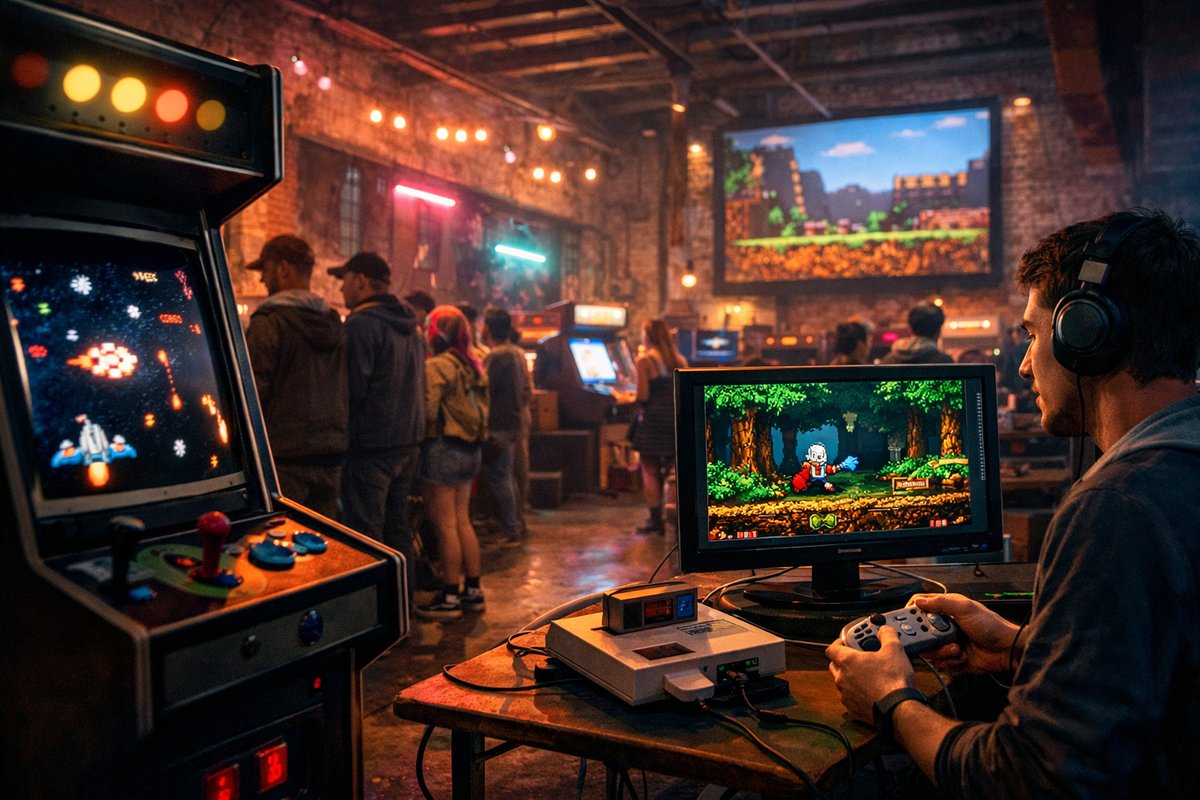

It began as a whisper among collectors but has grown into a full-blown movement: retro gaming is back in the spotlight. While memory cards and CRT monitors seemed destined for garage-sale obscurity, recent market data suggests a surprising uptick in demand for vintage titles and hardware. According to the industry tracker NPD Group, sales of retro-inspired gaming devices rose by 22 percent in the first quarter, marking one of the most significant growth spurts in a decade. In city centers and small towns alike, pop-up arcades are reclaiming abandoned storefronts, indie developers are reworking classic formulas, and communities are rediscovering pixel art, chiptune soundtracks, and tactile controls.
What’s driving this revival? For many players, it’s an antidote to the hyper-polished worlds offered by mainstream blockbusters. “There’s something deeply satisfying about a game you can understand at first glance,” says a community organizer who transformed a 1920s warehouse into a weekend arcade. “You don’t need a 10-page tutorial-just put in a coin and start exploring.” The rise of social media platforms dedicated to frame-by-frame gameplay, speedrun challenges, and fan-made modifications has only fanned the flames of nostalgia.
But the renaissance isn’t merely a trip down memory lane. Indie studios are taking inspiration from the past to forge fresh experiences. A group of developers in an urban co-working space recently released a pixel-art platformer with dynamic environments that shift according to player choices. By pairing retro aesthetics with branching narratives and procedurally generated levels, they’ve sold over 150,000 units across PC and console digital storefronts since launch. The project highlights how familiar visuals can serve as a gateway to creative innovation rather than a mere recreation of old formulas.
Beyond the digital marketplace, physical communities are gathering around the hum of CRT televisions and the click of joysticks. In Minneapolis, a volunteer-run arcade collective hosts monthly tournaments for obscure titles from the early ’90s, drawing participants as young as 12 and as seasoned as 45. Many newcomers arrive curious about radiant sprites and chiptune beats; veterans share tips on cartridge cleaning, controller maintenance, and memory card backups. The events have fostered a sustainable model: attendees contribute spare parts salvaged from broken consoles, iron shelving reclaimed from deconstructed malls, and vintage furniture upcycled into seating areas. This grassroots approach emphasizes repair over replacement, reflecting a broader sustainability ethos reshaping the hobby.
Hardware innovators are stepping into the spotlight as well. Modular arcade cabinets are now available in kit form, allowing enthusiasts to swap in custom controls, displays, and lighting elements. Small manufacturers are offering open-source designs for 3D-printed joysticks and button layouts, enabling hobbyists to personalize their rigs without a workshop full of power tools. On the handheld side, compact retro consoles equipped with HDMI outputs and rechargeable batteries are selling out in weeks. These devices often support SD card libraries, letting collectors digitize and preserve faded cartridges while enjoying crisp, upscaled graphics on modern TVs.
Despite the buzz, questions remain about long-term viability. Some industry analysts warn of a bubble, pointing to the fleeting nature of nostalgia trends. Yet most agree that the blend of community engagement, indie creativity, and sustainable practices gives this revival staying power. By emphasizing open-source hardware, collaborative events, and digital preservation, retro gaming advocates are building a resilient ecosystem that can evolve rather than fade away.
Looking ahead, the movement shows no signs of slowing. A handful of studios are exploring mixed-reality enhancements that overlay pixel-art characters into real-world environments via smartphone cameras. Others are integrating adaptive soundtracks that remix classic chiptune motifs based on player performance. Meanwhile, arcade collectives are planning regional circuits that travel in retrofitted delivery vans-complete with fold-out cabinets and bakery-style seating for viewers. These mobile units aim to bring gaming back to the streets, parks, and festivals that once hosted carnival attractions.
In a landscape dominated by photorealistic worlds and billion-dollar budgets, the retro resurgence reminds us that play can be both simple and profound. The joy of making a 16-pixel sprite leap, the thrill of mastering a perfectly tuned jump, and the camaraderie of sharing a physical space all speak to gaming’s roots as a social ritual. By reembracing the past through modern lenses, players and creators are forging a renewed sense of wonder-one pixel at a time.
-
Amazon.com: UYTGXEN XF40V Retro Handheld Game Console ...
【2026Newly Classic Retro Game Console】 The XF40V retro handheld game console features a powerful Linux operating system and a 1.5GHz quad-core processor, ... -
Nintendo Switch 2 + Mario Kart World Bundle - Walmart.com
The next evolution of Nintendo Switch · One system, three play modes: TV, Tabletop, and Handheld · Larger, vivid, 7.9” LCD touch screen with support for HDR and ... -
LEP1 Customs - Amazon.com
2 Story "Morning Glory" One Inch Scale (1:12) Modular... LVL23 2 Player Bartop Arcade Cabinet Kit for 19" to... ... I loved playing arcade games as a kid ... -
Organize your Sockets, Wrenches, Pliers, etc. with Pegboards, and ...
Buy Tool Organizer Kit (BLUE) - Organize your Sockets, Wrenches, Pliers, etc. with Pegboards, and Accessories at Walmart.com. -
8Bitdo M30 Wireless Bluetooth Controller Retro Gamepad - White
Amazon.com: 8Bitdo M30 Wireless Bluetooth Controller Retro Gamepad - White | Sega Genesis & Sega Mega Drive Style for Switch, PC Windows, MacOS, Android, ... -
Boytone BT IN & OUT Classic Record Player Turntable with AM/FM ...
Boytone BT IN & OUT Classic Style Record Player Turntable with AM/FM Radio, Cassette Player, CD Player, 2 Separate Stereo Speakers, Record Vinyl, Radio, ...