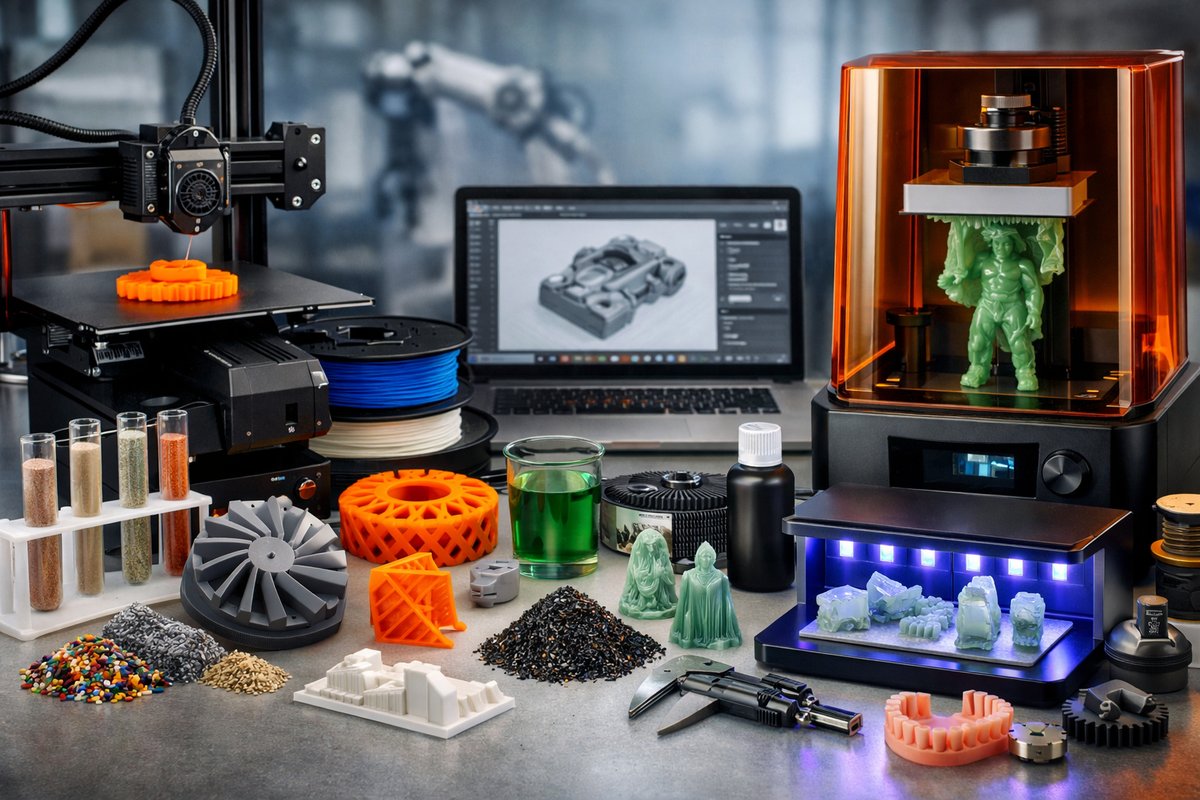

3D printing began as a niche tool for rapid prototyping and has since evolved into a multidisciplinary powerhouse. Today’s makers, engineers, educators, and artists use additive processes to turn digital dreams into tangible realities. But beyond dazzling demos of complex shapes and multi-material sculptures lies a quieter transformation: a drive to make 3D printing more economical, more feasible, and ultimately more successful for every user.
By revisiting core components-hardware, materials, and workflows-and pairing them with data-driven techniques and open-source ingenuity, the community has unlocked new ways to shrink budgets, eliminate waste, and raise print quality. Whether you’re printing your very first miniature figurine or rapidly iterating functional parts for a robotic arm, a handful of emerging technologies and smart practices can transform your experience.
At the heart of cost reduction lies smarter material use. Infill patterns, support structures, and shell thickness determine how much filament or resin ends up in the final object. Advanced slicing software now offers adaptive infill algorithms that vary density only where strength is needed. Combined with gyroid or honeycomb patterns, this slashes material consumption by up to 30 percent without sacrificing rigidity. On resin platforms, dynamic layer heights and variable exposure times allow thinner sections to cure with less resin, automatically reallocating resin reserves to solid zones. These software-driven optimizations mean fewer filament spools and resin bottles per project.
Recycling and reuse have also gained traction. Filament recyclers transform failed prints and support rafts into fresh filament pellets. Even desktop systems can grind leftover prints into feedstock for pellet extruders, which in turn feed larger format machines. Closed-loop systems now exist that wash, dry, and remelt waste PLA into new spools. When paired with biodegradable resin formulations, these circular workflows minimize landfill contributions and reduce overall material spend.
On the hardware front, a new generation of modular printers makes high-performance features accessible at budget price points. Swappable print heads support both fused filament fabrication (FFF) and stereolithography (SLA) in one chassis, while plug-and-play heated enclosures help tame warping on ABS and nylon. Even desktop laser sintering (SLS) systems have begun trickling into small labs, offering powder-based precision without the industrial footprint. By sharing a single mainboard and exploiting open electronics platforms, these machines cut development and manufacturing costs, translating savings directly to the user.
Increasingly, machine intelligence plays a role in print success. Real-time monitoring cameras coupled with AI-powered defect detection can pause prints at the first sign of layer shifting or nozzle clogging. Automated bed-leveling sensors map the build surface in seconds, adapting Printruder heights to within microns and eliminating wasted prints caused by poor adhesion. Voice-activated controls and remote slicing dashboards let teams manage long jobs from anywhere, ensuring time-sensitive projects stay on schedule without constant supervision.
Sustainability remains a core value driving innovation. Plant-based PLA derivatives now include composite blends with wood, bamboo, and even coffee grounds, enabling aesthetic finishes at no extra cost. Bioresins cured under LED light use less energy per part than traditional UV systems. Some early pilot projects have demonstrated solar-powered print farms, where photovoltaic panels generate electricity to run banks of desktop machines, completely offsetting operational energy usage.
For those seeking feasibility on a shoestring, community-driven ecosystems of open-source designs and shared settings are invaluable. Online libraries host validated print profiles for popular nozzles, beds, and filament brands. Calibration cubes, temperature towers, and test artifacts populate free repositories, letting newcomers dial in ideal parameters without trial and error. Paired with affordable calipers and surface probes, these practices cut down the learning curve from weeks to days.
Control over the printing environment extends to post-processing, where innovations in cleanup and curing accelerate throughput. Magnetic build plates release finished prints with a flick, avoiding damage and speed-ing up job swaps. Ultrasonic resin washers that circulate isopropyl alcohol reduce manual scrubbing, while LED UV curing chambers with programmable rotations ensure consistent strength and finish. These additions cost a fraction of the printer itself but can double daily output for busy workspaces.
Large-scale and specialized applications have not been left behind. Pellet extruders now allow printing directly from low-cost granules, making meter-long structural members feasible for construction and industrial design. Four-axis and multi-axis turntable attachments expand geometric possibilities, letting printer heads approach models from all angles. Hybrid systems that integrate subtractive tools-drills, routers, and CNC spindles-enable one-step manufacturing of parts that need critical tolerances or exquisitely smooth surfaces.
Key to long-term success is data collection. Logging temperature, fan speed, and layer times for each print creates a digital twin of your workflow. Over months, these logs reveal trends: certain filament colors clog more often, specific infill densities drive warping on large prints, or room temperature fluctuations cause layer adhesion issues at night. Armed with this insight, users can tweak environmental controls-like adding gentle airflow or zoned heating-or swap to filaments that perform more predictably under local conditions.
Looking ahead, artificial intelligence promises to further democratize 3D printing. AI-driven generative design tools already craft lattice structures that balance strength and weight beyond human intuition. Next-generation slicers will likely suggest hardware upgrades, software tweaks, and maintenance schedules tailored to each user’s unique printer history. Combined with cloud-based simulation environments, digital prototypes can be stress-tested virtually, reducing the need for costly physical iterations.
The economic viability of 3D printing rests on a tapestry of small improvements that compound over every layer. From smarter slicing software to recycled filaments, from AI-monitored prints to hybrid manufacturing platforms, the tools and techniques at our disposal are richer and more accessible than ever before. As makers embrace data, sustainability, and open collaboration, the low barrier to entry shifts even further-inviting more voices, more experiments, and more innovations into the fold.
Whether you’re shaping custom medical models, crafting intricate art objects, or building functional jigs for the next big invention, the path to success is paved with thoughtful choices at every step. By adopting material-efficient patterns, leveraging modular hardware, and harnessing real-time analytics, you can transform a humble desktop printer into a reliable fabrication partner. The quiet revolution of 3D printing isn’t dictated by flashy price tags or exclusive patents-it’s powered by shared curiosity, iterative learning, and the joy of watching ideas rise, layer by layer.
Explore these economical and practical advances, tinker with new materials, and document your findings for fellow makers. As each innovation builds on the last, the simplest print can inspire the next breakthrough, ensuring that affordable, feasible, and successful 3D printing remains within reach for every creative mind.
-
Onemacc 3D Printer Filament Storage Rack Desktop, Wooden 3D ...
【2-Tier Design, Maximum Storage】Maximize your desktop space with our innovative two-tier filament rack design. This setup allows you to neatly arrange ... -
VELCRO Brand ONE-WRAP Ties 8in x 1/2in Ties Gray & Black 50 Ct
Continue your search on Walmart. velcro cable ties · cord ... I use these to keep my 3D printer filament from becoming unspooled when I take it off the spool. -
FAST MELT UV Resin Curing Box, 395nm UV Curing Light Station ...
FAST MELT UV Resin Curing Box, 395nm UV Curing Light Station with 36 LED Beads, Auto UV Curing Resin Dryer Timer Setting Digital Display(S/M/H) with Tray, ... -
3D Printer UV Curing Light Box for LCD/DLP/SLA Resin ... - Walmart
Upgrade your 3D printing with our DIY 405nm UV Resin Curing Station. Features 360° turntable and intelligent time control ... UV LED lights which can fully curing ... -
Sovol Filament Dryer 2026, SH01 Filament Dehydrator 3D Printer ...
Amazon.com: Sovol Filament Dryer 2026, SH01 Filament Dehydrator 3D Printer Spool Holder with Upgraded Fan, Dry Box for Keeping Filament Dry, Compatible with ... -
Comgrow Filament Dryer Box, SH02 Filament Dehydrator with PTC ...
Buy Comgrow Filament Dryer Box, SH02 Filament Dehydrator with PTC Fast Heater and Touch Screen, 3D Printer Filament Sealed Storage Box with 2 Spools Holder ...