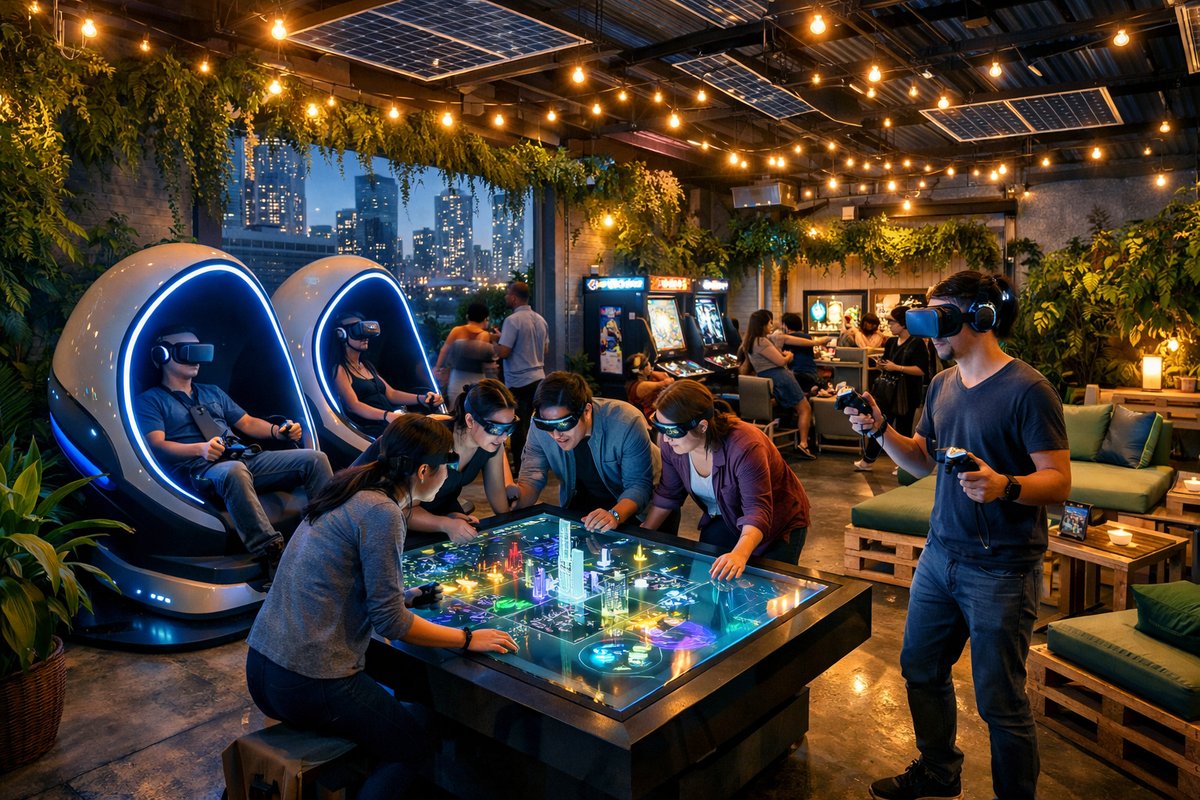

On a recent Saturday evening, a former industrial warehouse on the city’s east side pulsed with neon lights and electronic beats as more than two hundred gamers and curious passersby filed inside. But this wasn’t a nightclub or art gallery-it was the latest in a wave of temporary gaming arenas opening across urban centers to offer a social twist on the traditional living-room experience. From VR pods lining the perimeter to augmented reality tables in the center, these pop-up playgrounds demonstrate how play has become a collective, tech-powered spectacle.
The concept is simple: reclaim vacant buildings, parks, or community centers and outfit them with modular gaming furniture, projection mapping, and networked consoles. One organizer repurposed a century-old freight depot by installing retractable walls that double as screens, housing a dozen virtual reality stations alongside custom seating crafted from recycled plastics. Local volunteers helped assemble lightweight panels and plug in cloud-streaming consoles, recruiting nearby craft breweries and food trucks to round out the experience with ambient lighting and refreshments.
At the heart of each arena, visitors encounter VR pods equipped with motion-tracking gloves, haptic feedback vests, and wireless headsets optimized for minimal latency. These stations tap into cloud-based gaming libraries, eliminating the need for high-end personal hardware. By streaming directly to lightweight headsets, players can step into sprawling fantasy worlds or competitive shooters with smooth frame rates, regardless of the device they bring. Network engineers at each venue monitor connection speeds in real time, ensuring traffic peaks during tournaments don’t introduce lag or dropped frames.
Augmented reality also takes center stage in communal play areas: sleek tables fitted with overhead projectors transform classic board-game setups into dynamic battlefields. Digital overlays render troop movements, interactive terrain, and character stats, while players manipulate physical tokens. This blend of analog and digital appeal has drawn tabletop enthusiasts seeking fresh twists, as well as casual visitors enticed by interactive holograms and animated callbacks to favorite game franchises.
Sustainability underpins many of these pop-up designs. Organizers have partnered with local recyclers to source modular furniture made from reclaimed ocean plastics and forestry byproducts. LED panels chosen for ambient lighting are energy-efficient, dimming automatically when zones go unused. Even the temporary flooring-a rubber composite derived from recycled tires-packs down easily for transport and promises a cushioned surface that reduces fatigue during extended play sessions. After each event, the components are disassembled, cataloged, and redistributed to the next location, cutting down on waste and storage needs.
Health-oriented gaming pods have also arrived on the scene, blending virtual play with physical activity. Stations outfitted with full-body motion sensors challenge participants to dash, duck, and defend in rhythm-based combat simulators. One zone encourages guided stretching and cooldown sessions with interactive instructors, promoting better posture and wellness during marathon sessions. According to a recent study from a wellness nonprofit, active gaming installations in public spaces can reduce sedentary behavior by up to 30 percent among regular users.
Beyond tech and sustainability, these social arenas aim to foster community bonds. Organizers host weekly intergenerational evenings where younger and older gamers team up through cooperative puzzles and narrative adventures. Digital literacy workshops accompany the events, teaching basic coding or level-design techniques that empower participants to create their own mods and environments. Gamers cite feeling more connected and less isolated, with local support groups reporting a surge in new volunteers who initially met through these pop-up sessions.
“We wanted to create a space where technology and humanity intersect,” explains one facilitator who declined to be named. “It’s not just about high scores or the latest gadget-it’s about shared experiences, friendly rivalry, and building skills together. Our attendees leave inspired to try new games, collaborate on creative projects, or even start their own local meet-ups.”
Industry trends reflect this shift toward communal, flexible play. Cloud gaming subscriptions recently surpassed 50 million users worldwide, up 40 percent year-over-year, as companies deploy edge servers closer to urban populations. Meanwhile, manufacturers are releasing foldable furniture lines and plug-and-play kits aimed at event coordinators rather than individual consumers. The result is a blossoming ecosystem of turnkey solutions that give community organizers the tools to host pop-up arenas within days, not months.
Next month, the inaugural Citywide Gaming Festival will take over several closed-off blocks downtown, featuring a mix of competitive e-sports matches, AR scavenger hunts through local murals, and DIY game-jam stations. Attendees can drop in for a paid hour of VR combat or stay all weekend with a festival pass that also grants access to art installations, panel discussions on inclusive design, and evening live-music sets synced to rhythm-game visuals.
Analysts forecast that the global experiential gaming market could top $15 billion within the next three years, driven by demand for social venues and the rise of lightweight, cloud-enabled hardware. As remote work blurs the boundaries between home and office, public gaming spaces promise flexible environments where players can switch seamlessly from productivity to play. Urban planners and community leaders are taking note: some cities are revising zoning regulations to streamline permits for temporary entertainment installations, recognizing their role in driving foot traffic and local business.
From converted warehouses to pop-up parklets, from eco-friendly furnishings to health-boosting motion games, the new wave of social gaming arenas is reshaping how people interact with technology and each other. Far beyond the confines of private living rooms, play has become a shared, sustainable, and ever-evolving form of urban culture. As organizers roll out new sites and festival planners chart the next season, one thing is clear: serious business has never looked more fun.
-
Freefly Mobile Virtual Reality Headset & Glide Wireless Bluetooth ...
This device will track your 360° head movements (using your existing smartphone) and projects this on your screen, making you feel like you're in a virtual ... -
GOOVIS GE10 wireless VR headset XR dedicated Bluetooth headset
Buy GOOVIS GE10 wireless VR headset XR dedicated Bluetooth headset at business.walmart.com Technology - Walmart Business Supplies. -
ARES WING Under Desk Cable Management Spine, Screw-On ...
... Modular Segments for Office & Gaming Desks, Blue : Electronics. ... VIVO No Drill Clamp-on Desk Vertebrae Cable Management Kit, Adjustable Quad Entry ... -
One (1) YELLOW Pegboard to Organize Sockets, Wrenches, Pliers ...
1PC PEGBOARD – Pegboard to scale up your tool organization area. Installation of Ascend Tools' Organizer Genie ® 76-Pcs Pegboard Tool Organizer Starter Kit ... -
Dayton Audio DAEX-9-4SM Haptic Feedback Transducer 9mm 1W 4 ...
Dayton Audio's DAEX-9-4SM exciter will allow you to add audio or haptic (tactile) feedback to even the smallest projects. This 9 mm exciter is an ideal option ... -
UAG Samsung Galaxy S24 Ultra Case 6.8" Pathfinder SE Midnight ...
Ultra-responsive oversized tactile buttons provide a crisp, clean click-feel. Screen & Camera Protection: Elevated perimeter with a soft raised screen surround ...