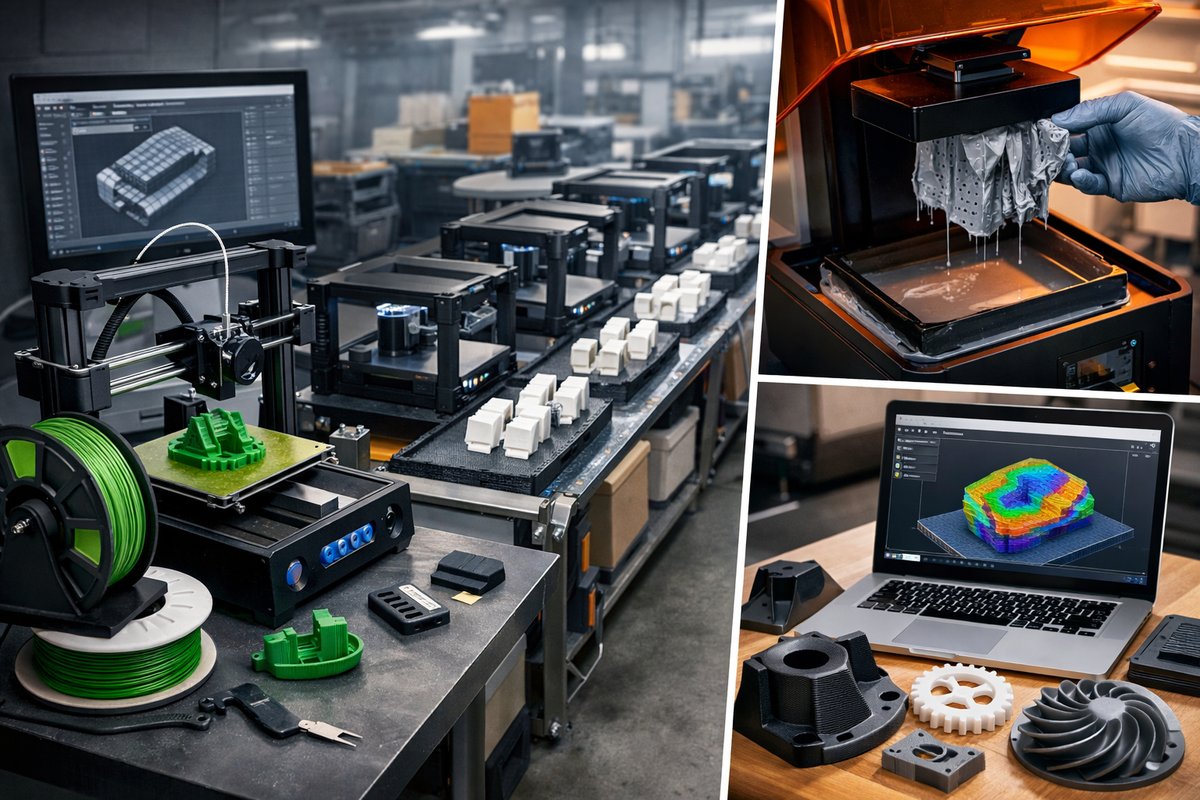

The allure of watching a three-dimensional object emerge layer by layer-from a pile of digital code and raw material to a tangible prototype-remains as strong now as when the first fused-filament printer whirred to life. Yet the barrier to entry for many enthusiasts, artisans, and emerging entrepreneurs has often been cost and complexity. How can we shrink budgets, reduce waste, and still achieve crisp detail and structural integrity? The answer lies in a suite of recent innovations that tackle efficiency and feasibility at every stage of the workflow.
Every successful print begins with the right material. Traditional PLA and ABS filaments are still workhorses, but they’ve been joined by cost-sensitive blends and recycled pellets that maintain dimensional accuracy while reducing environmental footprints. Manufacturers now offer filaments made from reclaimed PET bottles, coffee grounds, or agriculture by-products-each spool reducing plastic waste and undercutting conventional prices. Many users report comparable layer adhesion and minimal warping when printing at recommended temperatures, making recycled PLA an achievable gateway for budget-conscious makers.
Resin printing has also seen a democratization of consumables. A wave of bio-resins and generic photopolymers now competes with name-brand formulations at a fraction of the cost per liter. These resins cure cleanly under low-cost UV LEDs, and some reusable formulations allow you to recover uncured liquid through simple filtration systems. By combining resin recycling jigs and rotating vats, hobbyists can slash per-model resin expenses by up to 40 percent, according to community-sourced benchmarks.
On the hardware front, low-cost motion systems and open-source control boards have slashed the price of a versatile printer to well under four figures. Advances in stepper motor drivers enable faster acceleration and quieter operation, while 32-bit “silent” firmware variants unlock high-speed printing without the grinding noises of older 8-bit controllers. Coupled with self-leveling bed sensors and automatic mesh grids, these boards reduce calibration headaches and minimize failed prints caused by uneven surfaces.
For larger build volumes, modular extrusion heads now allow multi-material or multi-color printing on a single gantry. By retrofitting existing Cartesian frames with direct-drive tool changers, makers can cost-effectively upgrade a basic kit into a versatile multi-filament workstation. The ability to switch between rigid, flexible, or composite filaments mid-print opens new design horizons without the expense of a professional-grade multicolor machine.
The other half of cost-effectiveness is software. Traditional slicers have been joined by AI-driven tools that analyze geometry to suggest the optimal infill patterns, support structures, and layer heights. Machine-learning algorithms can predict weak points in a model and reinforce those areas with micro-ribs or denser infill, all while maintaining an overall lightweight structure. Some community editions of these slicers run in the cloud, so a modest laptop can generate complex toolpaths in seconds, freeing up local resources and speeding iteration cycles.
Strategies like variable-density infill and adaptive layer heights also contribute to resource efficiency. By thinning out less critical sections of a print and tightening up layers around detailed features, you reduce material usage and shrink print times-sometimes by as much as 30 percent compared to uniform settings. Additive fabrication can thus remain both fast and affordable, whether you’re prototyping mechanical parts or whipping up cos-play accessories.
Support removal often drives up post-processing labor and consumable costs. New water-soluble support materials and dual-extrusion setups let you print complex geometries that simply wash away in lukewarm water, eliminating manual chiseling and sanding. On resin systems, detachable support structures printed at lower exposure levels snap off cleanly, and rapid-cure baths use high-power LEDs to solidify excess resin in minutes rather than hours.
Post-print finishing has also benefited from frugal innovation. DIY polishing rigs use household ultrasonic cleaners with diluted detergents to remove small artifacts, while portable UV curing stations built from off-the-shelf LEDs cut heat output and electricity usage. For filament prints, rotating spray booths with high-volume low-pressure air brushes apply primer and paint evenly, so you spend less on industrial-grade booths and masks.
Recycling and reusing misprints can shave costs even further. Simple pelletizers grind failed filament parts back into granules, which can be blended with virgin material to maintain performance. Some hobbyists have even repurposed desktop injection-molding tools to fuse blended granules into new filament, closing the loop and drastically lowering per-kilogram expenses over time.
Beyond materials and machines, process workflows matter. Group buys for bulk filament or resin orders can cut prices by 20 to 25 percent, splitting shipping and import duties across a local maker collective. Remote monitoring apps and built-in cameras let you manage multiple machines at once, so a single operator can oversee a fleet of printers from a smartphone, optimizing uptime and minimizing idle runs.
Even electricity consumption is under scrutiny. Users are experimenting with low-power print modes that reduce nozzle and bed temperatures during infill layers and ramp up only for perimeters. Combined with well-insulated enclosures and passive cooling ducts, these settings can trim energy usage by 15 percent without compromising part quality.
As costs drop, the emphasis shifts from cost alone to reliability and creative freedom. Hobbyists can now experiment with multi-material mech assemblies, customized prosthetics can be prototyped in clinics at minimal expense, and small businesses can churn out custom signage or tooling jigs on demand. The closing cost gap between desktop printers and industrial systems means that even startups with shoe-string budgets can compete on speed and agility.
At its core, this quiet revolution is about unlocking creative potential. Each layer brings new possibilities-functional prototypes, art pieces, spare parts, or educational models. By weaving together recycled materials, open-source electronics, AI-driven slicing, and community collaboration, 3D printing is not only more affordable but also more sustainable and accessible than ever before. Whether you’re a first-time builder or a seasoned fabricator, the frontier of economical additive manufacturing welcomes curious minds, mindful makers, and innovators ready to reshape reality one thin layer at a time.
Bringing Future Layers into Focus
The drive toward ever-leaner processes and greener materials shows no sign of slowing. From liquid metal deposition to novel composite filaments and self-healing resins, the horizon is layered with potential. As communities share breakthroughs and open standards pave the way for interoperability, the dream of a truly decentralized, cost-effective manufacturing network moves closer. In that unfolding landscape, every printer-no matter how humble-can be a node in a global tapestry of creativity and innovation.
-
Amazon.com: phrozen Sonic Mighty 4K LCD Resin 3D Printer, 9.3 ...
Amazon.com: phrozen Sonic Mighty 4K LCD Resin 3D Printer, 9.3" Monochrome LCD, Tabletop 3D Resin Printer with 52µm XY Resolution, 7.9 * 4.9 * 8.7 Inch ... -
Nintendo Switch 2 + Mario Kart World Bundle - Walmart.com
View in 3D. In 50+ people's cartsBest seller. Visit the Nintendo Store. 4.5 out ... Dock that supports 4K when connected to a compatible TV*; GameChat ... -
Amazon.com: 3D Printer Extruders, Recycled Pet Filament Maker ...
✌--【3D Filament Extruder】Easily transforms discarded plastic bottles into 3D printing filament without complex pre-processing. -
Desktop Filament Maker Machine, 3D Printer Extruder, 3D Recycled ...
CREATIVE DESIGN: The filament extruder recycles used plastic bottles and discarded materials, ideal for DIY projects and educational 3D printing, ... -
ANYCUBIC Wash & Cure Max 3.0, 15.1L Ultra-Large Washing Volume
Detergent Saving 50%, Customizable Wash & Cure Process, Compatible with Photon Mono Series/Saturn Series Resin 3D Printer. -
Christopher Knight Home Modern Plush King Bed Frame with Soft ...
Buy Christopher Knight Home Modern Plush King Bed Frame with Soft Padded Headboard, Wood Frame, White at Walmart.com.