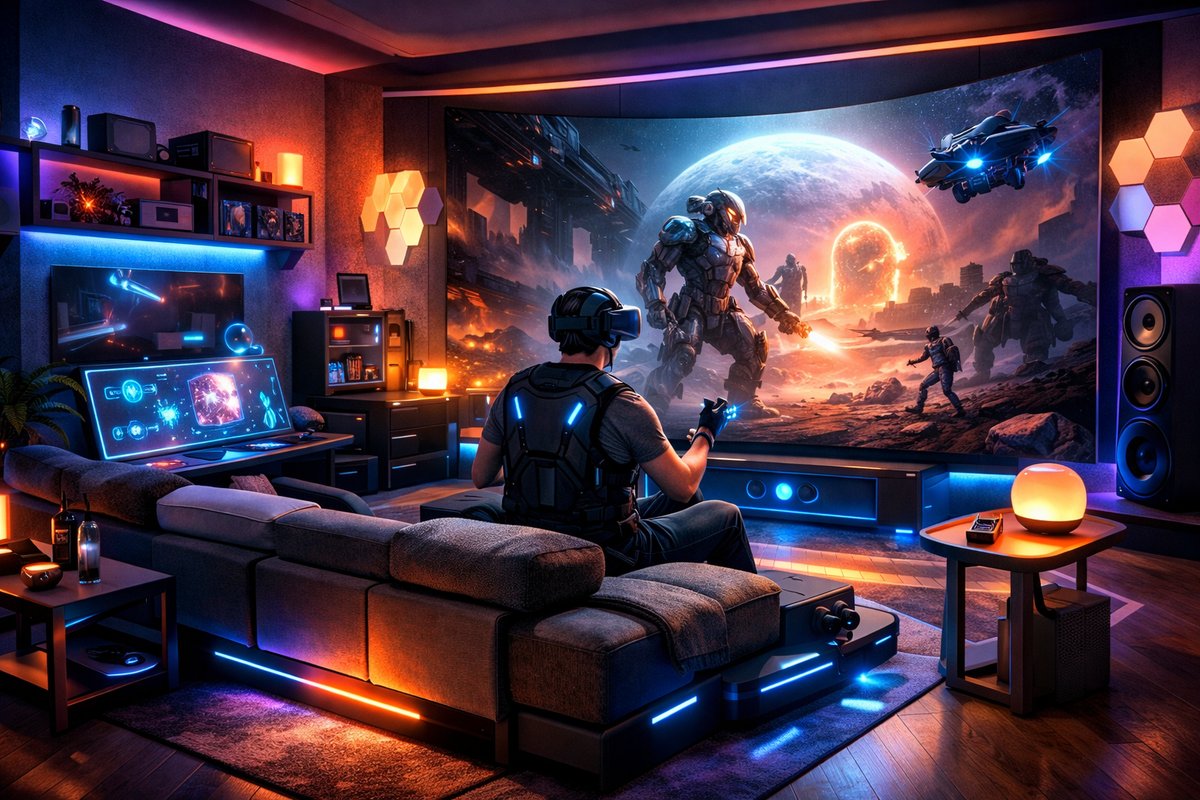

As the lines between living space and gaming battleground continue to blur, a growing number of enthusiasts are transforming ordinary rooms into personalized arenas. Whether it’s a spare corner in a studio apartment or a sprawling basement beneath the house, players are mining every square foot for competitive edge, creativity, and sheer escapism. Industry insiders report a surge in sales of modular furniture, ambient illumination systems, and DIY acoustic treatments, underscoring a broader shift: for many, home is now the ultimate gaming ecosystem.
Designing for Immersion and Comfort
For decades, the standard gaming setup consisted of a desk, a monitor perched at eye level, and a basic headset. Today’s challengers demand more. Adjustable desks with motorized height control let players seamlessly switch from seated RPG marathons to standing battle-royale standoffs. Customizable LED panels-once relegated to gamer-centric marketing gimmicks-now serve as functional mood lights that sync to on-screen action. According to recent retail data, demand for smart RGB lighting solutions has grown by over 40% in the past year.
Yet lighting is only one facet of the immersive equation. Acoustic foam panels, once the domain of home studios and podcasters, are being repurposed to dampen noise and sharpen audio cues in competitive shooters. Users are sharing before-and-after photos online, showcasing rooms that once rang with echoes now crisp with every footstep and weapon reload. Modular wall grids allow pain-free attachment of these foam squares, making upgrade paths both affordable and sustainable.
From static scenes to adaptable playgrounds, some gamers are adopting foldaway furniture and magnetic wall systems. A mid-sized couch that folds into a gaming bench by day and a sofa by night, combined with magnetic mounts for controllers and headsets, accommodates roommates and partners who use the space for work or movie nights. This flexibility resonates with renters and eco-conscious consumers seeking multiuse solutions without generating landfill-bound waste.
Tactile Tech and AI-Driven Storytelling
Beyond sight and sound, the haptic revolution is gaining traction. Wearable feedback vests and rail-mounted haptic panels let players feel every explosion, engine rev, or arrow impact. Although early adopters faced bulky designs and patchy game support, recent firmware updates and open-source APIs have spurred a wave of compatible experiences. One indie VR title now integrates directly with a popular haptic vest prototype, allowing players to feel wind bursts during glider sequences and the recoil of digital cannons.
Meanwhile, AI-driven narrative engines are reshaping single-player campaigns. Using machine learning to analyze a player’s past choices and favorite playstyles, these systems dynamically generate side quests, dialogue variations, and environmental events. Trial deployments at select beta labs report that players spend up to 30% more time engaging with procedurally tailored story arcs compared to static missions. Futurists suggest that as generative AI continues to advance, entire open worlds could be constructed on the fly, responding in real time to a player’s emotional state and decision history.
Community, Competition, and Shared Experiences
A growing subculture is emerging around collective living-room competitions. Friends join weekly “LAN nights” via local network streaming hardware that broadcasts crisp, low-latency feeds directly to multiple TVs. One community hub reported hosting over 100 hybrid tournaments last quarter, with participants dialing in from three neighboring cities. These events combine casual couch co-op with bracket-style showdowns, drawing amateur streamers and veteran pros alike.
Pop-up cloud arcades are also taking root. Rather than shipping bulky cabinets, operators rent portable kiosks that can be wheeled into a campus lounge or co-working space. Gamers log in to cloud-hosted titles, controlling everything with their preferred peripherals. This flexibility has proven especially popular in regions where real estate is at a premium and traditional arcades have all but vanished.
Retailers and streaming platforms are responding by bundling equipment with curated subscription tiers. One conglomerate now offers a “home arena” package that includes an ultra-responsive wireless controller, smart ambient lights, and trial access to a cloud library of over a thousand titles. Early feedback suggests high satisfaction among families, where parents appreciate the all-in-one simplicity while siblings enjoy endless content variety.
Challenges and Sustainability
As home arenas proliferate, not all trends align with eco-friendly practices. Single-use plastics, proprietary accessories, and fast-fashion merchandise can drive up e-waste. Industry groups are experimenting with take-back programs for obsolete headsets and keyboards, offering store credit or charitable donations in return. Some furniture brands have introduced modular desks made from reclaimed materials, while lighting manufacturers are switching to bio-based plastics for diffusers.
Power consumption is another concern. High-wattage GPUs, projector setups, and multi-zone lighting rigs can easily double a household’s monthly electricity bill. Consumers are countering this by installing smart thermostats, solar-ready roofing tiles, and energy-monitoring outlets. Reports indicate that households using these efficiency measures offset over 20% of their additional gaming load.
Looking Ahead: The Living Room’s Next Evolution
What began as a simple pursuit of entertainment has blossomed into a full-scale lifestyle movement. Living rooms are no longer just backdrops to play; they’ve become dynamic stages tailored to each user’s tastes and ambitions. Expect further cross-pollination between home design, AI innovation, and communal gaming culture. When next-generation consoles arrive, they may come embedded in walls or hidden behind art panels, nearly invisible until summoned.
Ultimately, the home arena movement reflects a deeper craving: to transform passive downtime into active exploration, personal expression, and shared connection. As hardware becomes more adaptable and software increasingly intelligent, the humble living room will only grow more vital as the heart of modern play.