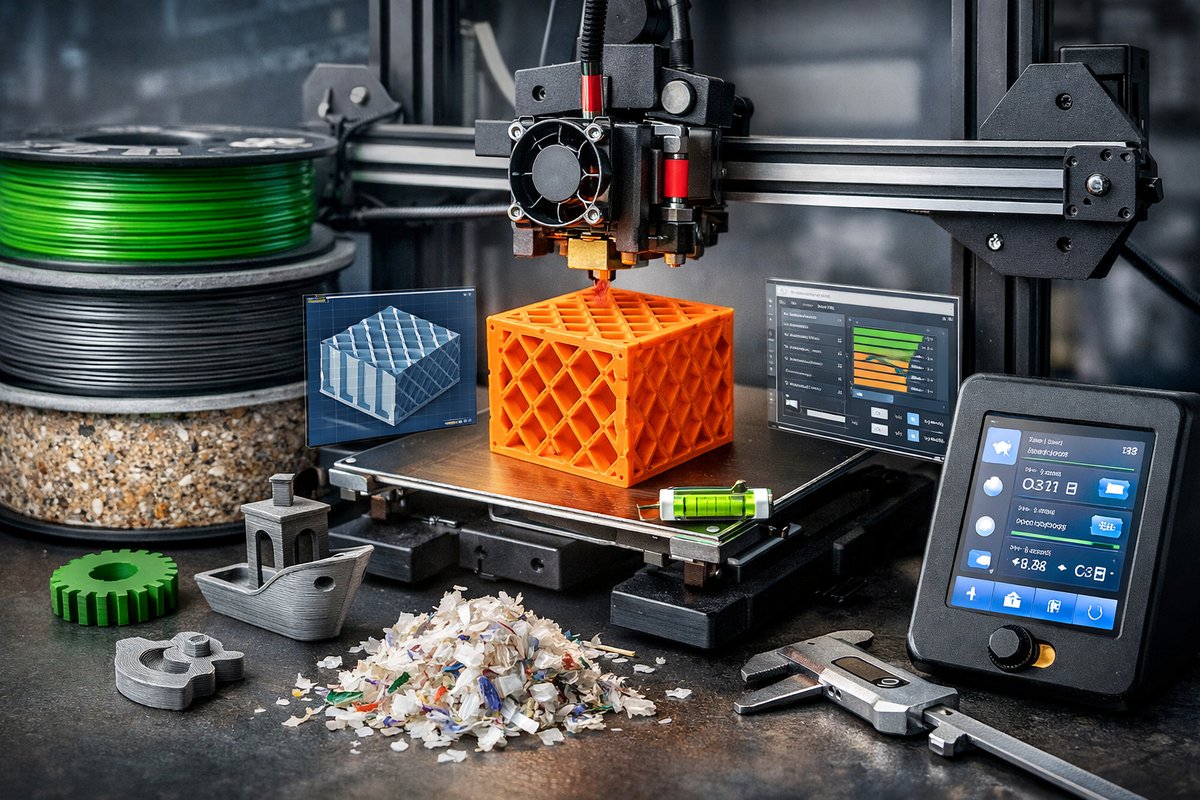

The transformative appeal of 3D printing lies in its ability to turn digital visions into tangible objects-one wafer-thin layer at a time. Whether the goal is a single-use prototype, a functional tool, or an intricate artistic sculpture, the core challenge remains the same: achieving consistent, high-quality results without escalating costs. Recent advances across materials, software, and hardware have cracked open new possibilities for economical, reliable printing. By combining smarter plastics, automated calibration, and novel slicing algorithms, makers can now fine-tune the entire workflow from model to finished part, cutting down waste, power draw, and failed prints.
One of the biggest leaps in cost-efficiency stems from innovative filament formulations. Traditional PLA remains a go-to choice for its low warping and ease of use, but recent blends incorporate recycled PETG and wood-cellulose composites. These hybrid filaments not only divert post-consumer waste from landfills but also exhibit higher impact resistance than pure PLA. Bulk spools sold in 2-kilogram increments yield per-gram price reductions of thirty percent or more. On the resin side, monochrome LCD curing screens in desktop SLA machines have slashed exposure times, halving resin consumption compared to earlier RGB panels. Many resins now feature water-washable additives, eliminating the need for costly isopropyl alcohol and reducing environmental impact.
Software enhancements in slicing programs also play a pivotal role in boosting print success while minimizing material use. Adaptive layer height dynamically modulates resolution: thin layers appear on curved surfaces and fine details, while thicker layers fill interior volumes and flat faces. This approach cuts overall print time by up to forty percent without sacrificing surface fidelity where it matters most. Dynamic infill patterns go further by reinforcing stress points and leaving voids inside low-load areas-in contrast to uniform honeycomb or cubic infill that often over-engineers simple shapes. Some open-source slicers even integrate stress-simulation tools, letting users visualize load paths and assign variable wall thickness before generating G-code.
Hardware innovations have matured alongside materials and software. Automatic bed leveling sensors-whether inductive, capacitive, or optical-measure hundreds of points across the build plate to correct uneven surfaces. Once a manual wobble led to countless first-layer disasters; today, many entry-level machines boast self-calibration routines that run in under a minute. Direct-drive extruders with high-torque stepper motors tackle flexible and abrasive filaments more reliably than Bowden systems, which struggle with soft materials. Swappable hotends capable of reaching temperatures above 300 °C unlock advanced polymers like nylon and polycarbonate blends, giving hobbyists access to engineering-grade plastics once reserved for industrial machines.
For those exploring resin printing, breakthroughs in resin chemistry and light engines have dramatically lowered operating costs. Next-generation plant-based resins harness bio-derived monomers to create parts that are both biodegradable and mechanically robust. Closed-loop temperature-control systems maintain the build chamber at optimal curing conditions, ensuring consistent layer bonding in air-conditioned rooms or colder environments. Upgraded LED arrays with narrow spectral peaks match the resin’s photoinitiators more precisely, improving cure efficiency so that each layer demands less exposure time. By combining water-cleanup resins with readily available nitrile gloves and silicone build mats, users can sidestep expensive solvents and keep the bench space free of unpleasant odors.
On a more industrial scale, DIY metal 3D printing has seen homegrown innovations that shave thousands off the cost of entry. Binder-jetting setups adapted from desktop filament extruders deposit metal powder mixed with a polymer binder, layer by layer. After printing, parts undergo a debinding and sintering cycle in a small electric furnace, resulting in near-net-shape stainless steel or bronze components. Powder-bed fusion remains the gold standard for complex lattices and high-temperature alloys, but recent open-source control boards and laser modules have democratized access, making it possible to retrofit used CNC enclosures into functional metal printers. While safety gear and proper ventilation are non-negotiable, these grassroots efforts bring metal additive manufacturing within reach of advanced maker spaces and small workshops.
Sustainability is no longer a fringe concern-it’s woven into the fabric of modern additive manufacturing. Biodegradable PLA blends, water-soluble supports, and closed-loop recycling systems are gaining traction. Some community-driven projects collect failed prints, grind them into flakes, and extrude fresh filament using desktop recyclers. Others partner with local recycling centers to convert municipal plastic waste into feeding stock for open-source extruders. These grassroots recycling loops not only lower material costs by up to fifty percent but also foster a circular-economy mindset among makers. As more filament manufacturers publish open documentation on their polymer formulations, transparency around additives and allergens improves, ensuring users can compost safely or take advantage of industrial composting facilities.
Practical tips often make the difference between heartbreak and triumph. Regular calibration of the Z-axis endstop, even on machines with auto-bed leveling, prevents first-layer compression or gaps. A quick cleaning routine-wiping down the nozzle and build plate with isopropyl alcohol-reduces adhesion failures caused by oils and dust. Preheating the bed and extruder for a minute before starting ensures consistent filament flow, especially in cold workshops. When tackling tall or delicate prints, adding brims or tree-type supports can dramatically reduce warping and nozzle clashes. Small tweaks like tightening belt tension, lubricating linear rails, and tightening grub screws on motor shafts often cure oscillation marks and layer shifts without replacing major components.
As the ecosystem of economical tools and techniques continues to evolve, the future of 3D printing looks brighter and more accessible than ever. Artificial-intelligence-driven slicers are already in development, promising automated orientation, support placement, and parameter tuning based on machine learning from thousands of successful prints. Cloud-based print farms will allow remote job submissions to clusters of budget-friendly machines, letting users scale small-batch manufacturing without hefty capital investment. Ultra-compact microprinters-no larger than a shoebox-are emerging for field work, rapid prototyping in classrooms, and medical clinics in remote regions.
The quiet revolution of additive manufacturing begins with a single layer, but the impact multiplies with every innovation in materials, software, and hardware. By embracing recycled and composite filaments, leveraging adaptive slicing strategies, and automating calibration, makers can dramatically lower costs and boost success rates. Whether you’re a hobbyist printing custom toys, an engineer crafting jigs and fixtures, or a small business owner prototyping new products, these advances make it easier than ever to turn virtual models into physical reality. The only true limit is curiosity-layer by layer, we’re building a more sustainable, inventive future together.
-
Amazon.com: Protopasta 3D Printer Filament | Black Recycled PLA
Amazon.com: Protopasta 3D Printer Filament | PLA Filament 1.75mm | Black Recycled PLA | 1kg Spool : Industrial & Scientific. -
VELCRO Brand ONE-WRAP Ties 8in x 1/2in Ties Gray & Black 50 Ct
8 inches long and 1/2 inch wide. Convenient Pack Contents. 50 gray and black ties included. View all ... -
phrozen Sonic Mini 8K S LCD Resin 3D Printer, 7.1 ... - Amazon.com
phrozen Sonic Mini 8K S LCD Resin 3D Printer, 7.1" Monochrome LCD, Tabletop 3D Resin Printer with 22µm XY Resolution, 6.5 * 2.8 * 6.7 Inch Printing Volume ... -
Beautiful, 10 in 1 Electric Multi-Cooker, 6 Qt, White Icing - Walmart.com
Unresponsive button : Requires multiple presses or specific pressure to register. Generated by AI. View less. Customer photos. -
DORUNDEA Bed Leveling Sensor Inductive Proximity Switch ...
This is Official accessories leveling sensor with correct connector, branded, high quality; Model Number: N3F-H4NB; Compatible with Elegoo Nepture 4, ... -
5Pcs Bionic Spotlight Solar Spotlight 25ft Motion Sensor ... - Walmart
Included Accessories: The package comes complete with an in-ground stake, additional installation hardware, and a user manual for straightforward setup. View ...