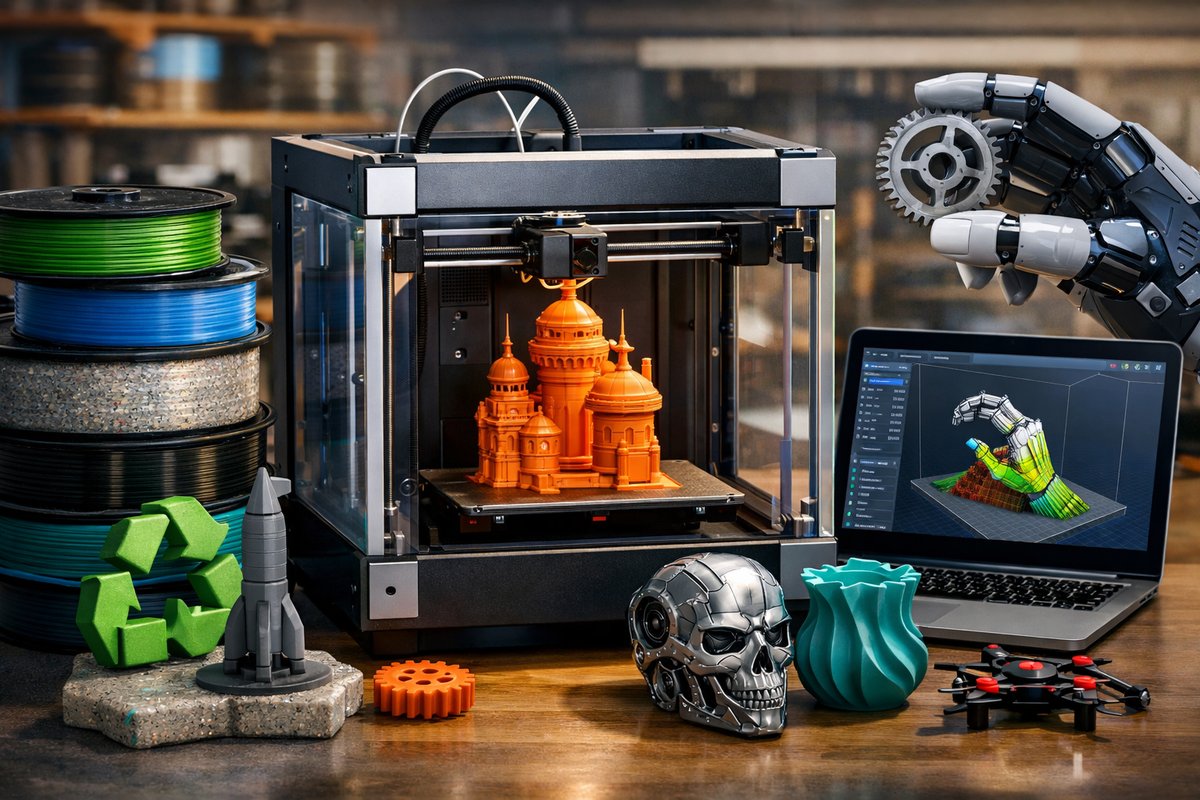

3D printing once felt like magic: digital blueprints transforming into tangible forms under a precise dance of nozzles or UV light. Yet the true revolution has quietly shifted toward making that magic accessible, sustainable, and cost-effective. No longer the sole province of industrial labs or well-funded startups, additive manufacturing now thrives in garages, maker spaces, dental offices, and boutique art studios. A new wave of techniques and technologies is slashing expenses, boosting reliability, and empowering anyone with an idea to become a one-person factory.
At the heart of this transformation is material innovation. High-performance polymers and specialty composites once cost prohibitive are now joined by budget-friendly alternatives. Food-grade and bio-based PLA, for instance, remains a staple thanks to its ease of printing and environmental profile. Yet the latest recycled PLA filaments reclaim waste plastic-bottles, failed prints, and industrial scraps-to spin fresh spools at nearly half the price of virgin runs. Composite blends incorporating wood, metal, or carbon fiber particulates deliver striking finishes and mechanical gains without a premium tag. Hobbyists are swapping out pure ABS for PETG-carbon blends that print at lower temperatures and resist warping, cutting both energy use and failed-print waste.
Resin printing, once dismissed as a luxury niche, is likewise shedding its cost barriers. Masked SLA printers now employ high-efficiency LED arrays instead of pricey lasers, shrinking component counts and power draws. Bulk resin delivery systems-cartridges and refillable tanks-drive resin costs down toward filament-comparable levels. And innovative resin recycling stations capture uncured liquid, filtering and remixing it for a second pass. These processes not only reduce spend but also limit hazardous chemical waste, aligning 3D printing with greener manufacturing philosophies.
Beyond single-material builds, multi-material heads and tool-changer attachments are opening new design frontiers without doubling printer budgets. A single extruder can swap via quick-release couplers between rigid PLA, flexible TPU, or conductive ink. In desktop resin setups, dual-wavelength LEDs allow simultaneous curing of standard and castable resin, enabling jewelry mold printing and direct part fabrication in one machine. Hybrid workflows-printing a rough FDM shell then finishing details in resin-yield professional textures while preserving throughput and cost gains.
Software has evolved in lockstep, slimming both print time and trial runs. AI-driven slicers now analyze part geometry to recommend adaptive layer heights, variable infill patterns, and optimized support structures. Predictive algorithms flag potential failure zones-overhangs, bridging spans, thin walls-before a single filament melts. Cloud-based slicing platforms facilitate collaborative print queue management, track filament consumption in real time, and push firmware updates that incrementally boost speed and accuracy. These data-driven insights ensure fewer print failures, less wasted material, and faster paths from digital file to finished object.
Hardware enclosures and environmental controls, once reserved for high-end machines, are trickling down to desktop printers. Affordable modular enclosures with heat-retaining panels and HEPA filtration stabilize ambient conditions, reducing warping in temperature-sensitive polymers and improving surface quality in resin cures. Sensor packages-thermal probes, ambient humidity monitors, networked cameras-feed dashboards that alert you to nozzle clogs or part detachment. Remote monitoring apps let you pause or tweak prints mid-job, preventing hours of wasted filament when a build goes off track.
On the sustainability front, closed-loop material systems are gaining traction. Desktop plastic shredders turn failed parts back into printable pellets; paired with small-batch extruders, makers can produce their own filament at a fraction of retail costs. Resin reclaimers combine ultraviolet filtration and sediment removal to keep returned resin viable. Some communities have set up exchange programs for unused spools and partially filled resin bottles, further cutting waste and stretching budgets. Such circular economies not only lower outlay but also reinforce a maker ethos of resourcefulness.
Open-source hardware and modular upgrades continue to democratize cutting-edge capabilities. From high-flow nozzles that double extrusion speed to magnetic bed plates that speed model removal, a thriving ecosystem of community-designed add-ons ensures even legacy machines can keep pace with modern demands. Plug-and-play sensor kits transform any printer into a smart device. Firmware forks add mesh bed leveling, filament runout detection, and silent stepper drivers-features once exclusive to premium models. This collage of grassroots innovation guarantees that a modest budget need not mean stale technology.
Real-world use cases underscore how these trends are reshaping fields beyond hobby crafting. In small engineering shops, low-cost desktop SLA printers produce tooling jigs and alignment fixtures for a fraction of CNC-machined costs. Dental labs use recycled-resin dental models for patient consults, saving on both casting materials and chair time. Emerging fashion designers leverage composite filaments to prototype bespoke accessories and rapid-turn shoe molds. Educators build micro-factories in classrooms, guiding students through sustainable design cycles from waste plastic to functional robotics parts.
Three decades after its public debut, 3D printing is no longer a laboratory curiosity but a mature, accessible manufacturing discipline. The latest material formulas, smart slicing engines, enclosed build chambers, and circular‐economy workflows align to slash costs, reduce failures, and expand creative horizons. As the price of entry falls and the pace of innovation accelerates, each new layer deposited carries not just molten plastic or cured resin, but the promise of ideas made real-affordably, reliably, and sustainably. Whether you’re a weekend tinkerer or a startup forging new products, the quiet revolution of making has never been more within reach.