
Why Wholistic Massage Matters for Whole-Person Wellbeing
In a world that often races ahead, wholistic massage invites you to pause, breathe, and reconnect with your body. Rather than focusing on a single sore spot, this approach considers physical tension, emotional stress, and daily habits as part of one interconnected system. By honoring the balance between body and mind, wholistic massage becomes more than a treatment-it transforms into a gentle practice of self-care that nurtures long-term ease and resilience.
The Foundation of Wholistic Touch
Wholistic massage begins with a warm, grounding touch that adapts to individual needs. Light to moderate pressure guides the hands along muscle groups, while occasional pauses invite nervous system recalibration. According to current massage-therapy guidelines, combining effleurage (long, gliding strokes) with petrissage (gentle kneading) supports blood circulation and soft-tissue release. As you experiment at home, start with broad strokes over the shoulders and back, gradually tuning in to areas of tightness. Notice how the skin warms and muscles soften under intentional movement.
Mindful Breathing and Body Awareness
Breath and touch work in harmony. When you breathe slowly and deeply-inhale filling the belly, exhale releasing tension-your nervous system shifts away from the stress response. Pair each exhale with gentle hand movements: for example, place both hands over the upper chest and exhale as you press slightly inward, then follow your hands down toward the ribs on the next exhale. This simple coordination heightens body awareness, helping you distinguish between mild discomfort and true strain. Over time, conscious breathing becomes a tool you can call on throughout the day to ease mounting stress.
Gentle Movement and Stretching
Wholistic massage often incorporates gentle stretches that honor individual flexibility. For shoulders, interlace fingers behind the neck and tilt the head side to side, using the weight of the arms as a gentle pull. For the lower back, lie on your back, hug one knee into the chest, and hold for several breaths before switching sides. Research in manual therapy highlights that combining passive stretches with massage enhances tissue elasticity and range of motion. Always move slowly and stop if pain arises-your focus is ease, not endurance.
Creating a Wholistic Environment
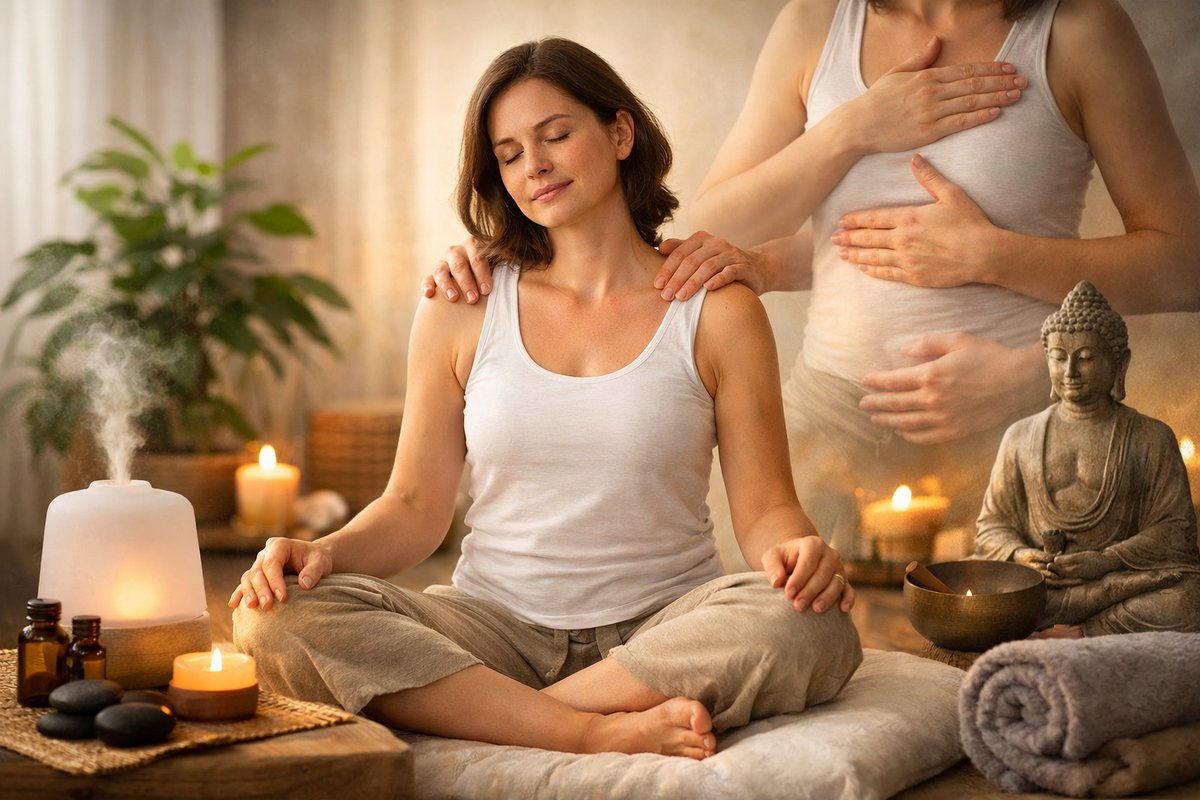
Setting matters just as much as technique. Choose a quiet space free of distractions. Soft, natural lighting or a warmed blanket can create a sense of sanctuary. Gentle background sounds-like birdsong or flowing water-invite relaxation without pulling attention away from your sensations. At home, digital timers can help you commit to a few focused minutes of touch without checking the clock. Research on restorative rituals shows that creating a predictable routine strengthens the mind-body connection, making it easier to slip into a calm state.
Simple Self-Massage Techniques
- Neck Release: Use fingertips to make small circular motions at the base of the skull. Breathe out as you massage, allowing shoulders to drop away from the ears.
- Hand Soothing: With the opposite thumb, glide along the palm from base to fingers. Press gently between the webbing of each finger, then finish by stretching each finger backward.
- Calf Roll: Slide a massage ball under the calf while seated. Roll slowly from ankle to knee, stopping at tender spots and breathing into them for 3-5 breaths.
These quick practices can be woven into work breaks or evening wind-down routines. Evidence supports short, regular sessions for reducing muscle stiffness and mental fatigue.
Evidence-Informed Benefits
Studies have shown that regular wholistic massage can lower levels of stress hormones, improve sleep quality, and reduce perceptions of pain. For example, a controlled trial reported a notable decrease in muscle tension and anxiety after just four massage sessions. While wholistic massage is not a substitute for medical care, it complements other self-care practices by promoting restful states and encouraging mindful body awareness.
A Gentle Invitation to Ongoing Self-Care
Wholistic massage is not a one-time fix but a gateway to deeper connection with your body’s rhythms. As you integrate these approaches-touch, breath, movement, and environment-you cultivate a personal toolkit for easing tension wherever it arises. Over weeks and months, this practice can become a familiar island of calm amid life’s demands.
Embracing Your Wholistic Practice
Begin today with just five minutes. Notice how each breath supports your touch, how each stretch invites release, and how the act of pausing itself can bring relief. By honoring the whole person-body, mind, and daily life-you nurture lasting balance and a softer way of being in the world.