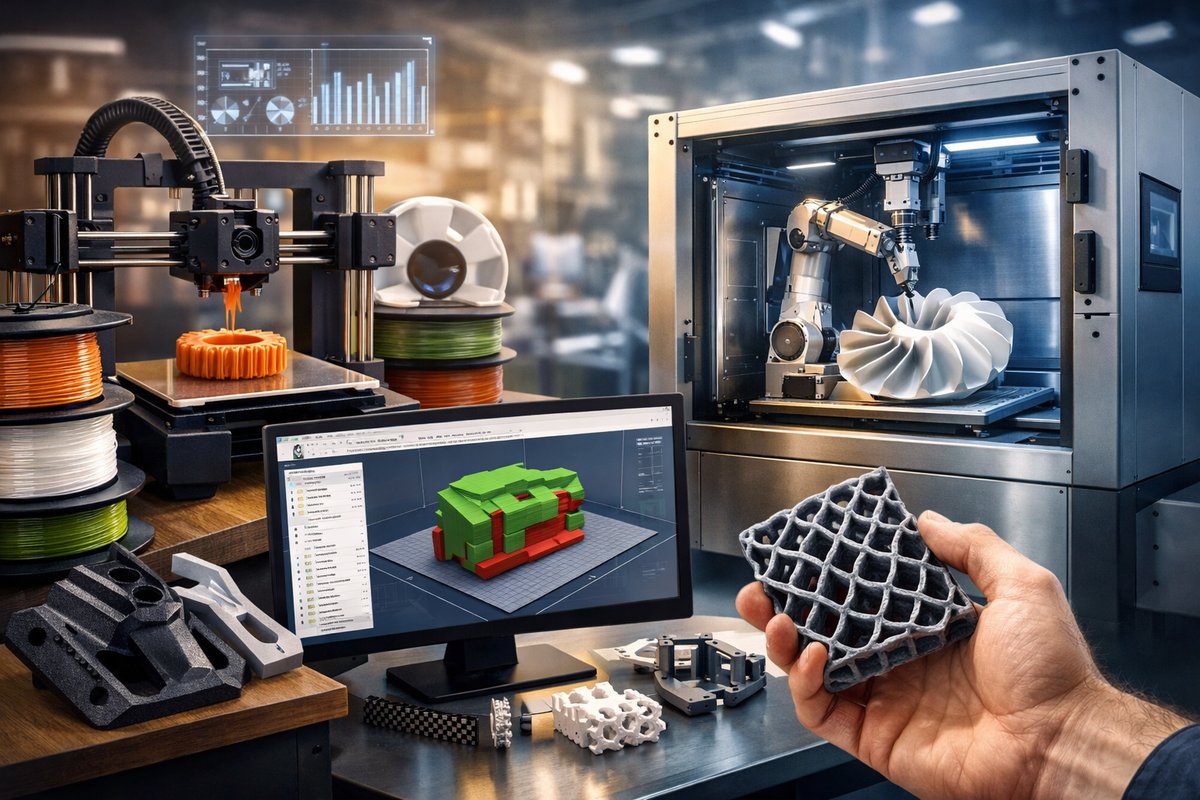

Every journey in 3D printing begins with a single thin layer of molten plastic, cured resin, or fused powder. Over the past decade, each new innovation has pushed down costs, improved reliability and opened doors for creative experimentation. Today, makers and engineers can choose from a dazzling array of printers, filaments, resins and power-user tools that make additive manufacturing both practical and economical. Whether you’re prototyping custom jigs, crafting functional end-use parts or exploring artistic sculptures, you can tap into a growing ecosystem of materials, software and hardware hacks to trim waste, accelerate print times and boost success rates.
At the heart of cost savings lies material efficiency. Traditional spooled filaments like PLA and PETG still reign for desktop printers because they are affordable, nontoxic and easy to print. However, new composite filaments infused with recycled plastics or natural fibers-such as wood, bamboo or recycled PET flakes-can deliver unique textures, reduced price per kilogram and a lighter environmental footprint. By blending virgin PLA with recycled feedstock, manufacturers now offer filaments at a fraction of the cost of pure specialty blends, making bulk purchases a viable option for small workshops.
Resin-based stereolithography (SLA) has similarly matured. Standard photopolymer resins used to be expensive and brittle, but low-cost “eco-resins” derived from plant-based monomers are gaining traction. These alternative chemistries reduce waste by allowing nearly full tank utilization and lower post-processing volumes of harmful solvents. Hobbyist-focused resin suppliers now package 1-liter bottles with value-priced starter kits, letting artists and dental modelers experiment with dozens of color and flex levels without breaking the bank.
For industrial and metal 3D printing, powder-bed fusion systems have traditionally required massive capital investments. Today, smaller-scale machines using polymer or metal powders with recirculation systems reclaim more than 90 percent of unused material. Powder reclaim reduces overhead costs for specialty alloys-like aluminum or stainless steel-making on-demand parts fabrication more economical for low to mid-volume runs. This cycle of reuse also highlights sustainability by cutting down raw material waste.
Software innovations have contributed as much to savings as material innovations. Next-generation slicing engines leverage artificial intelligence and machine learning to optimize tool paths in real time. These smart slicers predict filament flow quirks, temperature fluctuations and mechanical stresses, adjusting layer heights and print speeds on the fly. By continually fine-tuning extrusion rates and cooling cycles, AI-driven slicing can cut print times by 20 percent or more, lowering energy consumption and accelerating throughput.
Open-source firmware upgrades also play a key role in cost-effective maintenance. By customizing printer controllers with community-driven firmware builds, you can unlock advanced features-like pressure advance for string-free bridges or dynamic acceleration tuning to reduce vibration artifacts. These upgrades make it possible to repurpose older machines rather than replace them, extending their service life and delaying the expense of buying a brand-new printer.
Bed adhesion and print failures often eat both time and filament. To minimize these headaches, first-layer calibration tools have become more affordable and automated. Capacitive or inductive leveling sensors can survey the build plate dozens of times before a single nozzle touches the surface, ensuring uniform clearance. Meanwhile, replaceable sheets made of PEI or textured build surfaces provide consistent stick and easy part removal without glues or tapes. By reducing failed prints, these accessories immediately recoup their modest price tags.
Another way to save on long-term operational costs is through environmental control. Maintaining a stable ambient temperature and humidity level in your printing enclosure can make filaments last longer and prints more consistent. DIY enclosure kits or off-the-shelf inserts block drafts and contain heat, enabling better layer bonding and reduced warping-especially with temperature-sensitive engineering materials like nylon or ABS. Pairing an enclosure with a filament-drying chamber prevents moisture absorption, which can otherwise lead to brittle prints and clogged nozzles.
As supply chains stretch globally, local filament recycling stations are becoming a viable cost-saving option for makerspaces and small manufacturers. Machines that grind failed prints and scrap into uniform pellets can feed desktop extruders, turning waste into fresh filament at roughly one-third of retail prices. Although DIY filament makers require upfront calibration effort, they reward persistent tinkerers with near-zero-cost feedstock and a hands-on view of polymer processing.
Collaboration platforms and cloud slicing services now allow distributed teams to share templates, settings and real-time print telemetry. By crowdsourcing print profiles for specific model geometries and materials, everyone benefits from proven best practices. This exchange of knowledge reduces trial-and-error on each new build, accelerating time from design to a perfect final part.
On the hardware side, modular toolheads have unlocked multi-material and multi-color capabilities without investing in entirely new machines. Hotend carousels can swap filaments mid-print, enabling soluble supports or even carbon-fiber-infused filaments for added strength. Heated build plates and dual extruders on budget machines once reserved for prosumers are now readily available, letting you mix rigid materials with flexible ones or create complex assemblies in a single operation.
Beyond the desktop, automated post-processing stations have become accessible to labs and small shops. Compact wash-and-cure chambers for SLA prints ensure proper resin removal and UV hardening with touchscreens and preset cycles. That level of automation cuts manual labor, reduces variability in part finish and speeds up delivery times-especially useful for dental labs producing dozens of small, intricate models each day.
Quality control technologies that once cluttered industrial floors now fit onto a bench or even inside a printer. Inline sensors can scan each layer, detecting delamination or nozzle clogging before a print spirals out of control. Early-warning systems trigger gentle pauses and corrective routines, salvaging builds and minimizing wasted material. Some setups even integrate remote notifications, so you never have to babysit a print overnight.
Workflow integrations are also making cost-effective 3D printing part of larger digital manufacturing ecosystems. Custom plugins connect CAD platforms directly to slicing profiles, automating batch jobs for distributed production centers. Structured data exchanges track material usage, labor hours and energy consumption-critical metrics for any shop aiming to minimize waste and justify return on investment.
For makers focused on sustainability, closed-loop ecosystems combine material traceability and energy monitoring. Solar-powered printer arrays, paired with recycled-filament extruders, showcase how small-scale manufacturers can achieve near-zero carbon footprints. When every polygon counts, calculating the environmental cost per gram of filament helps you choose the most eco-friendly path from design to finished part.
Community-driven certification programs for recycled materials and cross-compatibility standards are emerging to ensure reliability. When you purchase certified eco-filaments or third-party resin, you know you’re getting consistent quality backed by test reports. This level of transparency eliminates the guesswork often associated with bargain-basement consumables.
Educational initiatives have likewise boosted adoption of cost-effective techniques. Online courses and maker camp workshops teach rapid prototyping methods, recycling strategies and lean manufacturing principles tailored to desktop-scale equipment. By learning how to streamline file preparation, calibrate precise tolerances and troubleshoot common defects, newcomers can avoid costly mistakes and accelerate their path to polished, functional prints.
Looking ahead, we can expect even more convergence between artificial intelligence, sustainable materials and networked hardware. Adaptive print cores that automatically swap nozzles or adjust extrusion pressures in mid-job are on the horizon. Surfaces that heal scratches or replenish adhesive qualities through embedded microcapsules could drastically reduce maintenance downtime. And open data protocols will let anyone contribute to a global knowledge base of optimized print profiles for novel materials.
Cost-effective 3D printing isn’t about cutting corners. It’s about channeling creativity and precision into every layer, making the process predictable, repeatable and accessible. By embracing recycled filaments, energy-efficient workflows, AI-driven software and modular upgrades, makers can focus less on technical barriers and more on transforming imagination into physical reality-one layer at a time.
Whether you’re printing functional tooling for your home workshop, anatomical models for clinical training or intricate art pieces that defy convention, the tools and techniques for economical, feasible and successful 3D printing are at your fingertips. The quiet revolution of additive manufacturing is powered by community knowledge, open hardware and a shared obsession with building better, layer by layer.