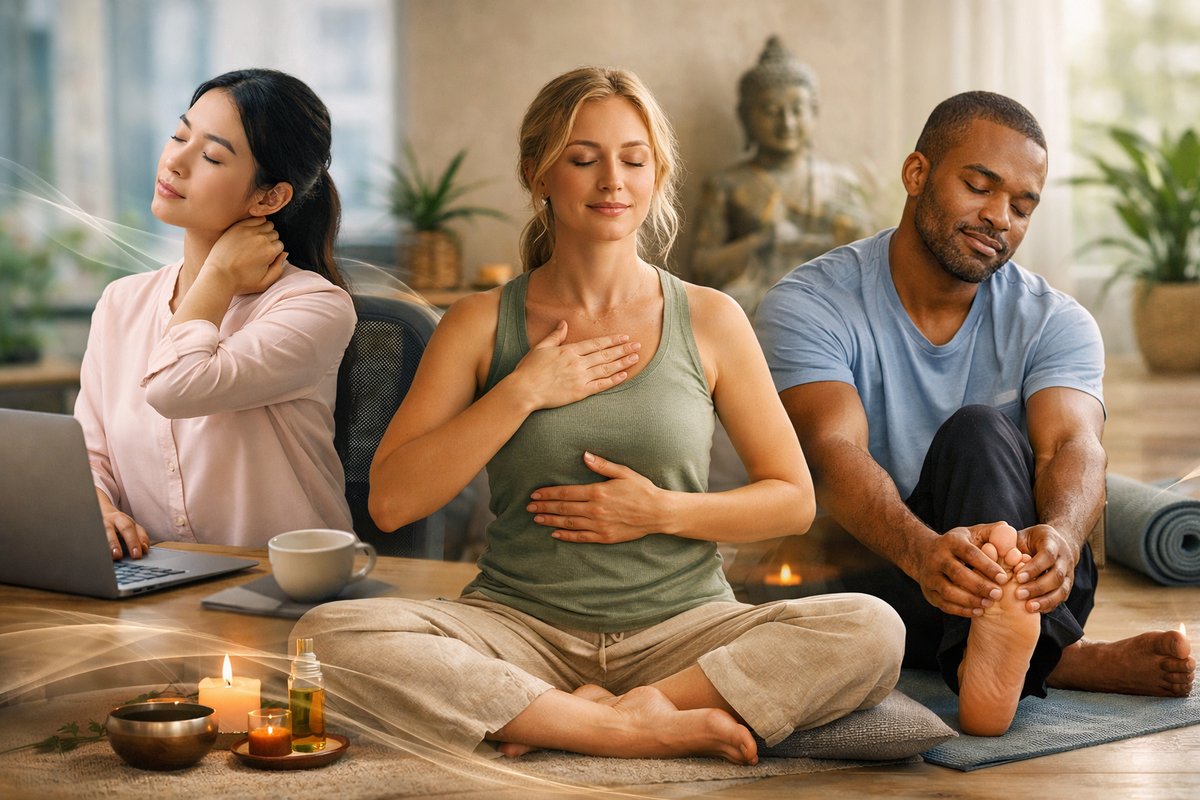

A few minutes of thoughtful touch can become a daily invitation to pause, breathe, and reconnect with your body. Wholistic self-massage blends gentle movement, mindful awareness, and sensory cues-like soft pressure and rhythmic strokes-to ease muscle tightness, soothe the nervous system, and cultivate a sense of grounded calm. In this article, you’ll learn safe techniques rooted in accepted massage-therapy practice, plus ways to weave them into your lifestyle for balanced mind-body comfort.
Sensing Tension: Bringing Awareness to Your Body
Before applying pressure or movement, take a moment to tune into areas where you hold stress. Sit comfortably with feet flat on the floor or lie on a supportive surface such as a yoga mat. Close your eyes if it feels safe, and follow a slow inhale-exhale cycle. Notice sensations-heat, coolness, tightness, or tingling-without judgment. This gentle scan primes your nervous system to transition from “go” into “rest and digest,” making every touch more effective.
Neck and Shoulder Release: Gentle Thumb Circles
Many of us carry tension across the upper shoulders and base of the skull. To ease stiffness:
• Sit upright on a firm chair or cushion, shoulders relaxed.
• Place your right hand’s thumbs on the back of your left shoulder where it meets the neck.
• Apply light to moderate pressure and trace slow, circular motions. Imagine stirring a calm pond rather than digging into muscle.
• After 20 seconds, move your thumbs slightly higher or lower along the trapezius until you find a comfortable spot.
• Repeat on the opposite side. Focus on coordinating each circle with an exhale-softening deeper on release.
Evidence shows that sustained, moderate pressure can help reduce muscle tone and quiet protective tension patterns, inviting greater range of motion and ease.
Forearm Squeeze: Calming the Nervous System
Stress often accumulates in the arms and hands, especially if you spend hours typing or gripping devices:
• Support your forearm on a tabletop or your leg.
• With the opposite hand, gently wrap fingers and thumb around the mid-forearm.
• Squeeze just enough that you feel warmth but no pain, then slide your fingers in one direction along the muscle for 5-8 slow inches.
• Repeat back and forth, exploring firmer or softer pressure based on comfort.
• Switch arms after 1-2 minutes.
This gliding action stimulates blood flow and engages sensory receptors that signal safety to the central nervous system, helping to reduce overall arousal.
Lower Back Comfort: Seated Squeeze with a Massage Ball
A small, soft massage ball can deliver targeted support for the lumbar region:
• Sit on a steady chair and place a massage ball between your low back and the chair’s backrest.
• Lean gently into the ball, adjusting height until you find a tender point.
• Breathe slowly as you hold pressure for 15-30 seconds, then roll the ball a few inches in any horizontal direction.
• Continue exploring for 2-3 minutes, pausing where you feel the greatest release.
Research on myofascial trigger points suggests that sustained compression and gentle rolling can ease discomfort and break up localized fascial adhesions.
Anchoring the Breath: Integrating Mindful Awareness
Throughout each technique, keep returning your attention to breath:
• Count a 4-second inhale, let the ribs expand sideways.
• Pause briefly, then exhale over 4-6 seconds.
• On every exhale, imagine inviting tension to flow out of the body.
This simple breath-touch pairing shifts the nervous system toward parasympathetic dominance, fostering calm focus and helping release muscle guarding.
Daily Rituals: Building a Sustainable Practice
Consistency transforms brief moments of care into meaningful resilience:
• Morning Grounding: Spend 3-5 minutes on shoulder and neck circles before rising.
• Midday Reset: Use the forearm squeeze while standing at your desk or waiting for coffee to brew.
• Evening Wind-Down: Recline on a yoga mat and explore lumbar self-massage to signal the body it’s time to rest.
Pair these rituals with gentle stretching, warm beverages, or soft music to deepen a sense of ritual and self-respect. Over time, small acts of wholistic touch can become an anchor of balance in a busy day.
Supporting Wholistic Wellbeing Beyond Touch
Self-massage operates in harmony with other lifestyle choices:
• Hydration: Drinking water after massage helps flush metabolic byproducts.
• Movement: Gentle yoga or walking complements touch by encouraging freedom of motion.
• Rest: Quality sleep reinforces body-mind restoration.
Together, these practices create a feedback loop of comfort-each element enhancing the next. Thoughtful touch isn’t a standalone cure; it’s a vital thread in a broader tapestry of wholistic self-care.
Invitation to Mindful Self-Care
Whether you’re new to wholistic massage or already exploring body-based approaches, these simple routines can serve as a daily reminder of your innate capacity for relaxation and renewal. Each stroke, squeeze, and inhale reconnects you to the present moment-and to a sense of safety within your own skin. Carving out even five minutes for mindful touch can shift the tone of your afternoon, ease the edges of a stressful workday, or calm restless thoughts before sleep. Embrace these gentle rituals as gestures of self-kindness. Your body, mind, and daily life will all benefit from this tender, evidence-informed approach to tension relief and whole-person balance.