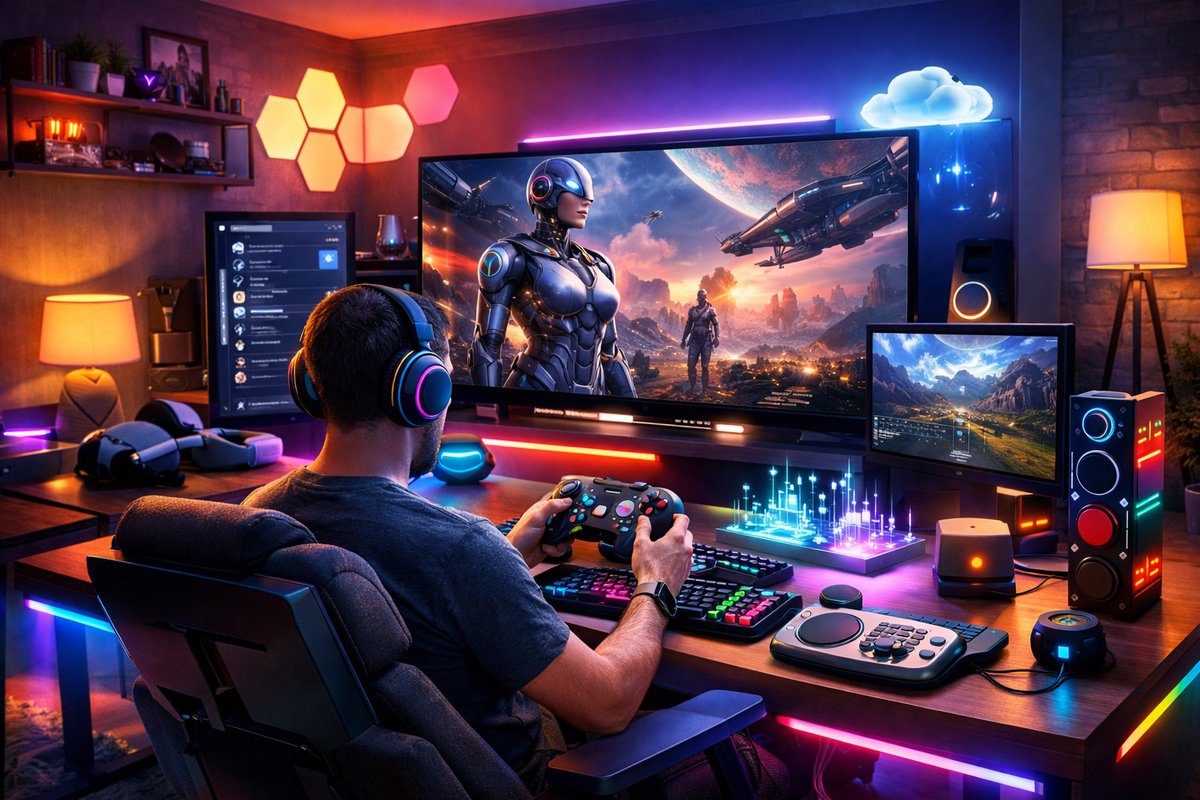

A fresh chapter in the history of play is unfolding as developers and hardware creators unveil systems designed to adapt in real time to both player skill and the environment around them. At the heart of this next frontier is a blend of cloud-powered processing, artificial intelligence, and modular design. Together, they promise experiences that respond not just to button presses, but to biometric feedback, voice commands, and even the layout of your living room. The result is a deeply immersive ecosystem where gameplay and setup evolve together.
Cloud integration has moved beyond simple game streaming. New services now dynamically allocate rendering tasks based on latency, device type, and player preferences. That means you can start a session on a smart TV, drop into a high-end PC, and resume on a mobile device without losing visual fidelity or control smoothness. Under the hood, adaptive servers detect congestion, reassign graphical workloads, and optimize network routes-all in a fraction of a second. For players who prize performance above all else, this promises near-instant responsiveness even when juggling multiple screens or streaming at 4K.
On the home-hardware front, modularity is no longer a niche. Interchangeable components-from thumbstick modules to haptic feedback pads-let players tailor controllers to their grip style or in-game role. Want tighter dead zones for precision tracking in a first-person shooter? Swap in a low-sensitivity module. Craving extra rumble zones for a racing sim? Clip on an auxiliary vibration pack. These snap-and-play parts also extend to audio peripherals: detachable earcups, swappable noise-cancellation filters, and custom equalizer profiles ensure the headset on your desk is never the same twice.
AI is reshaping game worlds themselves. Beyond procedural generation of terrain or loot drops, some studios are testing NPCs that learn from each interaction. Chat with a shopkeeper and they’ll ask follow-up questions based on your previous exchanges; ally bots in cooperative missions will adjust tactics if you favor stealth over head-on engagement. This deep learning adds narrative depth, turning static side characters into unpredictable companions. Early tests show players spending up to 30 percent more time exploring side quests when NPCs offer adaptive dialogue and missions that respond to individual playstyles.
In parallel, multisensory lounges are migrating from niche arcades into suburban basements. Infrared motion sensors trigger localized audio channels, so your footsteps in a virtual forest are heard only through specific speakers. Light-tracking strips embedded in furniture sync LED walls to in-game environments, bathing the room in atmospheric hues. Some setups even include micro-vibration actuators under the floor or sofa cushions, simulating the thrum of engines or the tremor of nearby explosions. The barrier between the virtual and physical blurs, creating a sense of presence that used to require dedicated commercial spaces.
Hybrid game nights are flourishing, too. Organizers are offering local drop-in stations wired to cloud lobbies, letting newcomers plug in without hefty downloads or hardware upgrades. Participants use lightweight client apps on smartphones to queue for matches, while community hubs provide preconfigured consoles or PCs. Within minutes, players can compete in tournaments without fussing over patches or driver updates. This frictionless approach is attracting crowds who might otherwise skip esports events because of technical barriers.
Meanwhile, mobile immersive gaming is leveraging portable cases that pack a fold-out screen, controller mounts, and battery packs into a travel-friendly shell. These units can host local co-op, LAN parties, or pop-up arcade nights in public parks. Developers have begun creating cross-platform titles that detect these shells and automatically switch control schemes, HUD layouts, and haptic profiles. The idea is to carry the full desktop-grade experience in a hand-held rig without compromising on visuals or frame rate.
DIY enthusiasts aren’t left behind. From 3D-printed controller grips to Raspberry Pi-powered retro cabinets, a vibrant maker community is sharing blueprints for everything from modular button grids to custom joystick sensors. On social feeds, threads show off immersive domes built from PVC pipe and projector units, offering a 180-degree wraparound display. Others demonstrate how to retrofit office chairs with tilt-sensing gyros, turning everyday furniture into racing simulators or flight sticks.
The convergence of these trends is also inspiring new genres. Imagine an escape room that updates its puzzle logic on the fly based on biometric readings-if heart rates spike too high, clues become more straightforward; if they remain calm, complexity ramps up. Or a horror title where ambient sounds in your actual home are sampled and woven into the score, ensuring every creak you hear at night feels like game-driven suspense. Early prototypes hint at experiences that adapt not just per player choice but per individual physiology and environment.
Accessibility is receiving a notable boost from adaptive tech as well. Voice-driven macros allow players with limited mobility to trigger complex action sequences through simple speech. Eye-tracking modules let gamers navigate menus or aim using just their line of sight. These innovations are moving beyond optional add-ons into mainstream offerings, signaling that future titles will ship with inclusive control schemes as standard.
Community engagement has likewise evolved. In-game hubs now integrate spatial audio chat-voices seem to come from the direction of the speaker’s avatar in 3D space-while overlay systems let streamers invite viewers to vote on things like weapon load-outs, environmental changes, or NPC behaviors in real time. Viewers become co-creators, and every stream morphs into a collaborative performance.
All of this points toward a future where gaming hardware and software grow in tandem, each update spawning new possibilities for the other. As developers push the envelope with AI, cloud orchestration, and immersive peripherals, players are empowered to assemble setups that speak to their personal style, physical space, and sensory preferences.
Looking ahead, we can expect manufacturers to embrace open standards that let devices from different makers communicate seamlessly. One day soon, a motion-capture suit might trigger organic lighting changes in a smart lamp array, which in turn feeds environmental data back to the game engine. Latency will shrink further, while modular designs will let players upgrade parts instead of replacing entire units. The barriers to creating truly custom play environments will dissolve.
Whether you’re a casual gamer seeking richer immersion, a competitive player chasing every millisecond of advantage, or a curious tinkerer eager to blend digital and physical worlds, adaptive tech is unlocking new frontiers. Your next session could feel less like pressing buttons on a plastic shell and more like stepping into a living narrative that responds to who you are, where you are, and how you choose to play.