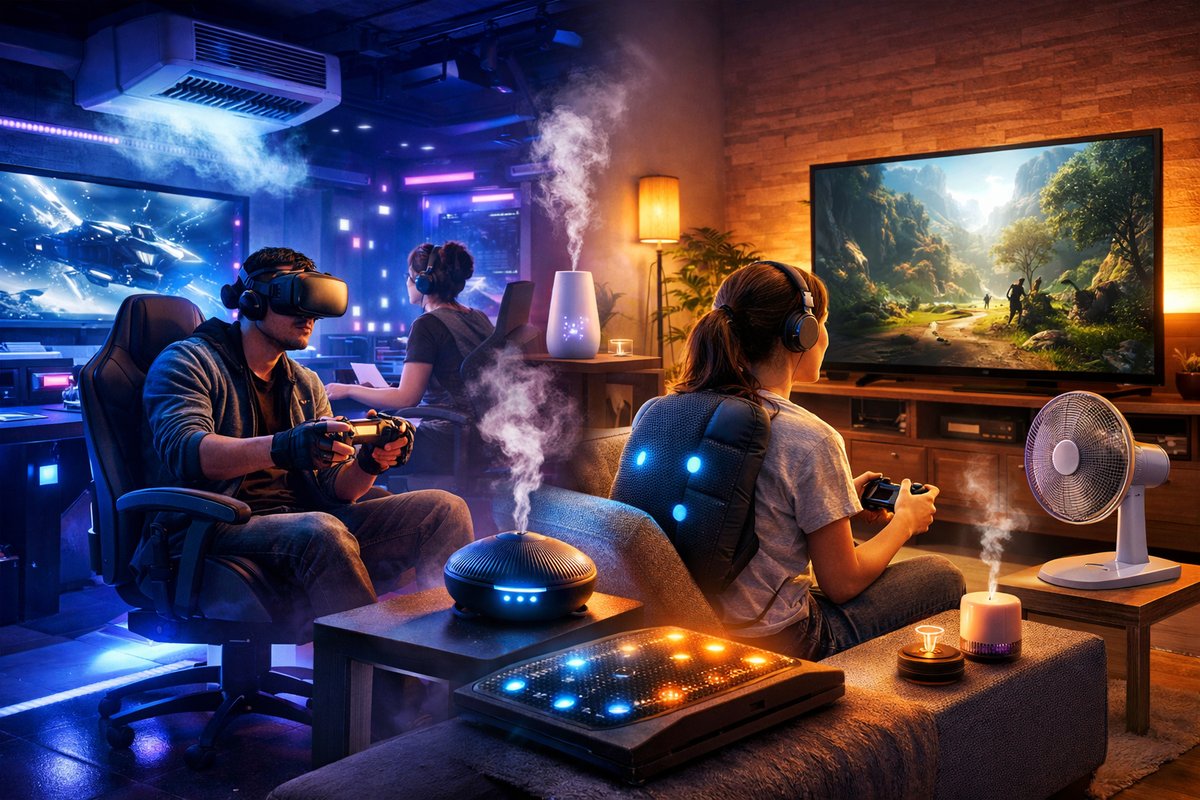

A new frontier in entertainment has emerged, and it isn’t powered solely by sharper graphics or faster processors. Across major cities from Berlin to Seoul, a network of multi-sensory gaming lounges is introducing environmental controls, scent circulation and haptic furniture to craft more immersive play. These venues are designed to engage all five senses, blending physical stimuli with digital worlds so that every quest, race or battle feels tangibly real.
In Berlin’s historic warehouse district, one flagship lounge features pod-like seating rigs equipped with directional fans, subwoofer-driven haptic floors and programmable LED arrays embedded in the ceiling. As players pilot hovercrafts through neon canyons, the chairs gently vibrate in sync with each engine burst while cool air sweeps across the room at key moments of acceleration. A modular scent system releases subtle hints of ozone and pine when navigating virtual forests, engaging the nose in ways that audiovisual alone cannot achieve.
Over in Tokyo’s Shibuya Ward, a boutique arcade studio has installed thermal panels beneath curved screens so that when a fire boss appears onstage in a fantasy RPG, the ambient air warms by several degrees. Patrons don lightweight haptic vests that transmit localized pulses for every sword strike or shield parry. Paired with high-fidelity spatial audio, these environments heighten emotional connection to in-game characters and storylines, earning rave reviews from both casual players and competitive e-sports teams.
Industry data underscores the appetite for sensory expansion. A survey of 5,000 gamers conducted by a leading market analyst found that 62 percent would pay a premium to access dedicated arenas offering 4D effects-defined as tactile feedback, scent integration or dynamic climate control-alongside traditional VR or console titles. More than half cited “heightened emotional engagement” as their top reason, while 48 percent pointed to a desire for deeper social experiences when sharing physically immersive play.
Designers emphasize that these lounge concepts aren’t just gimmicks. By stimulating multiple senses in carefully choreographed sequences, they can sharpen cognitive focus, improve reaction times and reduce the fatigue often reported during marathon sessions. Early trials within professional gaming teams show a measurable uptick in accuracy and decision-making speed when matches are conducted in multi-sensory setups versus standard e-sports arenas.
Privacy and sustainability are woven into the blueprint of these venues. Data collection remains strictly opt-in, with most lounges allowing guests to play anonymously or with temporary aliases. Scent cartridges use water-based oils and refillable canisters to cut down on plastic waste. LED lighting arrays and climate panels run on solar-augmented power grids whenever possible, helping to offset the additional energy demands of 4D effects.
Home gamers aren’t being left behind. A growing ecosystem of at-home immersion kits now offers compact haptic chairs, plug-and-play scent diffusers and smart light panels that sync to playground software. One modular kit uses open APIs to interface with popular streaming and gaming platforms: during a horror title, a low rumble emerges from under the desk, smoke cartridges emit faint mist and RGB strips shift from cold blue to flickering red.
These consumer-level packages carry more than novelty value. Focus groups report that adding just two sensory layers-vibration and lighting-can raise sustained attention by 27 percent in timed puzzle games and platformers. Families organizing local game nights have begun investing in lightweight diffusion units to surprise friends with bursts of citrus or forest scents when unlocking achievements or defeating bosses.
Multi-sensory design has also sparked a surge of pop-up experiences in museums and public spaces. Last spring, an interactive exhibit in Amsterdam invited visitors to explore a rainforest odyssey in VR. Haptic gloves simulated the rough texture of bark, while overhead mist cannons reproduced humid air. Curators noted record-high dwell times and social sharing, as guests often waited in line for a chance to step into virtual realms that engaged body and mind alike.
Beyond dedicated venues, restaurants and bars are experimenting with themed game dinners. Patrons who reserve a “cyberpunk night” receive augmented menus that pair electric blue cocktails with a brief VR chase sequence projected onto tabletops. LED coasters pulse in sync with menu items, while wearable vibro-bands add gentle thumps as soundtracks shift. This blending of dining, gaming and sensory design underscores a larger trend toward experiential social hubs.
On the retail front, hardware makers are racing to refine tactile feedback gear. The latest haptic vests boast slimmer profiles and precise, low-latency actuators that target specific muscle groups. Wireless controllers now ship with ultra-quiet micro-fans to simulate wind and breakthrough temperature modules for heat sensations. By year’s end, analysts predict these devices will punctuate nearly 30 percent of high-end VR headset sales.
At the intersection of wellness and gaming, VR fitness studios are capitalizing on multi-sensory trends to boost motivation. One boutique chain offers gamified cycling classes where riders feel simulated uphill breezes, scented pine when cresting mountain peaks and timed warmth for desert sprints. Early members report better adherence to workout schedules and higher enjoyment compared to traditional spin sessions.
Critics warn that over-stimulation could become a concern if sensory elements are poorly calibrated. Leading ergonomics experts stress the importance of user-adjustable controls for scent intensity, vibration strength and ambient lighting. By maintaining choice and comfort, lounges and home kits can avoid sensory overload and cater to neurodiverse participants who may be especially sensitive to multisensory inputs.
Looking ahead, developers are exploring AI-driven sensory choreography. Imagine a game engine that monitors your in-game heart rate and dynamically tweaks the room’s temperature, scent or tactile cues to steer emotions. Such responsive design could deepen immersion and tailor experiences to individual players, while safeguarding well-being through real-time calibration.
As these innovations converge, players can expect their standard console or VR playdates to evolve into full-bodied adventures. Whether gathering at a specialty lounge or upgrading a living room with modular kits, the next wave of gaming promises to engage more than sight and sound. By drawing on all senses, multi-sensory design is turning play into a richer, more memorable exploration of virtual worlds.
For the curious, early adopters and community builders, this shift underscores how seriously play is taken. No longer confined to pixels on a screen, games are becoming holistic journeys that resonate on multiple levels-intellectual, emotional and physical. And with privacy safeguards, sustainable materials and open-ended developer tools, this immersive frontier remains both responsible and endlessly expandable.