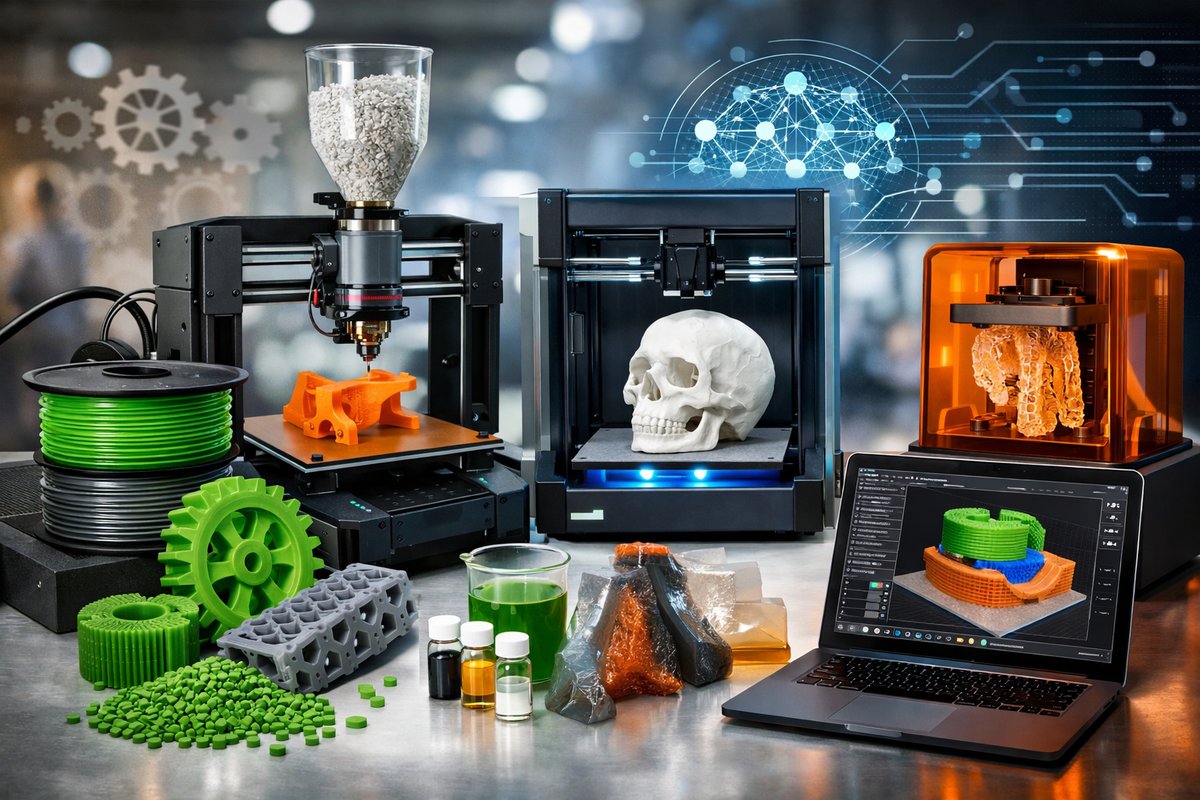

In workshops, garages, and R&D labs around the world, 3D printing has shed its reputation for costly, error-prone prototypes. Today, makers of every skill level are layering plastic, resin, and even metal into functional parts faster and more affordably than ever before. A combination of recycled materials, smart hardware tweaks, machine-learning slicers, and streamlined post-processing workflows is transforming additive manufacturing from a niche novelty into a versatile tool for hobbyists and professionals alike.
The quest for lower material expenses has fueled the rise of recycled and composite filaments. Desktop filament recyclers grind failed prints and unwanted plastic waste into pellets that can be re-extruded into fresh PLA, PETG, or ABS spools. By reclaiming material on-site, makers cut filament costs by 30-50 percent. Beyond pure recycled PLA, composite blends embed wood fibers, carbon or basalt powder, even coffee grounds, adding aesthetic flair and enhanced strength. These blends print at nearly the same temperature as standard PLA, so legacy machines need few modifications to handle the new mix.
For those willing to step beyond filament, pellet extruder systems attach to many popular open-source printers. By feeding raw polymer pellets directly into a screw-driven hot end, pellet extruders bypass the expensive pellet-to-filament conversion step. Bulk polymer pellets can cost a fraction of filament, dropping per-kilogram expenses to single digits. This approach has empowered small-scale studios to prototype large architectural models, furniture components, and custom tooling without breaking the bank.
Powder bed fusion systems have seen a parallel cost decline. Multi-laser setups once reserved for aerospace budgets are being miniaturized in benchtop machines. By employing multiple low-power diode lasers or LED arrays instead of a single high-watt CO2 laser, these printers spread heat more evenly across a small build area, reducing warping and layer delamination. New polymer powders with narrower particle-size distributions also sinter at lower energy thresholds, trimming power consumption and extending machine life.
Open-source firmware and AI-driven slicers are central to boosting first-print success rates. Traditional slicing software often leaves large gaps in thin walls or over-supports delicate geometries, leading to print failures. Next-generation slicers now integrate reinforcement algorithms that analyze each layer, dynamically adjusting infill density, wall thickness, and support placement to minimize weak points. These tools also tap into cloud-based databases of previous print logs, using machine-learning models to predict adhesion issues, temperature fluctuations, and mechanical stress before the printer even moves.
Monitoring the print in real time has become routine thanks to low-cost cameras, thermographic sensors, and embedded accelerometers. Tiny neural network modules sitting on each print head can detect filament jams, nozzle clogs, and layer shifts within milliseconds, pausing or adjusting the print mid-process. This automated vigilance has slashed failed print runs by as much as 70 percent in some maker spaces, turning late-night printer babysitting into a thing of the past.
Hybrid multi-material printing is another frontier for added functionality without added cost. Dual-extrusion heads that once struggled with alignment now leverage self-calibrating alignment routines, letting users switch between rigid plastics, flexible TPU, and soluble support filament within a single job. In selective resin printers, two-resin vats loaded with differing chemistries-one rigid, one elastic-offer part designers a gradient of material properties. This multi-material layering enables printed hinges, seals, or living hinges directly on parts, eliminating assembly and post-print bonding steps.
On the resin side, low-energy light sources are making large-format SLA printers more feasible. While early resin systems demanded intense ultraviolet lasers or arc lamps, today’s monochrome LCD panels require far less power to cure each layer. With increased UV transparency at specific wavelengths, these panels reduce cure times by 50-70 percent. Even budget SLA machines can churn out highly detailed jewelry prototypes, dental aligner molds, and miniature terrain at production rates once limited to industrial equipment.
Post-processing no longer means hours of scrubbing, sanding, and manual finishing. Automated wash-and-cure stations combine an isopropyl alcohol rinse with an integrated UV chamber, streamlining cleanup and final part hardening in under 15 minutes. For filament prints that need added strength, simple tabletop ovens or heated chambers anneal parts at controlled temperatures, reducing internal stresses and shrinking tolerances. DIY enthusiasts have even repurposed countertop convection ovens for batch annealing, creating stronger gears, brackets, and living-hinge components at virtually no extra capital cost.
The medical and aerospace sectors have been quick to embrace these cost-slashing innovations. Dental clinics now use entry-level SLA printers and recycled resin vats to produce surgical guides, fit models, and training aids for a tiny fraction of previous expenses. In aerospace R&D, flexible multi-laser powder bed machines handle low-volume metal runs of titanium and aluminum for brackets, ducting, and sensor housings. These printed components often bypass expensive tooling or machining steps, accelerating development cycles from months to weeks.
Even at the hobbyist level, maker communities are sharing open-materials databases where indie chemists upload resin formulas and plastic blends optimized for both print quality and recyclability. This collective R&D approach mirrors software open-source culture, driving down costs through collaboration rather than competition. Some local hacker spaces now host “print-it-forward” events where members trade unused filament spools, resin bottles, or even spare nozzles, reinforcing the circular-economy ethos that’s beginning to define modern 3D printing.
Looking ahead, biodegradable resins and inks are poised to further shrink the ecological footprint of additive manufacturing. Researchers are experimenting with plant-based waxes, algae-derived polymers, and protein-based hydrogels for both prototyping and end-use parts. Meanwhile, 4D printing-where parts change shape or properties over time in response to heat, moisture, or light-promises dynamic assemblies that could self-deploy, self-repair, or adapt on demand. While still early in commercialization, these smart materials hint at a future where prints can heal cracks, adjust tolerance, or transform functionality after you press “go.”
The quiet revolution of affordable, reliable 3D printing is more than a series of hardware or software advancements; it’s a shift in mindset. By standardizing low-cost materials, sharing process improvements, and applying AI-driven predictive models, the additive-manufacturing community has turned what once felt like trial-and-error into a precision craft. Whether you’re a budding maker prototyping a desk organizer, a medical team producing patient-specific guides, or an aerospace start-up printing load-bearing brackets, the tools and techniques for economical, successful 3D printing have never been more accessible.
From the first sticky layer to the final cured part, the art of making has embraced a new ethos: layer by layer, test by test, we get closer to turning imagination into reality with less waste, fewer failures, and a lighter environmental footprint. The next time you watch a nozzle glide across a heated bed, remember that each layer carries the collective knowledge of thousands of makers, engineers, and dreamers-all collaborating to make 3D printing smarter, greener, and delightfully more doable.