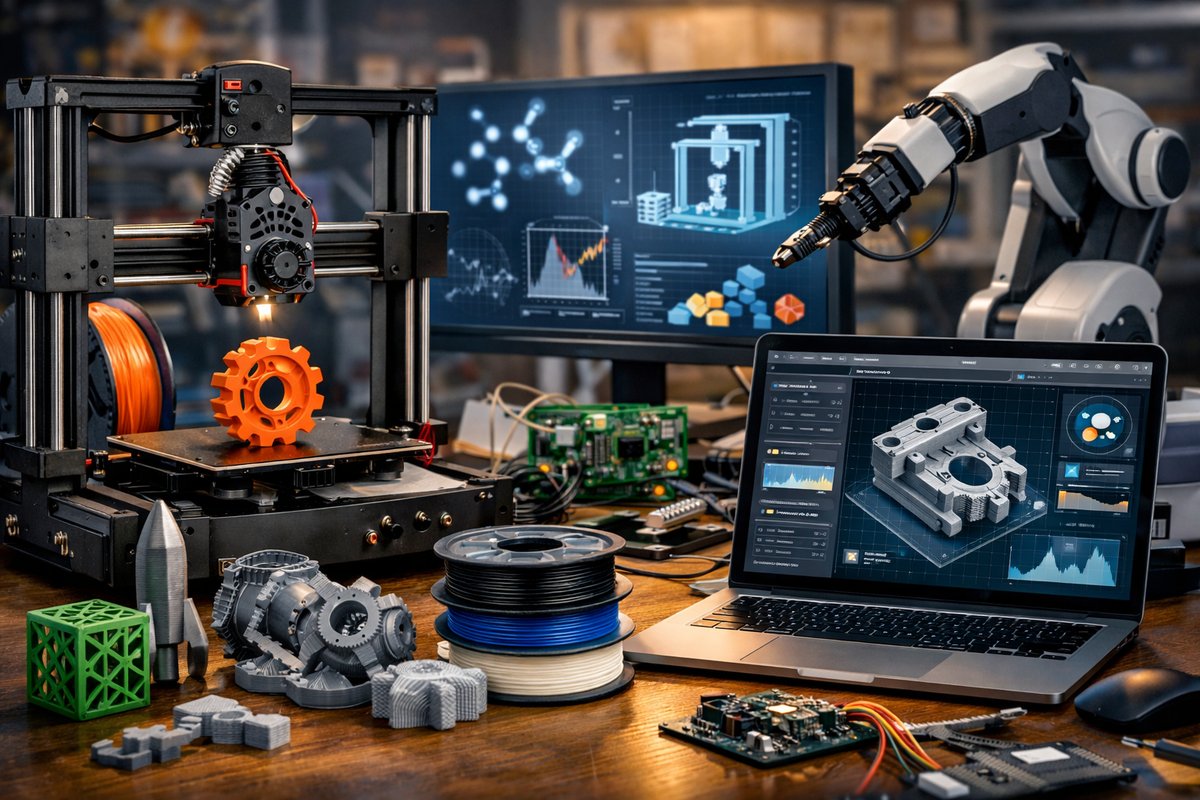

3D printing has evolved beyond a novelty for hobbyists into a transformative tool for engineers, artists, and educators alike. Once defined by high price tags and steep learning curves, the realm of additive manufacturing is now witnessing a wave of innovations designed to make it more affordable, reliable, and practical for anyone with a spark of creativity. From breakthroughs in low-cost hardware and recyclable materials to AI-driven slicing algorithms and streamlined post-processing workflows, the modern maker can achieve professional-grade results without an industrial budget.
In the hardware arena, the rise of open-source electronics and modular designs has been pivotal. Entry-level fused filament fabrication (FFF) printers now come as do-it-yourself kits or pre-assembled units with community-validated blueprints. Engineers have refined motion systems and hotend assemblies, borrowing from CNC and robotics research to reduce vibrations and improve layer accuracy. Integrated filament sensors monitor extruder flow in real-time, pausing prints before under-extrusion or jams cause a failed build. Even affordable board-level controllers leverage 32-bit processors, enabling advanced features such as silent stepper motor drivers and web-based monitoring dashboards that rival more expensive commercial platforms.
Resin printing hasn’t been left behind. Low-cost masked stereolithography (MSLA) machines have embraced monochrome LCD panels, which cure entire layers at once with shorter exposure times and longer panel lifespans. Combined with refined resin formulations that reduce shrinkage and improve toughness, these machines can rival traditional SLA systems in surface finish while costing a fraction of the price. Enthusiasts can now dial in parameters for food-safe resins, flexible elastomers, and high-temperature formulations, expanding the palette of applications from dental models to functional gaskets.
On the materials front, efforts to drive down costs center on recycled and bio-derived filaments. Pellet extruders retrofit standard FFF printers to accept raw plastic pellets-often sourced from post-consumer waste-and transform them into filament on the fly. Some innovators collect used support material, grind it, and blend it with virgin pellets to create recycled feedstock that meets industry standards for tensile strength. Bioplastics derived from plant starches, algae, or fungal mycelia provide sustainable alternatives to petroleum-based polymers, with ongoing research yielding formulations that resist warping and offer stable dimensional tolerances.
Multi-material printing has traditionally been a premium feature, but modular tool heads and quick-swap extruders have democratized the technique. A single-nozzle printer can now handle two or more filaments by adding a compact selector block, while hobbyist guide rails let users swap in a resin vat or pellet extruder in minutes. This flexibility slashes the need for multiple machines, reducing both space requirements and capital investment. For intricate color work, filament-mixing hotends blend primary colors at the melt chamber, producing a spectrum of hues without costly multi-print-head rigs.
On the software side, AI-powered slicing engines analyze geometry in seconds and recommend optimized support structures that minimize material use while ensuring print success. By simulating thermal deformation and stress points before a layer ever touches the build plate, these algorithms prevent warping and layer separation without trial-and-error test prints. Open-source firmware projects also enable behind-the-scenes tweaks: users can tune acceleration curves, adjust jerk settings, and implement custom g-code macros that automate routine maintenance tasks.
Economic feasibility is further boosted by community-driven print farms and cooperative makerspaces. Shared workspaces grant access to high-end machines-such as industrial laser sintering units or large-format polymer printers-for a fraction of the outright purchase price. In parallel, print-on-demand services allow individuals to upload models to a virtual queue and receive parts by mail, eliminating the need for any local hardware. Both approaches help maintain consistent quality across batches while spreading maintenance and electricity costs among multiple users.
Reducing post-processing time has become a priority for throughput and cost savings. Automated resin washing and curing stations standardize cleaning steps, ensuring each part is bathed in fresh isopropyl alcohol and exposed to uniform UV light for final hardening. For filament prints, modular finishing stations incorporate heated build plates for annealing, airbrush booths for primer and paint, and rotary polishers to smooth layer lines. These all-in-one units remove manual bottlenecks, freeing creators to focus on design iteration rather than elbow grease.
Recycling unused supports and failed prints on site has also seen major advances. Close-loop systems grind discarded plastic into uniform pellets, which feed back into pellet extruders or commercial filament kettles. Some labs install densifiers that compress plastic dust and small fragments into reusable pucks, reducing waste disposal fees and material expenses. Collectively, these practices can lower per-part costs by 20 to 40 percent, making small-batch production and rapid prototyping more financially attractive.
The combination of improved hardware, smarter materials, AI-driven software, and streamlined workflows is reshaping how 3D printing integrates into business and research. Medical institutions are printing patient-specific surgical guides in-house, reducing lead times from weeks to hours. Automotive engineers produce test fixtures and tooling for end-of-line inspections without outsourcing to machine shops. Artists sculpt dynamic installations that incorporate embedded electronics and moving parts, all fabricated on desktop machines. Even classrooms are embracing multi-disciplinary projects where students learn engineering, design, and materials science while keeping costs low enough for dozens of students to participate.
Looking ahead, binder jetting and metal powder bed fusion are attracting attention as materials and systems become more accessible. Desktop-scale metal printers now employ non-laser heat sources or green part solidification techniques, pushing the price points down. Binder jetting machines use low-cost inks that bind metal or ceramic powders layer by layer, followed by sintering ovens that consolidate the parts. As these technologies mature, the day when small shops and even advanced home labs can print functional metal components at tolerable costs grows nearer.
The future of economical 3D printing hinges on open collaboration and incremental innovations. Crowdsourced hardware revisions, community-funded filament research, and shared data on process parameters accelerate progress. As machine learning models continue to learn from millions of print records, they refine calibration routines and defect detection with every layer deposited. These converging trends point to a future in which anyone with a digital model can transform imagination into tangible reality swiftly, sustainably, and affordably.
In the meantime, hobbyists, educators, and small businesses can seize the moment by embracing recycling workflows, exploring multi-material setups, and integrating AI-powered slicing tools. The quiet revolution of making marches on-one layer at a time-lowering barriers to entry and widening the aperture of what’s possible. Every filament swap, every firmware tweak, and every creative experiment layers toward a world where design and fabrication meld seamlessly within reach of every curious mind.