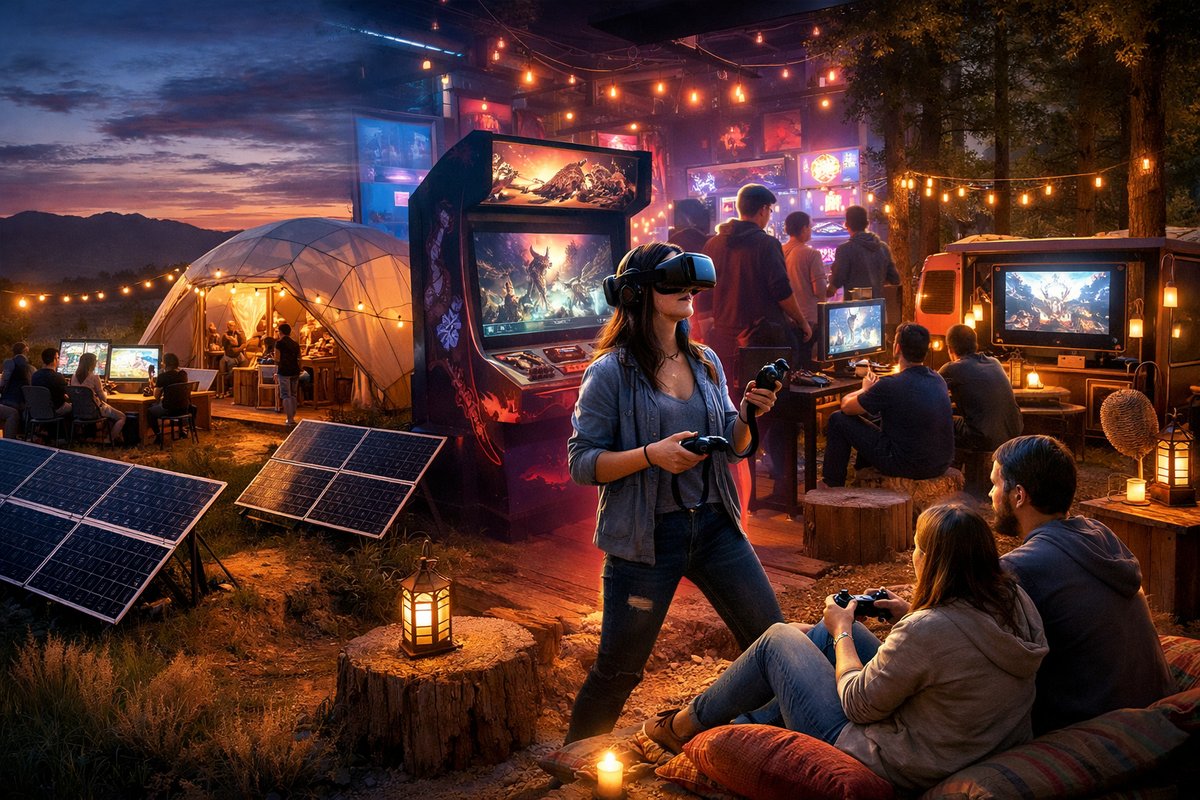

In city warehouses, community centers and even empty parking lots, a fresh breed of gaming festivals is emerging-one that exchanges blockbuster budgets for creativity, sustainability and hands-on social moments. These micro events are redefining what it means to level up: instead of massive expos and sprawling trade shows, players are gravitating toward intimate gatherings that mash up pixel art, indie dev demos, VR theater performances and solar-powered consoles under desert skies.
Over the past year, attendance at these grassroots meet-ups has soared. Organizers credit social media word-of-mouth, online community hubs and a growing desire for unfiltered, face-to-face interaction after years of global lockdowns. In one recent pop-up outside Berlin, attendees clustered around custom arcade cabinets showcasing fan-made mods of classic beat ’em-ups, while an adjacent projection dome hosted a live performance of a well-known multiplayer VR title reimagined as a cooperative, immersive theater piece.
Meanwhile, on the outskirts of Joshua Tree National Park, a solar-powered play pod nestled between Joshua trees became the site of “Sunset Circuit,” a weekend-long festival where players borrowed portable rigs powered entirely by rooftop panels. Between cooperative dungeon crawls and speed-running competitions at dawn, participants shared solar-cooked meals and swapped tips on building off-grid streaming stations.
Steam’s recent Summer Sale shattered previous records, spurring a wave of small-scale LAN parties and evening meet-ups across college campuses. University gaming clubs have begun hosting weekly “pixel socials,” converting lecture halls into dimly lit play spaces decked with LED strips and retro couches. In these settings, indie developers demo new titles directly to players in person, gathering feedback faster than any remote playtest could deliver.
An unexpected byproduct of this movement is the resurgence of classic sci-fi cinema in communal settings. Film-inspired speed-run challenges for cult titles like Blade Runner and Ghost in the Shell have been paired with midnight screenings on inflatable screens. The shared excitement of conquering a notoriously difficult arcade port, followed by a late-night movie viewing under twinkling festival lights, has sparked renewed interest in streaming classics through group rental platforms.
At the heart of these gatherings is a DIY ethos: organizers repurpose shipping containers into minimalist game lounges, 3D-print custom controller shells for accessibility, and use open-source hardware to craft motion-sensing devices that bring new rules to tabletop role-playing sessions. In one corner of an East London microfest, a hacker collective displayed a motion-capture dance pad that translates real-world choreography into in-game spells. Nearby, cosplayers spun pixel patterns in virtual worlds via lightweight haptic gloves.
But this isn’t just about innovation for its own sake. A growing number of event hosts are partnering with sustainability advocates to reduce e-waste and energy consumption. Attendees are encouraged to bring gently used peripherals-gamepads, keyboards, headsets-and swap them at designated “gear exchange” booths. Electrified food carts run on biodiesel, and reusable drinkware is the norm. Even prize pools steer clear of plastic loot: winners walk away with print-on-demand custom T-shirts, game codes for up-and-coming titles, or donations made in their names to digital literacy charities.
On the technology front, network latency has been tackled with creative fixes. In rural locales where broadband can be spotty, organizers establish mesh networks using battery-backed routers and directional antennas. Gamers queue outside makeshift server nodes to ensure lag-free five-on-five tournaments of a headline competitive shooter. In urban lofts, 5G hotspots are shared among players, creating impromptu local networks that rival even top-tier co-location facilities.
This hybrid festival approach has also caught the eye of local businesses. Small neighborhood cafes sponsor puzzle-hunt trails through city streets, where QR codes unlock mini-games on participants’ phones and pathfinders lead teams to secret underground arcades. Independent breweries have tapped custom augmented-reality beer labels that unlock exclusive in-game skins when scanned. These partnerships drive foot traffic to local shops and create cross-promotional opportunities between game creators and community enterprises.
Digital content creators and streamers are adapting too. Rather than broadcasting from home studios, a growing number of influencers are taking live feeds from micro events. Mobile production rigs fitted inside vans allow instant multi-camera coverage of live tournaments, cosplay parades and panel discussions with indie developers. Viewers enjoy an on-the-ground perspective, complete with crowd reactions, behind-the-scenes developer chats and spontaneous cosplay dance offs. These feeds blur the distinction between remote spectators and in-person attendees, fostering a shared sense of presence.
One unexpected upshot: renewed curiosity about role-playing genres. LARP groups are borrowing VR headsets and projection mapping to turn static tabletop adventures into dynamic mixed-reality quests. Players in costume chase down AR-spawned creatures across grassy fields, scanning markers on trees to unlock branching story paths. When batteries give out, games seamlessly transition to analog, with game masters distributing printed clue cards.
Looking ahead, experts predict continued convergence of physical and digital play experiences. With major game engines now offering free tier licenses to small creators, expect an influx of bespoke mods, localized experiences and art-driven mini-games at upcoming micro festivals. Innovative hardware partners are rolling out affordable edge servers to bring cloud-streamed demos on the road, while open-source VR head-mounted displays will democratize immersive theater once reserved for deep-pocketed studios.
For the modern player, the takeaway is clear: fun can be as much about the context as the code. Sharing a makeshift LAN repair station, cheering next to new friends during an AR dungeon crawl or lounging under solar lanterns while exploring voxel realms-these moments are shaping the next chapter of gaming culture. Whether you’re a veteran speed-runner, an indie dev, or simply someone looking to break out of the living-room routine, there’s a micro festival or pop-up arcade waiting to transform how you play.
As hybrid gatherings continue to pop up from the desert to the city streets, one thing is certain: the future of play is both high-tech and hands-on, powered by community spirit and creative reuse. And with solar-charged consoles, pop-up projection pods and modular gear-swap stations leading the charge, there’s never been a more exciting time to level up your setup-wherever you choose to press start.